Private market investment firm Federation Asset Management (FAM) has announced its intention to launch a new long-duration energy storage (LDES) investment platform in Australia.
FAM, which manages capital commitments of more than AU$2 billion (US$1.27 billion), revealed in a statement that Australia will be a key investment market for the group in the future, citing “strong risk-adjusted returns and the increasing need for grid stability.”
“Energy storage is a large-scale investment opportunity with attractive risk-return characteristics,” said Stephen Panizza, partner at Federation Asset Management.
The organisation said that the investment opportunity for battery energy storage systems (BESS) exceeds AU$100 billion. It hopes that further investment in the country’s LDES market will help lower energy costs and enhance Australia’s energy security.
Try Premium for just $1
- Full premium access for the first month at only $1
- Converts to an annual rate after 30 days unless cancelled
- Cancel anytime during the trial period
Premium Benefits
- Expert industry analysis and interviews
- Digital access to PV Tech Power journal
- Exclusive event discounts
Or get the full Premium subscription right away
Or continue reading this article for free
FAM also noted that the time was right to branch further into the energy storage market thanks to “significant investment in infrastructure and technological advancements.”
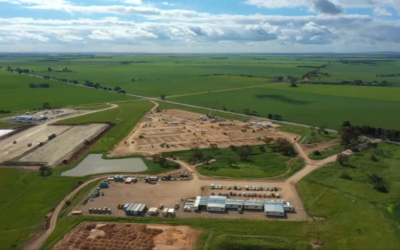
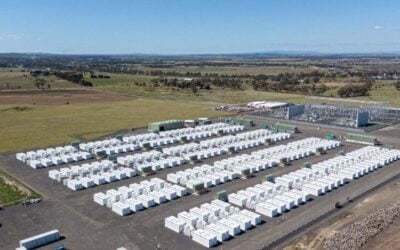
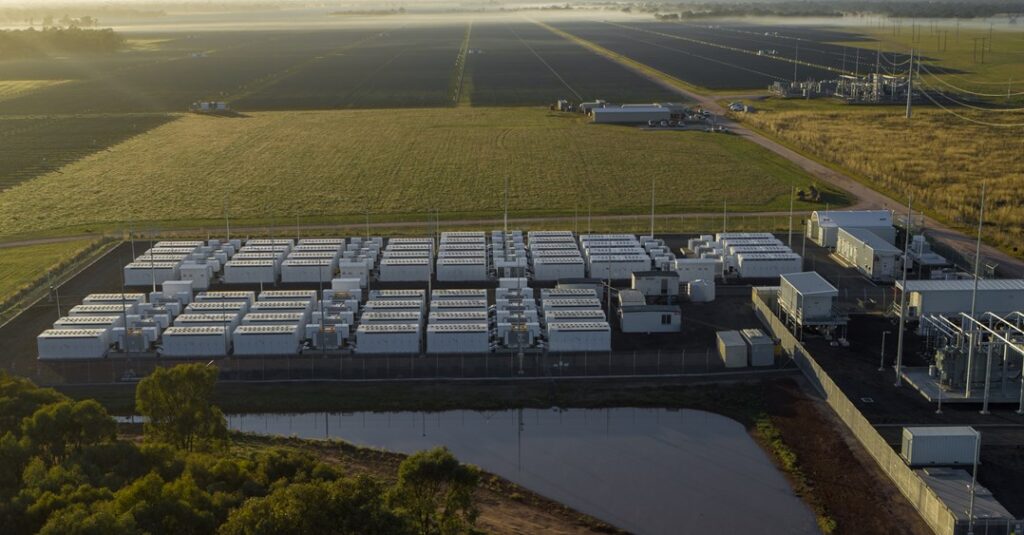
The organisation was an early mover in the BESS space, having initially invested in the 150MW/300MWh Riverina and Darlington Point BESS in New South Wales in 2022. The investment was completed via FAM’s Sustainable Australian Real Assets Fund & Federation Alternative Investments II fund.
This BESS was brought online in May 2023 and is being used to tackle a constrained area of Transgrid’s network between Darlington Point and Wagga Wagga in New South Wales, increasing its capacity by 120MW.
The BESS project is equipped with Tesla Megapacks, which form three separate operating systems co-located adjacent to an existing 333MWp solar PV power plant, connected at the 132kV Darlington Point substation.
Economics for LDES are beginning to ‘shift favourably’ in Australia
Previous coverage by Energy-Storage.news found that the economics for long-duration storage are beginning to shift favourably; Australia’s federal and state governments continue to emphasise the importance of technology in sending the correct market signals to prospective investors.
Indeed, earlier this year, speaking exclusively to Eku Energy’s chief technology officer Elias Saba, ESN Premium reported that various factors, including systems’ cost structure, have enabled a shift toward LDES on the National Electricity Market (NEM).
“Long-duration systems on the NEM have been helped by some of the fundamental economics of storage over the past year or two. We’ve seen a significant decline in the cost of lithium but also generally improvements in energy density and the cost of the general equipment, structure, and supply of storage,” Saba said.
Longer-duration systems are also becoming more lucrative in the NEM. Research conducted by Wood Mackenzie last year found that a 4-hour duration BESS in 2026 could earn an average of AU$263,000/MW (US$163,461/MW) over its lifetime.