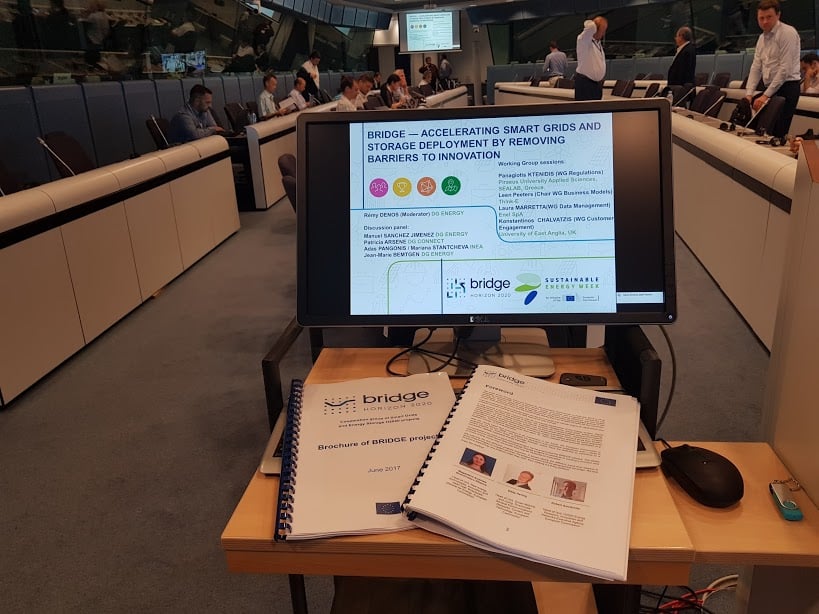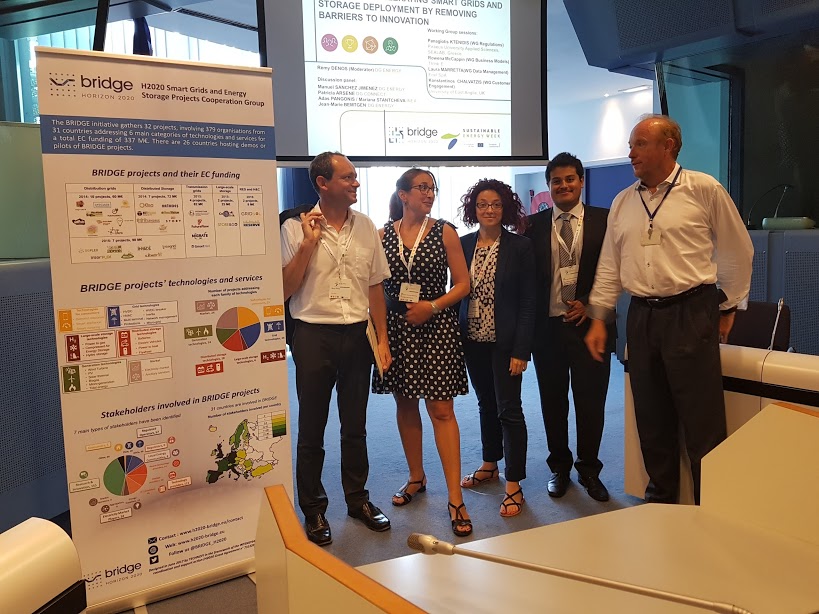
32 separate projects in smart grid, energy storage and related technologies which received backing through a European Union innovation programme, will pool knowledge and expertise in a shared network.
Horizon 2020 is a research and innovation programme run through the EU’s European Commission (EC), worth €77 billion (US$88.44 billion) from 2014 to 2020. The programme looks at the transport and energy sectors and a new initiative, BRIDGE, has been started up to link together all the applicable smart grid and energy storage projects.
BRIDGE: Horizon 2020 seeks to “create a structured view of cross-cutting issues… which may constitute an obstacle to innovation”. It has put together four working groups to look at separate areas considered vital to success: data management, business models, regulations and customer engagement.
BRIDGE then seeks to add value to projects by encouraging teams to share field experiences, feedback and the lessons they have learned, to band together to make collective requests and recommendations to policymakers and regulators and to establish contacts and networks among themselves that may benefit their future business.
Try Premium for just $1
- Full premium access for the first month at only $1
- Converts to an annual rate after 30 days unless cancelled
- Cancel anytime during the trial period
Premium Benefits
- Expert industry analysis and interviews
- Digital access to PV Tech Power journal
- Exclusive event discounts
Or get the full Premium subscription right away
Or continue reading this article for free
The hope is that policymakers will find this a more coherent and coordinated approach when talking to industry, especially where it comes to identifying non-technical barriers to deployment, such as legal issues or electricity market regulation.
Diverse projects look to create a collective voice
So far 32 projects have signed up to the programme, including the TILOS (Technology Innovation for the Local Scale Optimum Integration of Battery Energy Storage) renewable energy microgrid-forming project on the Greek Island of Tilos, WiseGRID (Wide scale demonstration of Integrated Solutions and business models for European smartGRID) which looks to develop a more modern framework for European grids, including energy storage and better able to accommodate higher volumes of electric vehicles.
Other projects include CryoHUB, which looks at cryogenic energy storage, Elsa (Energy Local Storage Advanced system) which looks to combine energy storage with cutting edge information technology (IT) solutions and InteGRIDy, which looks to develop platforms for integrating multiple energy resources with an emphasis on virtual power plants (VPPs) and energy storage.
Incidentally, Horizon 2020 is currently seeking projects for its ‘Competitive low carbon energy” strand – technologies which assist the integration of renewable energy – with nine separate areas open for application. Applicants must meet a deadline of 7 September, with up to EUR105 million up for grabs.