Multinational utility and IPP Engie has launched construction on a 200MW/800MWh battery energy storage system (BESS) in Belgium.
The France-headquartered firm announced the start of construction in the 4-hour duration project in Vilvoorde, Belgium, on 5 July.
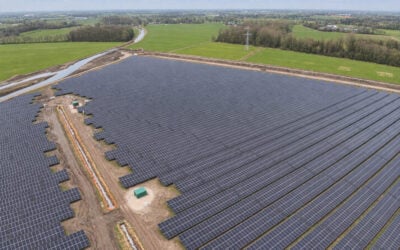
The 3.5 hectare site will comprise 320 battery units totalling 800MWh, each measuring 25m x 4m x 3m, though Engie hasn’t revealed which BESS provider has been enlisted for the project.
The project has a 15-year contract with the transmission system operator (TSO) in Belgium, Elia. It is being co-located with Engie’s 870MW combined cycle gas turbine (CCGT) plant which it acquired in 2020.
Try Premium for just $1
- Full premium access for the first month at only $1
- Converts to an annual rate after 30 days unless cancelled
- Cancel anytime during the trial period
Premium Benefits
- Expert industry analysis and interviews
- Digital access to PV Tech Power journal
- Exclusive event discounts
Or get the full Premium subscription right away
Or continue reading this article for free
It will be commissioned in two phases, with 100MW coming online in September 2025 and a further 100MW in January 2026. Vilvoorde is one of three large-scale projects the firm has construction permits for, along with ones in Kallo (100MW) and Drogenbos (80M), revealed in April 2023.
The projects were part of a 3.6GW pipeline of BESS projects under development which will add to its 1.3GW of already-operational assets.
The Belgium market is among the most active in Europe, with a storage-friendly grid regulatory environment and ample revenue opportunities in flexibility services, energy trading and capacity markets, where 357MW of BESS projects were awarded contracts in the most recent tender.
The largest approved project in Europe, Giga Storage’s 2.4GWh system, is being planned for there.
The country had around 372MWh of front-of-meter grid-scale BESS online as of the end of 2023, with another 140MWh coming online this year and a staggering 1.7GWh set to come online in 2025 according to data from LCP Delta provided for our Energy Storage Report earlier this year.