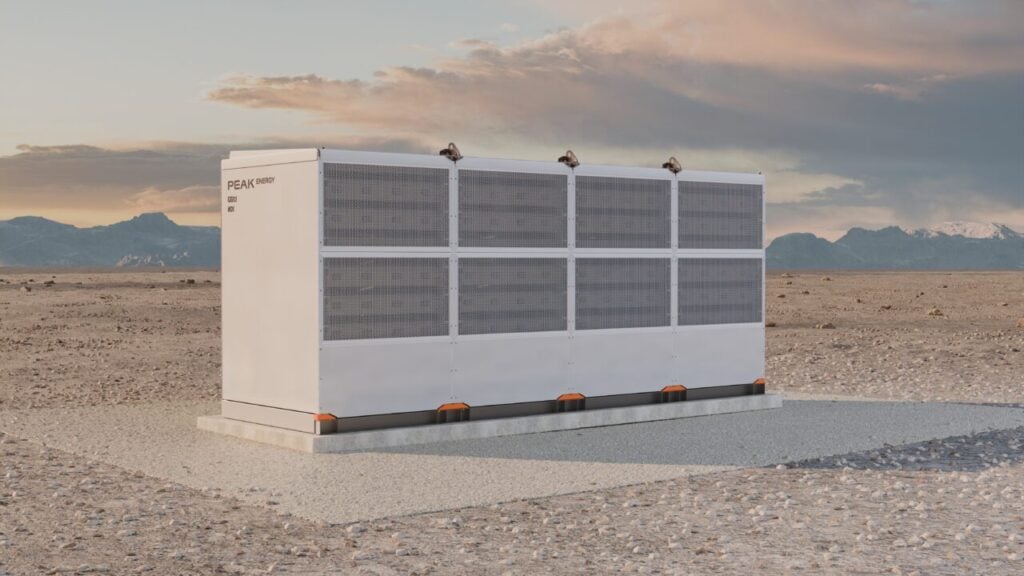
Energy storage developer and system integrator Energy Vault and sodium-ion battery energy storage system (BESS) startup Peak Energy have announced a 1.5GWh strategic development agreement.
Energy Vault has finalised a supply agreement to secure 1.5GWh of sodium-ion (Na-ion) battery systems, manufactured in the US by Peak Energy.
The companies will jointly develop a storage platform that combines Peak Energy’s Na-ion batteries with Energy Vault’s proprietary digital stack, with a focus on Energy Vault’s AI infrastructure portfolio. The companies claim this approach speeds up deployment, improves safety, and lowers costs by removing “complex legacy systems.”
The jointly developed solution will be specifically designed for AI Neoclouds and AI-first data centre operators. The two companies claim that traditional BESS are not well suited to the volatile demands of AI data centres.
Try Premium for just $1
- Full premium access for the first month at only $1
- Converts to an annual rate after 30 days unless cancelled
- Cancel anytime during the trial period
Premium Benefits
- Expert industry analysis and interviews
- Digital access to PV Tech Power journal
- Exclusive event discounts
Or get the full Premium subscription right away
Or continue reading this article for free
Peak Energy’s Na-ion energy storage technology will be integrated with Energy Vault’s proprietary design and Vault-OS energy management system (EMS).
According to Energy Vault, the integrated solution is unique to the company and is a major differentiator for its modular “powered shell” data centre product. It claims advantages such as streamlined electrical design, reduced reliance on conventional uninterruptible power supply (UPS) systems, lower cooling requirements, and better management of high-volatility AI compute workloads.
The company also expects to qualify for domestic content investment tax credits (ITCs), and, notably, has secured exclusive channel partner rights for Peak Energy’s technology in Australia and Japan.
Energy Vault claims that these exclusive rights establish it as the only provider of this solution in those two markets.
When Energy Vault released its Q3 2025 financial results, the company credited its growth to expanding projects in Australia and its ‘Asset Vault’ subsidiary.
Robert Piconi, Chairman of the Board and CEO of Energy Vault, stated of the company’s commitment to Australia and Asset Vault:
“Following a strong operational quarter, we made major progress on our ‘build-own-operate’ Asset Vault strategy, targeting 1.5GW of storage capacity within the inaugural fund, including the acquisition of an attractive 150MW project in Texas and the closing of a $300 million non-dilutive preferred equity investment from Orion Infrastructure Capital (OIC).”
He added, “Our commercial team also unlocked new regional markets and super high growth new market segments.”
In November 2025, Peak Energy announced a multi-year phased agreement with developer Jupiter Power to supply up to 4.75GWh of Na-ion BESS.
That deal sees Peak supplying the BESS to Jupiter Power for deployment between 2027 and 2030. The total contract value could exceed US$500 million.
Caterpillar forms strategic alliance with American Intelligence & Power for AI infrastructure
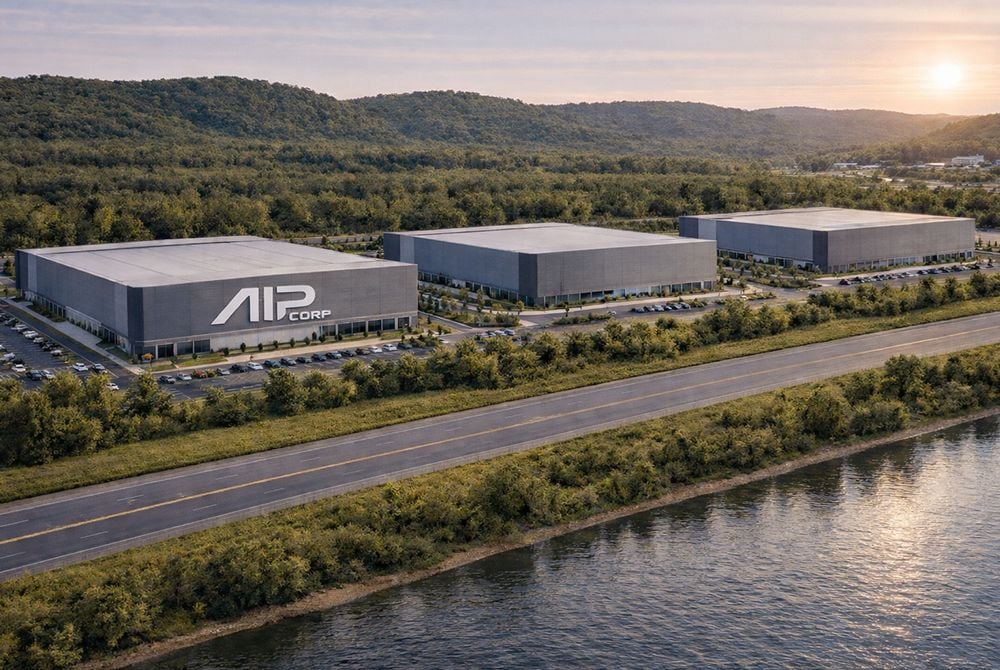
Meanwhile, engineering equipment manufacturer Caterpillar has announced the execution of a purchase agreement with AI infrastructure developer American Intelligence & Power (AIP) to support AIP’s Monarch Compute Campus.
Monarch, AIP’s flagship site, is a large-scale, multi-phase power generation and infrastructure platform built to provide long-term power solutions for hyperscale and enterprise data centre customers.
Under the purchase agreement, AIP has committed to ordering 2GW of fast-response natural gas generator sets to support the initial phase of Monarch, with deliveries planned from September 2026 to August 2027.
The natural gas generators will be supplemented with BESS capable of managing the significant load fluctuations of AI data centres. The Caterpillar equipment and battery systems are anticipated to be commissioned and operational within a few months of their arrival.
AIP and Caterpillar say that additional phased expansion is planned over time.
In 2023, Caterpillar introduced the Cat ESS suite of battery storage solutions. This suite features scalable and modular designs suitable for various energy system applications, such as generator set transient assist, grid support and integration, shifting energy from production to consumption times, stabilising power, correcting power factor, and integrating renewable energy.
The core component of this system is a standard 20-foot module containing lithium-ion batteries, Caterpillar’s bi-directional inverter, and an isolation transformer.
In August 2025, the company committed to installing a combined heat and power (CHP) plant equipped with over a gigawatt-hour of batteries for a data centre complex being developed by Joule Capital Partners in Utah.
The project will also incorporate natural gas generators. The CHP plant will have a total capacity of 4GW, featuring combined cooling, heat, and power (CCHP) solutions, Caterpillar G3520K gas generator sets, a 1.1GWh grid-forming BESS, and backup generator sets.
Caterpillar’s collaboration with AIP involves the G3516 gas generator, which will run on natural gas. The generators will feature what Caterpillar describes as advanced emissions controls, such as selective catalytic reduction (SCR), to ensure ultra-low emissions and meet all applicable air permitting standards.
The Energy Storage Summit USA will be held from 24-25 March 2026, in Dallas, TX. It features keynote speeches and panel discussions on topics like FEOC challenges, power demand forecasting, and managing the BESS supply chain. ESN Premium subscribers can get an exclusive discount. For complete information, visit the Energy Storage Summit USA website.