Energy Vault has confirmed its increased guidance for 2022, posting US$146 million in revenue of which two-thirds came in Q4.
The company, which is known for its gravity-based energy storage solution but has recently broadened out into battery storage and green hydrogen, released its full-year results yesterday (7 March). In January it revealed revenues would be 40-100% higher than previous guidance of US$75-100 million.
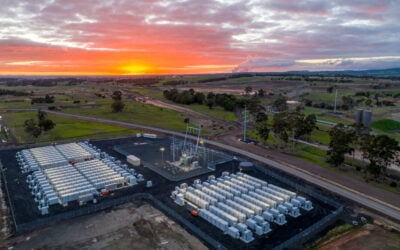
US$100 million of that came in the final quarter of the year thanks to the company’s gravity energy storage expansion and ahead-of-schedule execution of a 275MWh battery storage project in California.
It is the first year Energy Vault has booked revenues since being founded. Net loss for the year was US$78 million. For 2023, the firm expects revenues of US$325-425 million and an adjusted EBITDA loss of US$50-70 million.
Try Premium for just $1
- Full premium access for the first month at only $1
- Converts to an annual rate after 30 days unless cancelled
- Cancel anytime during the trial period
Premium Benefits
- Expert industry analysis and interviews
- Digital access to PV Tech Power journal
- Exclusive event discounts
Or get the full Premium subscription right away
Or continue reading this article for free
The company expects its first commercial EVx system project in China, which uses its gravity-based solution, to start commissioning of all electronic and power generation components in the second quarter of 2023.
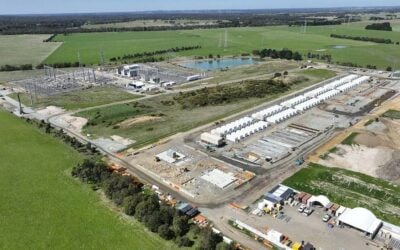
Battery storage engineering, procurement and construction (EPC) projects secured last year with Jupiter Power, Wellhead and NV Energy are all scheduled to be online in the second half of 2023.
Over the course of 2022 it contracted and signed booked orders totalling 1,635MWh of energy storage capacity across its technology areas, representing US$540 million of business.
The company is known primarily for its gravity-based, mechanical energy storage technology which is based on lifting massive concrete blocks to charge and lowering them to discharge. The design of its has undergone a major overhaul since a prototype system was delivered in Switzerland.
The company listed a little over a year ago on the New York Stock Exchange, and has a market capitalisation of US$428 million at the time of writing off a US$3.10 share price. See all our coverage of the firm here.
Energy-Storage.news’ publisher Solar Media will host the 5th Energy Storage Summit USA, 28-29 March 2023 in Austin, Texas. Featuring a packed programme of panels, presentations and fireside chats from industry leaders focusing on accelerating the market for energy storage across the country. For more information, go to the website.