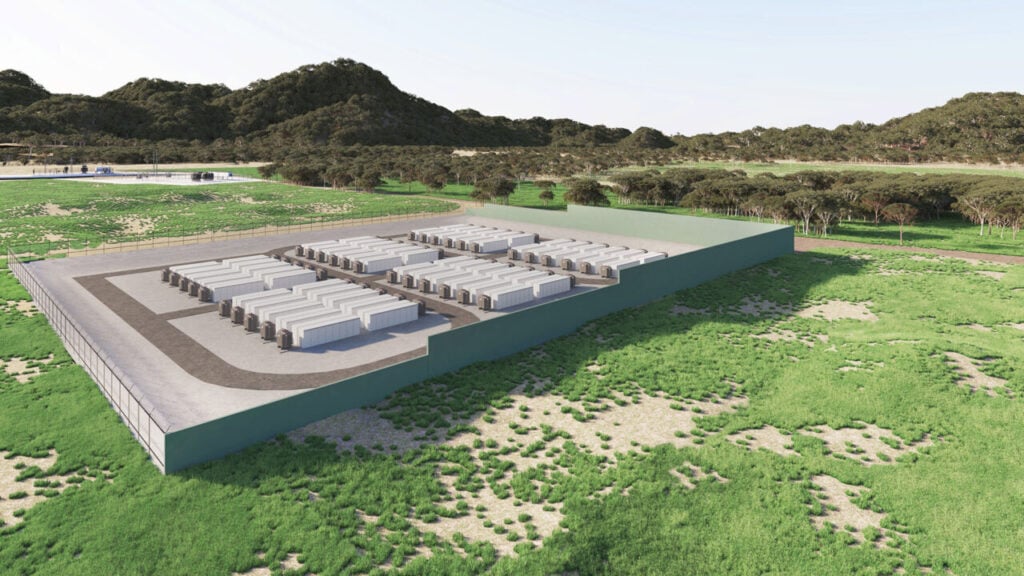
Battery energy storage developer Eku Energy has seen its development application for a 250MW/500MWh battery energy storage system (BESS) in the Australian Capital Territory (ACT), approved.
The BESS, located at Williamsdale in the south of Canberra, is part of the ACT government’s Big Canberra Battery initiative, which aims to deliver an ecosystem of batteries to maintain grid stability.
Securing approval of the development application is a key milestone on the project’s development. The application is a formal process for permission to build a new development in a designated area in ACT.
According to Eku Energy, the BESS is expected to enter the construction phase later this year and will be located in close proximity to the Williamsdale substation.
Try Premium for just $1
- Full premium access for the first month at only $1
- Converts to an annual rate after 30 days unless cancelled
- Cancel anytime during the trial period
Premium Benefits
- Expert industry analysis and interviews
- Digital access to PV Tech Power journal
- Exclusive event discounts
Or get the full Premium subscription right away
Or continue reading this article for free
Eku Energy is responsible for developing, constructing, operating, and actively managing the Williamsdale BESS. Under an innovative revenue share agreement, it will share 50% of the net revenue with the Territory.
The Williamsdale BESS will also be registered to participate in the National Electricity Market (NEM), the main interconnected electricity network covering the east and south coasts of Australia.
Eku Energy partnered with the ACT government last year to develop, build, and operate the 250MW BESS. At the time, this was deemed a significant step in delivering the Big Canberra Battery ecosystem.
The initiative was first announced as part of the state’s 2020-2021 budget with AU$100 million (US$67 million) in funding pledged towards it. The government ran a procurement process for the grid-connected BESS which began in mid-2022 before its award to Eku just under a year later.
Eku Energy is an energy storage development platform that was launched through the Macquarie Asset Management-owned Green Investment Group (GIG) in late 2022
Eku Energy discusses business model variety
Eku Energy discussed how its Australian projects are developed under a variety of different business models, such as merchant, in an exclusive interview on Energy.Storage.news Premium last month (10 June).
Rachel Rundle, Eku Energy’s senior manager for policy and regulation in the APAC region, said that Eku Energy takes each project on a case-by-case basis, stating that it’s impossible to say what the commercial and revenue for schemes may look like. But the contribution the schemes could bring to the decarbonization of the country is unparalleled.
“We definitely see that with all the system challenges that we as a sector are aware of, through all these thermal plants coming out of the system, batteries are really well-placed to provide those services: whether it be system strength, whether it be synthetic inertia, voltage support, batteries are sort of that multi-tool asset,” Rundle said.