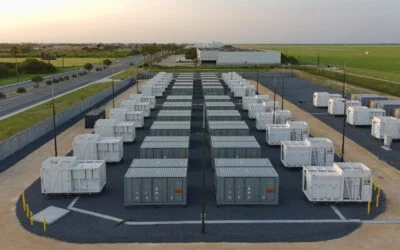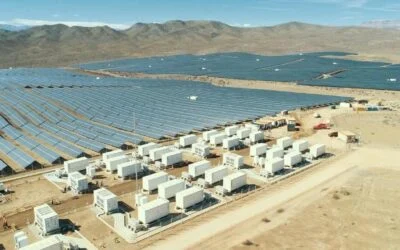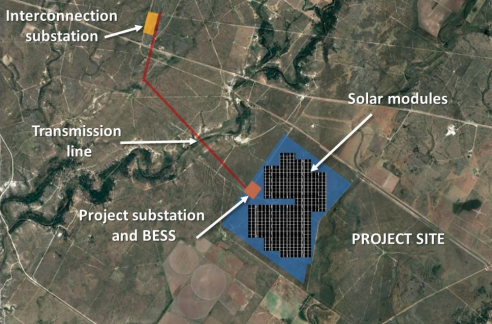
US development bank NADBank is providing a US$65.7 million loan for a co-located solar project with an 80MWh battery energy storage system (BESS) in Texas.
NADBank (North American Development Bank) is funding the Zier Solar and Energy Storage Project near the town of Brackettville in Kinney County, which borders the Mexican state of Coahuila.
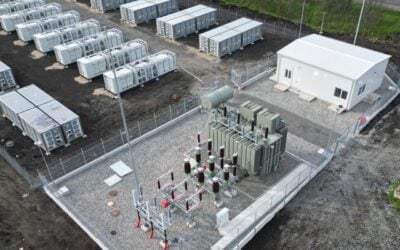
The project pairs a 160MWac solar PV array with a 40MW, two-hour BESS and also involves the construction of a new 3.67 mile transmission line to connect to the nearby 138kV Pinto Creek substation. It is being managed by Cypress Creek Renewables, a solar and storage developer with a nationwide presence that was acquired by private equity firm EQT in November last year.
Friday’s (June 10) funding announcement did not reveal a construction or operational start date, but an earlier loan proposal says that construction could start before July this year for an operational start date during quarter three 2023.
Try Premium for just $1
- Full premium access for the first month at only $1
- Converts to an annual rate after 30 days unless cancelled
- Cancel anytime during the trial period
Premium Benefits
- Expert industry analysis and interviews
- Digital access to PV Tech Power journal
- Exclusive event discounts
Or get the full Premium subscription right away
Or continue reading this article for free
The main aim of the project, which is 17 miles northeast of the US-Mexico border, is to increase the renewable energy and energy storage capacity on the Texas grid, which is operated by ERCOT. The ERCOT grid is unique in that it is entirely decentralised, with no centralised capacity auctions like in the UK and most other grids, meaning BESS projects make all their money through energy trading and ancillary services.
The BESS will help ERCOT reduce the use of ramp-up/down fossil fuel plants, integrate more renewables onto the grid and increase grid reliability.
According to the project proposal, the BESS is expected to complete the equivalent of 0.4 charge/discharge cycles (32 MWh) per day with a round-trip efficiency of 87%. It will be restricted to charging from the solar park during the first five years, after which it will also be able to charge from the grid.
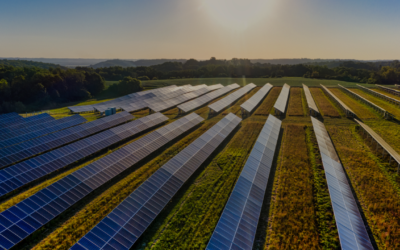
The solar array will comprise 380,000-440,000 bifacial monocrystalline photovoltaic modules from a ‘top-tier global provider’, the proposal reads. The BESS will use Tesla Megapacks, the electric vehicle giant’s utility-scale product which uses lithium iron phosphate (LFP) cathode material, with a 10-year warranty and 20-year power guarantee.
Cypress will be asset manager, operator and maintenance provider for the BESS unit and will sign a 20-year capacity maintenance agreement with Tesla for the latter to replace degraded battery modules. It expects to use Tesla’s battery recycling programme for the end-of-life battery modules. Cypress has 1.6GW of operational solar and storage assets in the US today.
The Zier project is NADBank’s second BESS funding announcement in the space of a few weeks. At the end of May, it took part in what was claimed to be the first full debt financing of a fully merchant BESS project in California, covered by Energy-Storage.news.