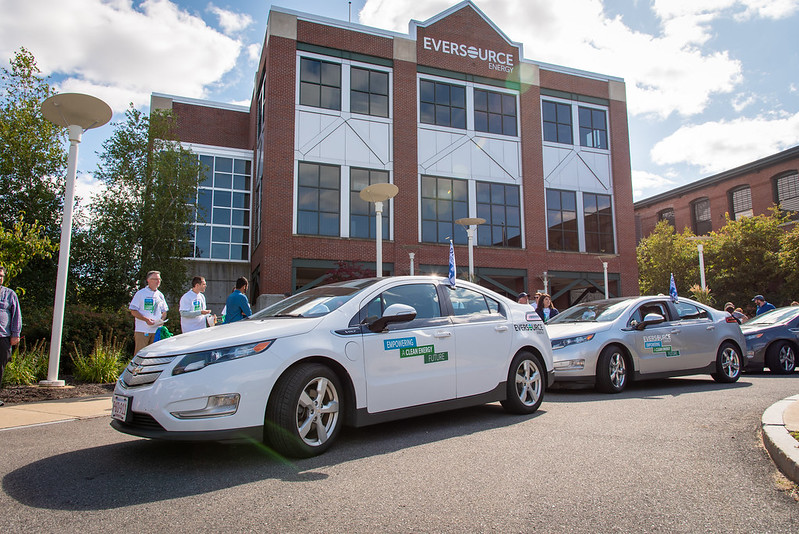
A programme incentivising the deployment of customer-sited energy storage systems (ESS) has been launched by the two main investor-owned utilities serving the US state of Connecticut.
The utilities, Eversource and United Illuminating (UI), provide electricity and distribution network infrastructure to almost all of the state. With Connecticut having committed last year to an energy storage deployment target of 1,000MW by 2030 as it pursues carbon neutrality by 2040, just over half of that figure is expected to be provided through the new programme.
Called Energy Storage Solutions and overseen by Connecticut’s Public Utilities Regulatory Authority (PURA), the two utilities will offer upfront incentives to homes and businesses to reduce the cost of buying battery storage systems. They will also be eligible for performance-based incentives.
The programme, first announced in the middle of last year, seeks to aggregate 580MW of energy storage by 2030. The Connecticut Green Bank, created through state legislature in July 2011, will co-administer the programme alongside the utility companies.
Try Premium for just $1
- Full premium access for the first month at only $1
- Converts to an annual rate after 30 days unless cancelled
- Cancel anytime during the trial period
Premium Benefits
- Expert industry analysis and interviews
- Digital access to PV Tech Power journal
- Exclusive event discounts
Or get the full Premium subscription right away
Or continue reading this article for free
Its objectives include allowing energy storage to provide multiple benefits to the grid, from adding resiliency to electricity supply, to ancillary services provision, peak shaving, deferring the need for investment in distribution system upgrades and enabling the integration of more distributed energy resources (DERs) like solar and electric vehicles onto the grid.
PURA also wants the programme to support the “sustained, orderly development” of an energy storage industry in the state, to prioritise giving people resilient power, lower barriers to entry for energy storage in Connecticut and maximise both the environmental and economic benefits of energy storage.
The programme should also provide positive net present value to all electric ratepayers, who will ultimately be funding it, PURA said in a December 2021 document setting out the programme design and aims.
“Through Energy Storage Solutions, customers in Connecticut have a path to more affordable, resilient and greener energy,” Connecticut Green Bank president and CEO Bryan Garcia said.
“There has never been a more critical time to support storage enablement, especially for our most vulnerable communities and critical facilities.”
Five eligible contractors and third-party owner companies for the programme were announced today via the Energy Storage Solutions website.
Commercial and industrial (C&I) energy management specialist CPower, one of those contracting companies, already manages more than 4.5GW of distributed energy resources (DERs) including a 700MW energy storage and distributed generation portfolio in the US. The company was acquired by power project developer, investor and operator LS Power in late 2018.
CPower vice president and general manager for sales in New England Keith Black said that financing is “often cited as a barrier to distributed energy investments”.
“Connecticut’s move to incentivise energy users will help accelerate the state’s adoption curve for storage. This program presents significant opportunities for our customers while reinforcing flexibility in the grid,” Black said.
What the programme provides in the initial 2022-2024 period
Residential customers will be eligible for an upfront incentive of about US$200/kWh of battery capacity installed, capped at US$7,500 per project. Performance-based incentive payments will be paid out based on the average amount of power a household’s battery system provides to the grid at critical times.
Business customers can get up to 50% of the project cost in their upfront incentives in declining blocks: small commercial systems with <200kW peak demand will get US$200/kWh, medium commercial between 200kW – 500kW peak demand will get US$175/kWh and large commercial with over 500kW peak demand will get US$100/kWh.
These incentive levels refer to the first 50MW of commercial storage projects enrolled into the programme.
Meanwhile performance-based incentives granted range from US$25/kW in the winter season and US$200/kW in the summer season in years one to five of the programme, capped to a maximum incentive of US$225/kW.
In years six to 10, those incentives decline to US$15/kW in winter, US$115/kW in summer and a maximum annual incentive of US$130/kW.
Connecticut’s path to 1,000MW of energy storage by 2030
Connecticut became the eighth US state to adopt an energy storage deployment target last year — with Maine having followed shortly after, there are now nine such targets in place.
With 580MW of that 1,000MW to come from the Eversource-UI programme, the programme has also been set interim deployment targets by PURA of 100MW during 2022-2024, 200MW in 2025-2027 and 280MW in 2028-2030. Residential and C&I segments will contribute 290MW each during that time.
The overall 1,000MW target also has interim targets in place, a design which the US national Energy Storage Association (ESA), commended last year. In particular a 2024 target of 300MW represents around 4% of the state’s summer peak load, which ESA said was an appropriate initial benchmark to give stakeholders an opportunity to “learn by doing”.
Connecticut Green Bank is meanwhile expected to launch a specific programme to encourage front-of-meter energy storage later this year.