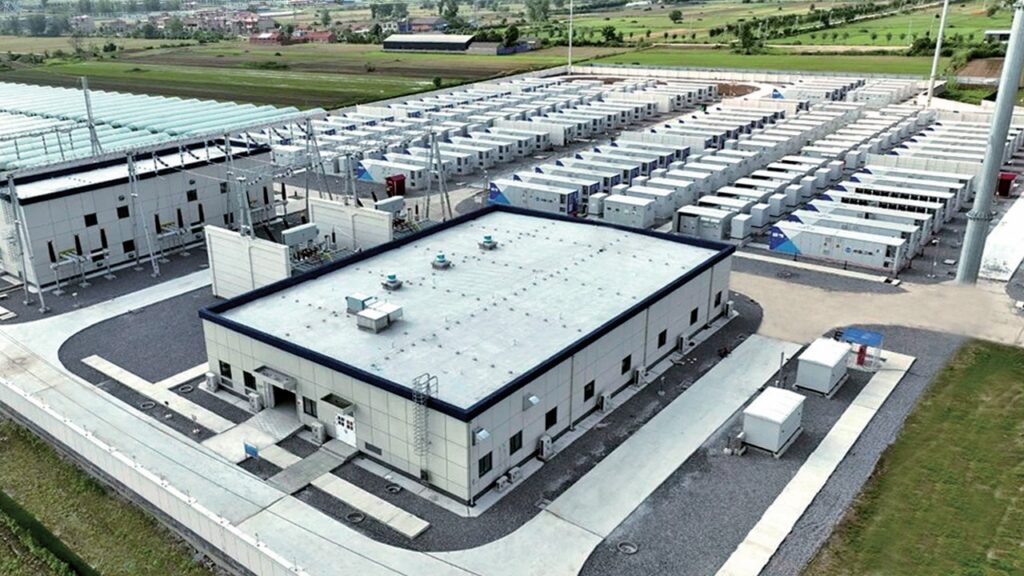
China has reached well over 70GW of installed BESS capacity, while DC block prices appear to be ‘stable’, a local metals price agency said.
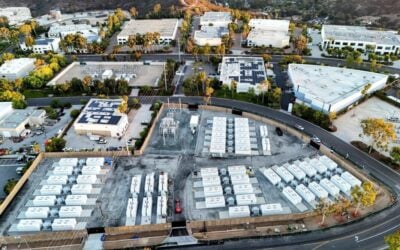
China is by far the largest energy storage market in the world, both in terms of its domestic deployments of battery energy storage systems (BESS), pumped hydro and other technologies, as well as manufacturing of battery cells and BESS.
Trade body China Energy Storage Alliance (CNESA) said last week (15 January) that ‘new energy storage’ capacity reached 78.3GW/184.2GWh by the end of 2024, a term it appears to use to describe technologies other than pumped hydro energy storage.
Including all energy storage, its total installed capacity is now 137GW, meaning that ‘new energy storage’, mostly BESS, now exceeds its pumped hydro capacity.
Try Premium for just $1
- Full premium access for the first month at only $1
- Converts to an annual rate after 30 days unless cancelled
- Cancel anytime during the trial period
Premium Benefits
- Expert industry analysis and interviews
- Digital access to PV Tech Power journal
- Exclusive event discounts
Or get the full Premium subscription right away
Or continue reading this article for free
That is thanks to 43.7GW/109.8GWh of ‘new energy storage’ that was installed in 2024, CNESA said.
Energy-Storage.news reported on several large-scale projects using technologies other than lithium-ion throughout the year, including sodium-ion, vanadium redox flow batteries (VRFB) and compressed air energy storage (CAES), but the vast majority of the figure will still be lithium-ion BESS.
Separate figures, from the National Energy Administration (NEA) cited in state-owned Xinhua News Agency, said that the total installed capacity of new energy storage projects reached 73.4GW by the end of 2024. With an average duration that indicates a total capacity of around 73.4GW/168GW.
Market intelligence provider Rho Motion meanwhile has a figure of around 92GW of BESS online in China.
Figures for the US are not out yet, but CNESA and NEA’s China figures are around double what most estimates have the US pegged to reach for BESS capacity by the end of 2024.
Domestic prices for DC blocks in China ‘stable’
Soaring growth and competition in the the domestic energy storage market in China have been one of the main catalysts for a sharp downward movement in prices in both the domestic and global market, alongside falling battery prices as manufacturers ramp up production.
A recent 16GWh BESS procurement tender run by State-owned EPC firm China Power Construction Group saw what were described as “mind-blowing” bids of US$60-82 per kWh, averaging US$66.3 per kWh.
A more recent, smaller but still substantial tender for the provision of 1.125GW/2.5GWh of BESS run by state-owned oil and gas firm PetroChina showed a price range with a similar low end.
Across 13 companies shortlisted, the bid prices ranged from CNY430-960 per kWh, or US$59-132 per kWh, according to Chinese metals market intelligence and price reporting agency (PRA) Shanghai Metals Market (SMM). The note said that the results showed that DC block prices ‘remained stable overall’.
PetroChina’s procurement was split into four sections, 0.25C, 0.5C, and 0.5C grid-forming BESS and 1C energy storage systems. A C-rate is another way to describe discharge duration, by showing how much of a BESS’ capacity is discharged each hour of full power output. So a 0.25C is a 4-hour system, a 1C is a 1-hour system.
CATL submitted the highest bids in the first three categories, while it, Sungrow, Hyperstrong, and Goldwind Zero Carbon all submitted bids over CNY900/kWh for the 1C category. Lower prices were seen for the 0.25-0.5C categories.