Chile has passed new regulations around capacity market payments to energy storage, coinciding with a major project announcement from CJR and Sungrow.
CJR and Sungrow to deploy 880MWh BESS
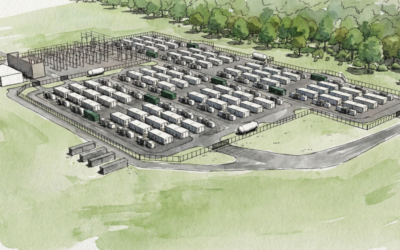
EPC firm CJR Renewables and inverter and battery energy storage system (BESS) manufacturer Sungrow will together deploy a 200MW/880MWh BESS project at a solar PV plant in Chile for owner Atlas Renewable Energy.
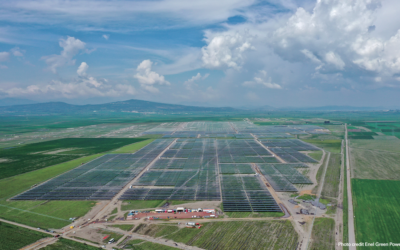
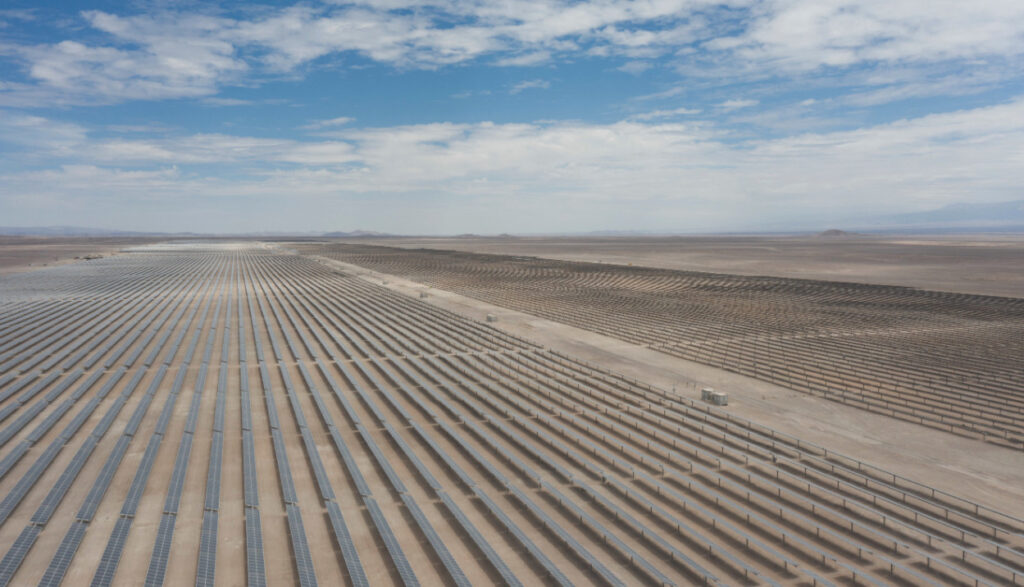
Atlas has enlisted CJR as the primary contractor for both the civil and electrical works for the project, which will be built at Atlas’ existing 244MWp Sol del Desierto solar PV plant in Antofagasta, northern Chile (pictured above).
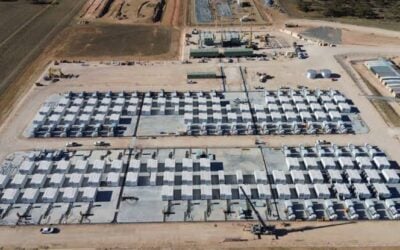
Some 320 battery energy storage system (BESS) units from Sungrow will be installed, to go on 320 newly constructed foundations, and 40 foundations which will house power conversion system (PCS) units. It brings the total BESS installations in Chile for CJR, an engineering, procurement and construction (EPC) firm, to 523MW, it said in its Linkedin announcement last week (30 May).
Try Premium for just $1
- Full premium access for the first month at only $1
- Converts to an annual rate after 30 days unless cancelled
- Cancel anytime during the trial period
Premium Benefits
- Expert industry analysis and interviews
- Digital access to PV Tech Power journal
- Exclusive event discounts
Or get the full Premium subscription right away
Or continue reading this article for free
Note that the BESS will be an independent project from Sol del Desierto with its own power purchase agreement (PPA), separate to solar PV plant’s. In March, Chilean energy and forestry company COPEC agreed with Atlas to buy the power from the BESS under a 15-year deal.
New capacity market regulation passed
The incorporation of standalone energy storage into the electricity market was finalised in late 2022, but changes to the capacity market to facilitate payments to standalone projects, as well as co-located ones, needed to be finalised.
Supreme Decree No. 70 of 2023 (DS 70) has now been passed and introduces significant changes in the recognition and compensation of energy storage projects, law and tax advisory firm Garrigues said.
The updated capacity market regulations now explicitly address energy storage and provide a method for determining the payment for renewables with energy storage, and for determining the power capacity of storage in the capacity market, the firm added.
Based a conversation with developer Flexen last year about the capacity market regulations, Energy-Storage.news believes the latter refers to the ‘de-rating factor’ for energy storage based on its duration, i.e. the amount of its capacity it can bid in, and be paid for, in the capacity market.
A table from Garrigues said the de-rating factors will be:
- less than 1-hour duration: 0%
- 1-hour duration: 36%
- 2-hour duration: 65%
- 3-hour duration: 85%
- 4-hour duration: 98%
- 5-hour+ duration: 100%
Energy-Storage.news has heard recently from local BESS developers about the de-rating factors in Poland and the UK – specifically, that they are too low and don’t reflect the value of storage. Chile’s appear to be significantly higher.
Standalone and co-located being deployed at scale
Both standalone and PV-connected BESS projects are being deployed at scale in Chile as it increases its renewable generation and phases out coal and legacy plants.
BESS are being added to existing solar PV plants to increase their profitability with substantial, prolonged periods of negative pricing being seen. Independent power producer (IPP) Innergex recently commissioned its second such large-scale project in Chile while utility and IPP Engie is building the third and fourth of its PV co-located BESS projects and will soon start building its first standalone one.
Standalone projects meanwhile will be able to capitalise on wide spreads in the wholesale energy market as well as the long-term capacity market payments.
Energy-Storage.news’ publisher Solar Media will host the 3rd annual Energy Storage Summit Latin America in Santiago, Chile, 15-16 October 2024. This year’s events bring together Latin America’s leading investors, policymakers, developers, utilities, network operators, EPCs and more all in one place to discuss the landscape of energy storage in the region. Visit the official site for more info.