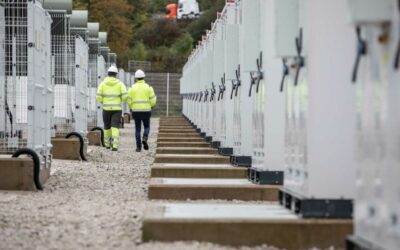
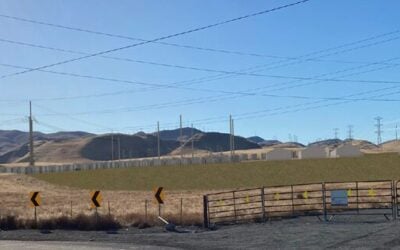
Aliso Canyon Natural Gas Storage Facility is limited in operation following the gas leak in October 2015. Flickr: Earthworks
Energy storage developers in California have an opportunity to prove the benefits of energy storage technologies versus fossil fuels, in what will be one of the fastest energy storage procurements in history, according to industry commentators and analysts.
The California Public Utilities Commission (CPUC) recently issued an emergency resolution directing utility Southern California Edison (SCE) to procure energy storage capacity to be deployed in just a few months rather than years. This comes in response to fears of an energy shortfall during peak times in winter and summer in the region because of the limited operations at the Aliso Canyon Natural Gas Facility after a major gas leak in 2015.
Matt Roberts, executive director of the US-based Energy Storage Association (ESA), told Energy-Storage.News that the competitive solicitation represents a great opportunity to demonstrate that no other technology is able to provide the same level of value to the energy system as storage, when it can be procured this quickly. Eligible storage systems must be operational by 31 December this year, just seven months from now.
While Roberts does not expect there to be issues with the performance of the storage systems in replacing the services of the presently defunct Aliso Canyon gas capacities, he claims the real test will be whether the procurement system can execute the process within this landmark timeline.
Try Premium for just $1
- Full premium access for the first month at only $1
- Converts to an annual rate after 30 days unless cancelled
- Cancel anytime during the trial period
Premium Benefits
- Expert industry analysis and interviews
- Digital access to PV Tech Power journal
- Exclusive event discounts
Or get the full Premium subscription right away
Or continue reading this article for free
He added: “We have already seen that storage outperforms peaker plants on basically every metric in terms of speed accuracy, lack of new emissions, no need to be idling, no new water pollution. It is a superior choice based on all those metrics, and in addition, what is about to be shown is that you can procure storage in four or five months.”
Roberts said this speed of procurement from concept to installation is “incredibly unique” in the energy industry, especially when compared to new peaker plants, which could take one and half to two years to process.
He added: “That is really what this process is going to demonstrate, that storage can fill in these roles.”
Ravi Manghani, director, energy storage for GTM Research, said that energy storage has been used before in similar conditions in the ancillary services market to provide backup or to peak shave, although perhaps not with “such high stakes”.
Echoing Roberts, Manghani said: “The real test will be on a much shorter scale, in the industry’s ability to meet the compressed project development cycle, which as per the timeline will only provide three months for actual construction, interconnection and commissioning, once CPUC formally approves the applications in September.”
The CPUC energy division director set the tone for a rapid-fire process from the beginning by taking just three weeks to implement the Resolution E-4791, that directs the emergency storage procurement.
Manghani also said: “This is definitely a win for distributed energy resources as assets that can fulfil capacity tightness challenges in a short and distributed (i.e. modular) fashion, unlike fossil fuel-based assets that have longer development cycles and economies that require a larger scale.”
Gabe Schwartz, director of marketing at California-based commercial storage firm Stem Inc, said: “[California] can’t just throw out more natural gas power plants and there is only so much they can do in new transmission and distribution construction, so [energy storage] really has accelerated. We are talking in Southern California about programmes over the next several years [where] it’s suddenly now: ‘What can we do this summer? How can we set up a programme 10 times the size of what we’ve been discussing in the past?’”
Similar case
San Diego suffered blackouts two years ago resulting in a storage tender. Flickr: Nan Palmero
Roberts said that the only comparable case was seen in the service area of California utility Imperial Irrigation District (IID) after blackouts in San Diego and throughout most of Southern California two years ago due to a load shift.
NERC, the electricity reliability council, handed down a fine to IID, saying it could have prevented the blackouts and also mandated that IID procure energy storage to create a more reliable system, said Roberts.
This was another example of storage being determined to be a crucial part of reliability in the energy system, however it was not an emergency procurement in the same way that this latest SCE procurement is, Roberts added.
Competitive tender
Matt Roberts, executive director of the Energy Storage Association (ESA) explained how competitve the bids are likely to be. LinkedIn: Matt Roberts
Roberts said that hundreds of companies bid into the original SCE procurement of 261MW announced in 2014, which was highlighted as a big milestone for the industry.
However, with the tighter turnaround on this new SCE procurement by the end of December, the companies that are positioned well to bid on it are “a smaller universe”, but it will still be very competitive, said Roberts.
He added that this is a unique situation, in which by December developers will need to have the capacity ready to build out the system in factories, as well as needing their suppliers to be ready.
Finally, Manghani said: “It is hard to imagine this to have occurred so expeditiously in any other market.”
“
“The real test will be on a much shorter scale, in the industry’s ability to meet the compressed project development cycle, which as per the timeline will only provide three months for actual construction, interconnection and commissioning, once CPUC formally approves the applications in September.” Ravi Manghani, GTM.