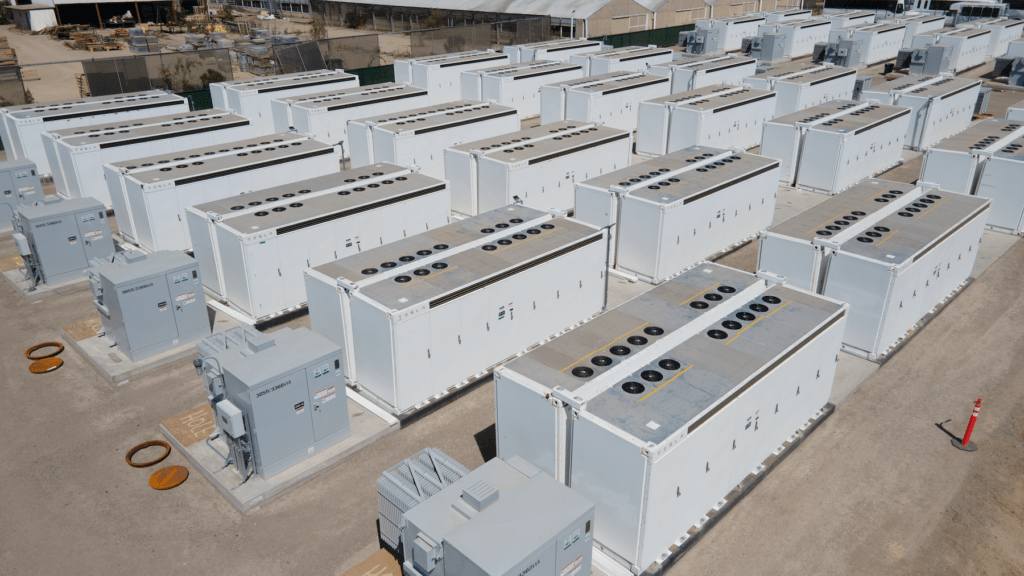
New legislation in California could open pathways for easier siting of energy storage projects by making changes to zoning laws.
State Governor Gavin Newsom signed the bill, AB 2625 into law a couple of days ago, which had enjoyed bipartisan political support. It removes the requirement to subdivide parcels of land which are being leased for electrical energy storage.
The bill had been sponsored by trade and advocacy group California Energy Storage Alliance (CESA) and authored by Assemblyman Phil Ting, a Democrat representing the 19th Assembly District encompassing western San Francisco and parts of San Mateo County.
CESA warmly welcomed the bill’s signing, saying that it would ease development barriers to energy storage deployments in California, putting electricity storage technology projects on the same footing as solar PV and wind.
Try Premium for just $1
- Full premium access for the first month at only $1
- Converts to an annual rate after 30 days unless cancelled
- Cancel anytime during the trial period
Premium Benefits
- Expert industry analysis and interviews
- Digital access to PV Tech Power journal
- Exclusive event discounts
Or get the full Premium subscription right away
Or continue reading this article for free
Those renewable energy technologies are already exempted from the subdivision requirement, which CESA executive director Alex Morris said can be a complex and lengthy process which currently means developers and landowners have to traverse various extra steps crosscutting zoning, environmental, labour and other considerations.
In other words, the process of formally subdividing a parcel of land to comply with California’s Subdivision Map Act has thus far added extra time, months if not years according to CESA, to the development process. That’s because to gain permitting approval, each subdivision must be voted on and approved by local authorities, which in California means Boards of Supervisors at county level or City Councils.
With AB 2625 having passed, portions of parcels of land can be leased without subdivision being formally required, which CESA argued means better project economics and quicker lead times.
“I am encouraged by the momentum we have built for this overdue reform, and I look forward to seeing an even more rapid deployment of energy storage to further California’s clean energy goals, strengthen our grid, and reduce the cost of electricity across the state,” Assemblyman Ting said,
Ting noted that the bipartisan support the bill enjoyed was “a testament to the benefits that clean energy delivers to all Californians,” including cleaner air, economic growth and job creation, enhanced energy security and lower energy bills.
California is already the US’ leading state for battery storage and one of the leading regions in the world. With nearly 2GW of energy storage deployed across the entire state in 2021, grid operator CAISO which oversees about 80% of the state’s network hopes to have 4GW of cumulative installations in its service area by the end of this summer.
However, COVID19 brought into stark relief an already existing obstacle in terms of permitting – with site visits and in-person meetings not possible during stay-at-home periods of the pandemic, as with other parts of the US, deployments inevitably slowed down.
CESA has projected a need for 10,000MW of new energy storage over the next 10 years in California to enable progress towards its goal of 100% renewable energy-sourced electricity by 2045, so even with that leading position, California still needs to move faster, the trade group argued.
Last year, in declaring a state of emergency over California’s shortfall of electricity resources, Governor Newsom moved to enable expedited permitting of storage, as well as new renewable energy resources.
“To meet its ambitious decarbonisation goal, California will need to develop and deploy hundreds of new storage installations,” CESA’s Alex Morris said.
“While much work remains to be done, I believe this legislation is a key milestone in our effort and greatly improves the efficient permitting of a resource California increasingly cannot live without.”
It’s not just energy storage where permitting challenges are being tackled by the clean energy industry in California. Our sister site PV Tech recently reported the progress of new legislation to introduce automated permitting applications for rooftop solar PV, which likewise has been hailed as a game changing solution for the state.