Renewable energy group BayWa r.e. has been selected to implement a project in France combining a solar PV plant, a battery energy storage system (BESS) and – if enough offtakers can be found – green hydrogen.
The Community of Communes of Haute-Saintonge, near Bordeaux, has chosen the international firm to deliver the co-located project.
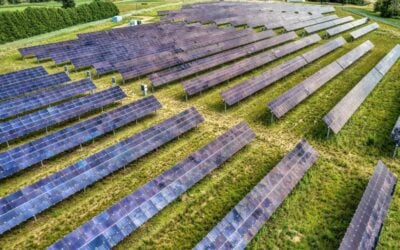
It will combine a 40MWp PV park and an attached BESS. A press release did not reveal the size but BayWa r.e’s director of innovation in France Mathieu Bordeleau told Energy-Storage.news that, although its specifications had not been finalised, it was currently planning a 2-4MW, 4-8MWh two-hour system.
He added that it was “highly likely” that the chosen battery chemistry would be lithium iron phosphate (LFP), considering that is the technology of choice for its other BESS projects, and that it would have a variety of use cases.
Try Premium for just $1
- Full premium access for the first month at only $1
- Converts to an annual rate after 30 days unless cancelled
- Cancel anytime during the trial period
Premium Benefits
- Expert industry analysis and interviews
- Digital access to PV Tech Power journal
- Exclusive event discounts
Or get the full Premium subscription right away
Or continue reading this article for free
“The use cases will be specified at a later stage, depending on economic opportunities and potential changes in the regulatory and incentive frameworks. In the current situation, the energy storage system would provide ancillary services (frequency reserve) and would participate to the French capacity market,” Bordeleau explained.
Adding: “We will also investigate the potential of energy time shift, as well as peak shaving to optimise connection to the public grid.”
A press release said that green hydrogen production would also be added to the project if local offtake and utilisation opportunities are confirmed. If it is, that portion of the project will be delivered by Lhyfe, a company based in Nantes, northwest France.
The renewable hydrogen would be sold to industrial players, local authorities, associations or school and urban transport, within a 100-150 km radius. This potential for adding the technology to the project will be confirmed through a one-year study on local use.
BayWa r.e. has offered the local authority the chance invest in the project during the development phase, and to become a majority shareholder during the construction and operation phase.
This project will be a blueprint for regions that want to actively take part in the energy transition, especially as an investment opportunity for local authorities”, commented Céline Tran, Managing Director of BayWa r.e. France.
The company has worked on co-located projects in several other countries, including a 200MW/400MWh system in Texas it recently sold to Eni New Energy, one in California for which it signed a PPA with an offtaker recently, and two in the UK it acquired from from Harmony Energy and JBM in April 2022 and July 2021, respectively.