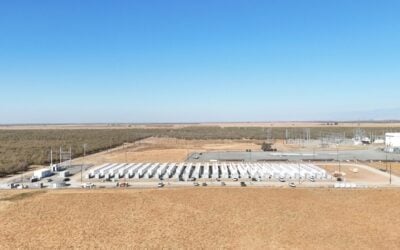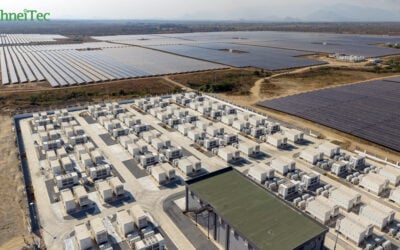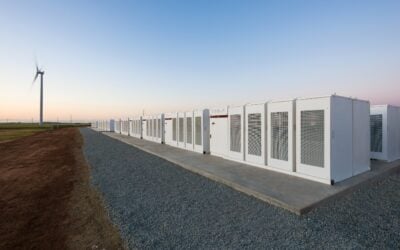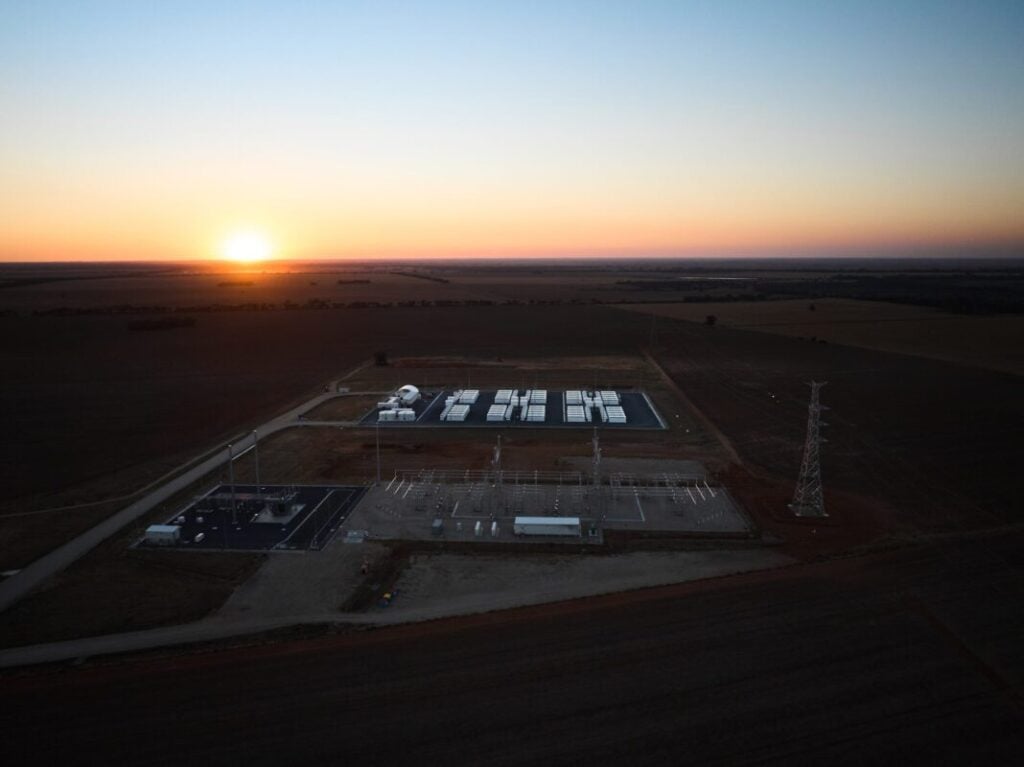
Battery energy storage systems (BESS) equipped with grid-forming inverters have emerged as essential components for maintaining system stability in Australia’s National Electricity Market (NEM) as renewable energy penetration increases.
This is according to AEMO’s 2025 Transition Plan for System Security, which outlines that 10 grid-forming BESS sites are currently in operation in the NEM with a combined output of 1,070MW, while the development pipeline includes 94 projects comprising 78 standalone battery systems and 16 hybrid installations.
Grid-forming technology provides essential system services, including synthetic inertia, system strength, and frequency control capabilities that traditional synchronous generators have historically supplied.
Grid-forming inverters have previously been identified as a key trend in Australia and are an area of the energy storage industry where the country is currently leading.
Try Premium for just $1
- Full premium access for the first month at only $1
- Converts to an annual rate after 30 days unless cancelled
- Cancel anytime during the trial period
Premium Benefits
- Expert industry analysis and interviews
- Digital access to PV Tech Power journal
- Exclusive event discounts
Or get the full Premium subscription right away
Or continue reading this article for free
The topic is set to be explored in detail across both days of the Energy Storage Summit Australia 2026, with several dedicated sessions, including a case study titled ‘Construction of a Grid-Forming Fluence BESS’.
AEMO’s analysis highlights the importance of grid-forming inverters in stabilising the grid, though current technology provides lower fault current contributions compared to synchronous machines.
This limitation underscores the need for ongoing technological advancements to replace conventional generation capabilities fully.
The transition to high renewable energy penetration poses challenges for maintaining system strength and inertia as coal-fired power plants retire. AEMO has identified eight key transition points related to coal plant retirements that require targeted investments in system strength solutions.
The planned exit of 1,680MW coal-fired Gladstone Power Station in 2029 exemplifies these challenges, necessitating the deployment of synchronous condensers and other system strength measures to ensure grid stability in Central Queensland.
Grid-forming BESS represents a key component of AEMO’s strategy to address these requirements through advanced inverter technology.
Type 2 Transitional Services trials evaluate grid-forming inverter performance under diverse system conditions, including assessments of protection-quality fault current, system restart capabilities under high distributed photovoltaic conditions, and operation without synchronous generation.
Trial findings will inform future standards and procurement strategies, ensuring battery systems can contribute to system security.
Embedded energy storage capacity is expected to expand from 2.2GW in 2026 to 9.8GW by 2036, driven by the adoption of residential and commercial battery systems. These DERs offer potential for grid support during periods of high demand or low renewable energy generation; however, their integration requires robust technical standards and effective coordination mechanisms.
AEMO collaborates with distribution network service providers to develop functional requirements for operating a high DER power system, with key focus areas including improving data quality in the DER Register, enhancing compliance with inverter standards, and implementing emergency backstop mechanisms for distributed PV curtailment.
The increasing penetration of DERs necessitates enhanced visibility and predictability to ensure both long-term planning and real-time operational stability.
Advanced forecasting tools and flexible grid management strategies become essential as solar generation variability impacts system operations. The integration of DERs into the grid requires coordination mechanisms that can effectively harness their potential while maintaining system security.
You can read the full breakdown of AEMO’s 2025 Transition Plan for System Security on PV Tech.
The Energy Storage Summit Australia 2026 will be returning to Sydney on 17-18 March 2026. To secure your tickets and learn more about the event, please visit the official website.