Three battery energy storage projects, totalling 5.5GWh, have been added to Australia’s Environment Protection and Biodiversity Conservation (EPBC) Act, spanning Victoria, New South Wales, and South Australia.
The trio of referrals, comprising a 2GWh project in Victoria, AMPYR Australia’s 1.5GWh Swallow Tail BESS in New South Wales, and Revera’s 2GWh Robertstown BESS in South Australia, represent a combined 1,375MW of power output.
Victoria’s 2GWh project targets Moorabool-Mortlake transmission corridor
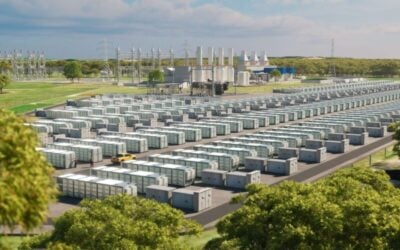
The largest project submitted to the EPBC Act, in terms of power output, is a 500MW/2,000MWh BESS proposed for connection to the existing 500kV Moorabool to Mortlake transmission line in Victoria.
The Murchs Corner battery energy storage system (BESS), being pursued by developer Alternate Path spanning a 169-hectare site across two freehold parcels near Darlington-Terang Road, would establish a ‘cut-in’ terminal station to facilitate grid connection.
Try Premium for just $1
- Full premium access for the first month at only $1
- Converts to an annual rate after 30 days unless cancelled
- Cancel anytime during the trial period
Premium Benefits
- Expert industry analysis and interviews
- Digital access to PV Tech Power journal
- Exclusive event discounts
Or get the full Premium subscription right away
Or continue reading this article for free
Despite the substantial project area, actual development is expected to disturb only approximately 21 hectares, with the broader 65-hectare disturbance footprint designed to allow siting flexibility during detailed design phases.
The BESS itself would occupy around 13 hectares, while the cut-in terminal station would require four hectares north of the existing transmission easement.
The proponent has designed the project to avoid direct impacts to matters of national environmental significance, situating infrastructure on existing cleared agricultural land dominated by introduced species.
Two flora species and three fauna species listed under the EPBC Act are considered likely to occur in the project area, along with one potentially present threatened ecological community, though the referral states no significant impact is expected due to the highly disturbed nature of the site and avoidance of nearby creeks except where existing infrastructure already crosses watercourses.
The project is expected to operate for approximately 20 to 25 years, with decommissioning plans focused on removing above-ground components for repurposing where possible and returning the land to its original agricultural condition.
During operations, only six maintenance jobs are anticipated to run intermittently.
AMPYR Australia seeks approval for 1.5GWh grid-forming BESS in NSW
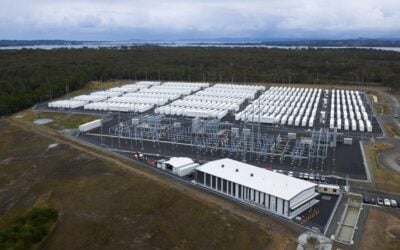
AMPYR Australia, through its project vehicle STBESS Projectco, has submitted an EPBC Act referral for the Swallow Tail BESS, a 375MW/1,500MWh facility proposed for Bannaby in New South Wales’ Upper Lachlan Shire, approximately 70km north of Goulburn, a city in the Southern Tablelands region, which is also recognised as Australia’s first inland city.
The project would connect via new 330kV overhead or underground transmission lines to the existing Transgrid Bannaby Substation, located approximately 1.5km south of the 144-hectare project area.
AMPYR noted it had selected the location specifically for its proximity to the substation, which limits required transmission infrastructure, and its strategic position as a key network node supporting Sydney’s high-energy demand centre.
Notably, the Swallow Tail BESS is designed as a grid-forming battery storage system, which AMPYR states would strengthen the grid through voltage and reactive power management, contributing to overall system resilience.
Grid-forming technologies were a major discussion point at the Energy Storage Summit Australia 2026, with Fluence hosting a panel discussion that revealed exclusive insights into the development of the 1,000MWh Liddell BESS, which recently entered commissioning.
This technical specification positions the project among a growing cohort of advanced battery systems capable of providing essential system services beyond simple energy arbitrage.
Grid-forming capabilities have become increasingly valued by network operators as coal-fired generation exits the system, with projects like Quinbrook’s 780MW Supernode North BESS, which secured EPBC Act approval earlier, similarly emphasizing system strength contributions.
The approximately 56-hectare development footprint has undergone multiple design iterations to prioritise retaining areas of ecological value, with the BESS area and access routes refined to minimise direct impacts within 40 metres of St Paul’s Creek and associated riparian habitat.
The proponent is also seeking State Significant Development (SSD) consent under the NSW Environmental Planning and Assessment Act, with an Environmental Impact Statement currently in preparation.
AMPYR’s EPBC Act application stated that the project would utilise the same transport route as the Taralga Wind Farm development, requiring minimal upgrade to existing roads, with materials transported from either the Port of Newcastle or Port Botany during construction.
Revera’s staged Robertstown BESS builds on existing South Australian approval
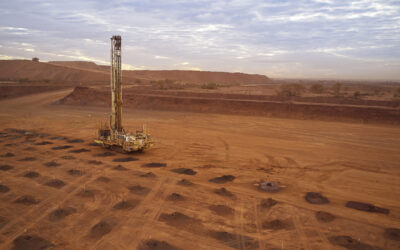
Energy infrastructure platform Revera Energy’s Robertstown BESS is a 500MW/2,000MWh 4-hour storage system in South Australia, to be constructed in two 250MW/1,000MWh stages, each individually financed and contracted.
The project benefits from an existing Development Approval granted by the South Australian government in June 2018, which was varied in March 2023 to allow for increased BESS capacity and a revised connection route to ElectraNet’s Robertstown Substation.
At just 16.39 hectares, the Robertstown project has the smallest footprint of the three referrals, with the entire disturbance area confined to this compact site. The facility will connect to the Robertstown Substation via dedicated underground transmission lines, allowing the BESS to both export and import electricity from the national grid.
The project was originally approved alongside a 500MW solar PV power plant under the same development consent, though Revera has determined that solar PV plants are “not currently economically viable” in South Australia and is proceeding solely with the BESS component.
Despite this, Revera stated that it will continue to monitor key valuation parameters with a view to reassessing the solar PV plant stage if material improvements arise.
Vegetation clearance for the Robertstown BESS is limited to four scattered trees and 0.767 hectares of mallee woodland and degraded chenopod shrubland, representing minimal environmental disturbance.
The project has been designed following field surveys and design refinement to minimise impacts to Mallee and Chenopod shrubland habitat adjacent to existing roadside vegetation and infrastructure.
Revera has executed a voluntary Cultural Heritage Agreement with the Ngadjuri Nation Aboriginal Corporation following heritage surveys conducted in 2022.
The agreement addresses cultural heritage issues across the wider project area and has resulted in an updated facility design to ensure the exclusion of areas with heritage values, along with a Cultural Heritage Management Plan to guide ongoing engagement.