Queensland’s Stanwell Corporation seeks to add 5GWh of energy storage to its resource mix through two new deals.
The power company, owned by the Australian state’s government, has acquired a 4GWh pumped hydro energy storage (PHES) development and is negotiating a long-term deal for just over 1GWh of capacity from a battery storage project.
Supernode at ‘strategic location’ on Queensland grid
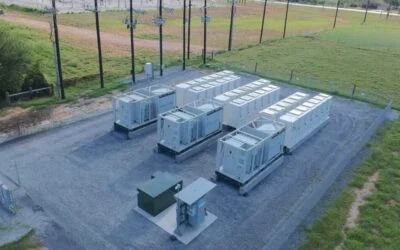
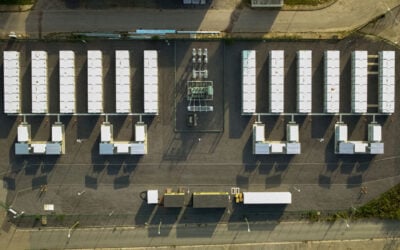
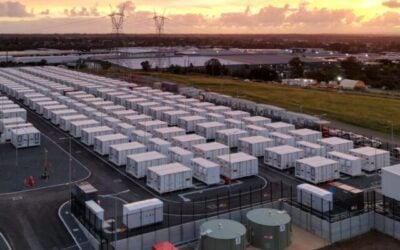
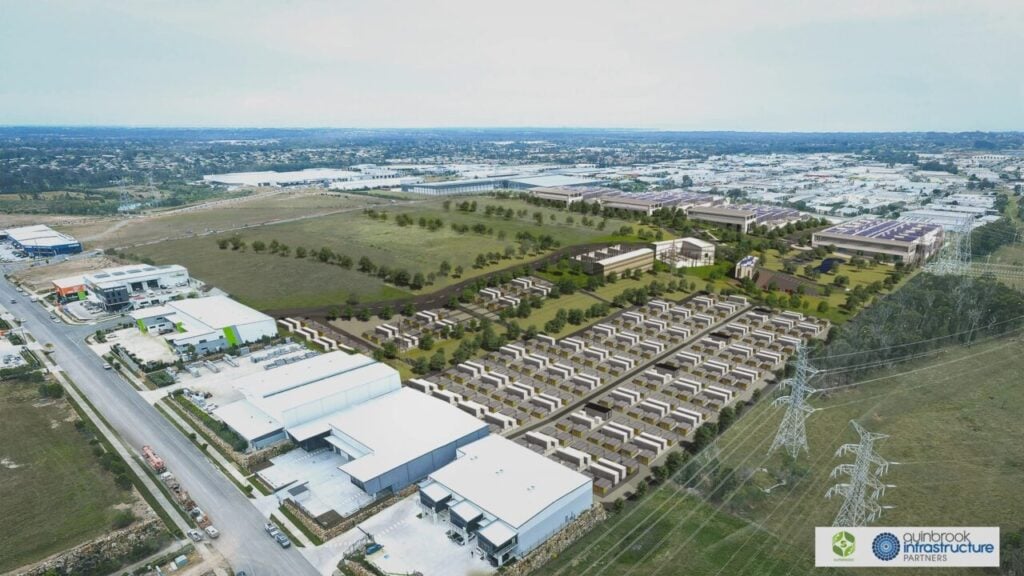
Stanwell said on Friday (4 October) that it wants to sign a 15-year deal to purchase 1,010MWh of stored energy from investor Quinbrook Infrastructure Partners’ ‘Supernode’ battery energy storage system (BESS) project in the Queensland suburb of Brendale, in Moreton Bay.
The contract would cover all the capacity of Stage 3 of the Supernode project. Quinbrook is developing the project as a combination of low-carbon data centre campuses and large-scale BESS technology.
Try Premium for just $1
- Full premium access for the first month at only $1
- Converts to an annual rate after 30 days unless cancelled
- Cancel anytime during the trial period
Premium Benefits
- Expert industry analysis and interviews
- Digital access to PV Tech Power journal
- Exclusive event discounts
Or get the full Premium subscription right away
Or continue reading this article for free
The investor closed financing on the first stage of the project in April, which comprises 250MW/500MWh of battery storage, and another state-owned energy company, Origin Energy, contracted as its exclusive off-taker.
That closing led the way for construction to begin. In July Quinbrook and Origin signed a further agreement to encompass full capacity from the 250MW/1,000MWh (4-hour duration) Stage 2, for which the BESS will be supplied and integrated by GE Vernova.
As that latter deal was signed, Quinbrook co-founder and managing partner David Scaysbrook noted the Supernode’s strategic location within the Queensland power network.
“The South Pine switchyard [where the project will connect] is the central node of the electricity network in Queensland, with an estimated 80% of Queensland’s traded electricity flowing through here every day,” Scaysbrook said in July.
The Supernode project’s total expected investment cost has been previously given at around AU$2.5 billion (US$1.63 billion). It is being planned to comprise 750MW through the three stages, and Quinbrook has said its output could eventually be expanded to 2,000MW.
Incidentally, Stages 1 and 2 off-taker Origin Energy has just pulled back from a planned large-scale hydrogen project in Queensland, with the company citing that market forces are driving it towards a renewables and energy storage-led focus.
Stanwell JV for ‘Big-T’ pumped hydro project
Stanwell then announced this morning (7 October) that it intends to acquire a 400MW, 10-hour duration (4,000MWh) pumped hydro energy storage (PHES) project from developer BE Power.
The corporation has partnered with an undisclosed ‘established global pumped hydro operator’ to form a joint venture (JV) forCressbrook Pumped Hydro Energy Storage Project, known during its development by BE Power as ‘the Big T’.
The early-stage development project would be sited at Queensland’s Lake Cressbrook, and the Stanwell JV now takes over its progress toward a Final Investment Decision (FID). If it goes ahead as planned, Stanwell will dispatch energy stored at the 4GWh long-duration energy storage (LDES) asset.
A new upper reservoir will be constructed on land owned by the JV partners, with Lake Cressbrook used as the lower reservoir. Up to 6.4GL of water will be released from the upper reservoir during times of peak demand to drive two 200MW turbines for up to 10 hours.
The JV will seek additional investment sources, with a maintenance arm of Stanwell due to get preference to service and maintain the asset over its projected 50-year lifetime. It is expected to go into operation in mid-2033, Stanwell said. Stanwell Asset Maintenance Company will also go into negotiations to provide services for the Supernode Stage 3 BESS.
BESS to add 2.8GWh of firm capacity for Stanwell by 2027
As one of Australia’s top three energy generators and Queensland’s main provider of electricity to the state and resources into the interconnected National Electricity Market (NEM), Stanwell must align with state renewable energy targets, transitioning from its traditional base of coal assets to a lower-carbon fleet.
Those targets include hitting 70% renewable energy by 2032, with the Queensland government providing support for both downstream deployment of renewables and storage and upstream clean energy value chain development through the state’s AU$62 billion Queensland Energy & Jobs Plan.
Stanwell said the 1,010MWh Supernode Stage 3 deal would bring its dispatchable firm capacity up to 2.8GWh by 2027, joining two large-scale BESS facilities the energy company is building itself.
These include a 300MW/1,200MWh project at Stanwell Power Station, part of the company’s coal-fired generation fleet, on which construction began recently, and Stanwell’s 600MWh Tarong BESS, which reportedly past halfway in its construction phase.
Meanwhile the Big-T PHES project at Lake Cressbrook will meet approximately a quarter of Stanwell’s projected energy storage requirement by the time it comes online. By 2035, it is seeking to have 5GWh of firming resources.