Australia-based battery energy storage system (BESS) developer, owner and operator Stor-Energy has received a strategic investment from HMC Capital, an ASX-listed asset manager.
The investment, presented by HMC’s Energy Transition platform, which is seeking to raise up to AU$2 billion (US$1.35 billion), aims to assemble a 15GW development portfolio across the energy value chain, including wind, solar, battery energy storage, biofuels, and emerging technologies. It will also see HMC secure a majority interest in the business.
Following an initial investment, additional funding, amounting to AU$50 million, will be provided over a three-year period, subject to achieving early-stage development milestones.
Stor-Energy’s senior management team will continue to lead the business, retaining a minority interest in the business. The transaction is expected to be completed in early July 2024.
Try Premium for just $1
- Full premium access for the first month at only $1
- Converts to an annual rate after 30 days unless cancelled
- Cancel anytime during the trial period
Premium Benefits
- Expert industry analysis and interviews
- Digital access to PV Tech Power journal
- Exclusive event discounts
Or get the full Premium subscription right away
Or continue reading this article for free
HMC’s head of energy transition, Angela Karl, highlighted the business’s potential for scaling and the further opportunities available in the Australian market.
“We are impressed by the calibre of Stor-Energy’s management team and believe the business has the potential to be scaled significantly. HMC has already identified other complementary bolt-on opportunities, which are currently under review,” Karl said.
Stor-Energy’s 1.4GW storage pipeline
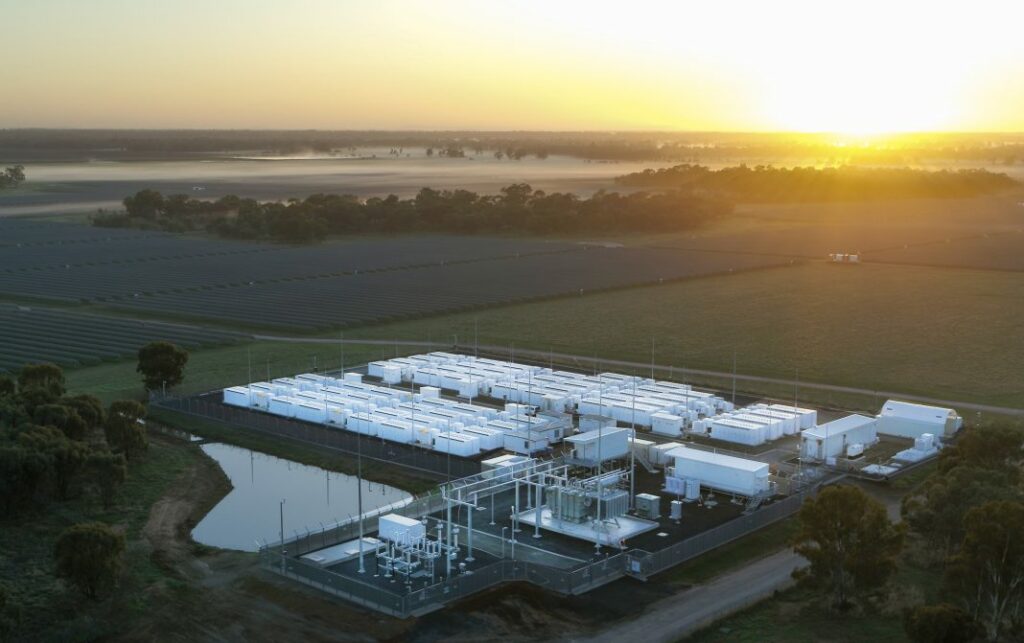
The funding will directly support Stor-Energy as it develops its 1.4GW pipeline of BESS projects. This is expected to cost around AU$2 billion and deliver “attractive risk-adjusted returns.”
Stor-Energy’s development portfolio comprises six utility-scale BESS opportunities located near existing grid infrastructure across four mainland National Electricity Market (NEM) states.
FRV Australia switches on its first solar-plus-storage project
In other Australian BESS news, developer and IPP Fotowatio Renewable Ventures (FRV) Australia has put its first solar-plus-storage project in the country online, as we reported yesterday.
The facility in Dalby, Queensland, comprises a 2.45MWdc solar PV plant and a co-located 2.54MW/5MWh BESS. The project will sit on around 30 hectares of land.
Combining the two energy assets helps the site stabilise the national grid. Excess energy generated by the solar PV plant is captured and stored in the BESS for when demand spikes.