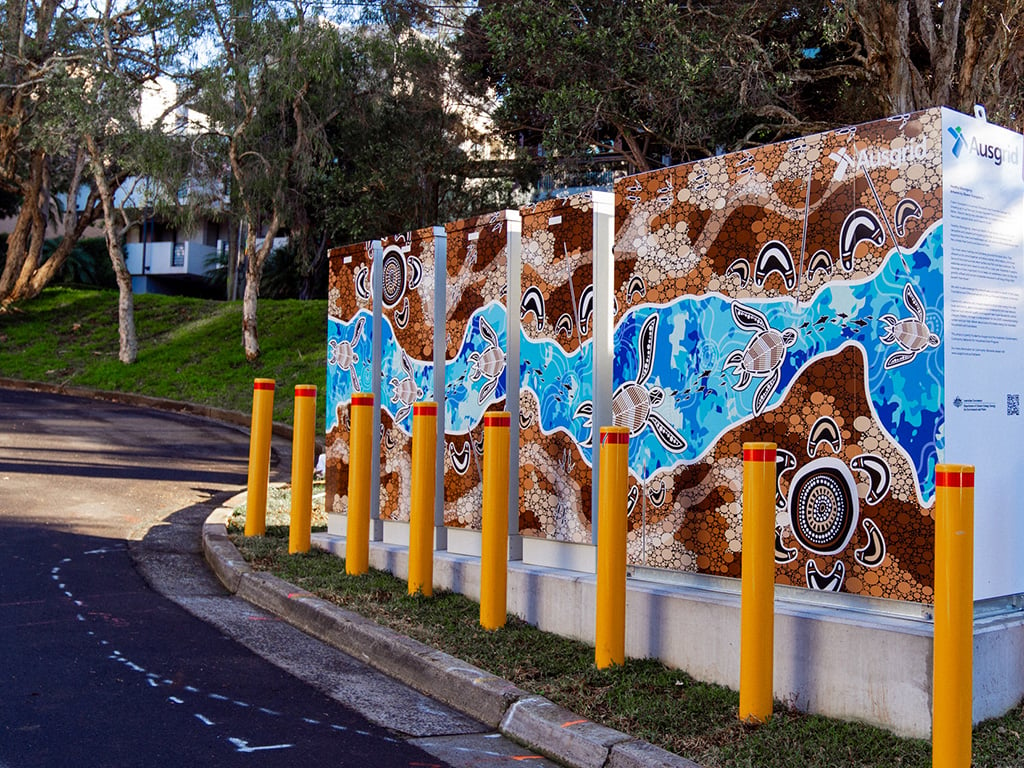
A new 200kW/284kWh community battery energy storage system (BESS) has been switched on in Cammeray, a suburb of Sydney, the capital of New South Wales, Australia.
The community battery is owned by Australian network company Ausgrid and becomes the latest in its portfolio in Sydney. The organisation launched its ninth community battery in Bondi, an eastern suburb of Sydney, in August last year.
Each community BESS has a designated catchment area and is set by Ausgrid based on network connectivity and battery benefit.
According to the government, the community battery will serve around 350 local citizens and provide approximately AU$200 (US$125) in savings a year. Households eligible for the community battery could also benefit from Ausgrid’s new energy storage-as-a-service (ESaaS) offering, which is being delivered alongside partners Origin Energy and EnergyAustralia.
Try Premium for just $1
- Full premium access for the first month at only $1
- Converts to an annual rate after 30 days unless cancelled
- Cancel anytime during the trial period
Premium Benefits
- Expert industry analysis and interviews
- Digital access to PV Tech Power journal
- Exclusive event discounts
Or get the full Premium subscription right away
Or continue reading this article for free
The ESaaS offering aims to capitalise on the growing interest surrounding community BESS assets by offering eligible customers an energy retail plan to access the energy stored within. The offering also grants additional benefits for Australians, such as improving grid reliability and supply security, and could also help facilitate the greater integration of renewable energy.
Chris Bowen, Australia’s minister for climate change and energy, hailed the opening of the new community battery and emphasised the technology’s importance for Australia’s energy transition.
“Our Reliable Renewables Plan is bringing cleaner, cheaper and reliable renewable energy to communities across the country, including right here in North Sydney. The rain doesn’t always fall, but we always have water on tap because we store it for when we need it – batteries like the one in [Cammeray] will do the same thing with reliable and affordable renewable energy,” Bowen said.
The importance of community batteries
The coupling of solar PV technology with these community batteries could support residential decarbonisation and create an additional incentive to introduce renewable energy generation technology to homes, even if the building does not have access to a home BESS asset. This is where the community BESS’s strengths come to the fore.
Australia has some of the highest residential solar penetration rates worldwide, with over four million rooftop installations. The country also leads the world in per capita solar production, with research from think tank Ember indicating that 2023’s average was around 1,810kWh.
Despite various incentive schemes, home batteries have not matched this substantial solar PV uptake. However, larger community batteries have grown in popularity, combining multiple residential areas to pool household renewable energy generation through rooftop solar PV.
This has captured the attention of industry heavyweights the Australian Renewable Energy Agency (ARENA), which last year allocated AU$143 million in financial backing to build 370 community assets across Australia.
Under the organisation’s Community Battery Funding Round 1 initiative, Queensland and New South Wales will receive the most community batteries, with 69 and 95, respectively, followed by Victoria with 37 batteries, Western Australia with 28, South Australia with 24, the Northern Territory with 16, and Tasmania with six.
ARENA said at the time that the batteries would benefit various energy consumers, such as households, hospitals, schools, and other facilities.
The state of Victoria also has a community battery scheme dubbed the ‘100 Neighbourhood Batteries Program’, which aims to provide communities with the benefits collective solar PV can grant.
Community batteries could earn up to AU$250,000 per year
Stace Tzamtzidis, solar, storage and EV regional director at energy management solutions provider GridBeyond Australia, said that a community BESS in the country could earn up to AU$250,000 year in an article for Energy-Storage.news.
A community battery generates income by providing grid services such as frequency regulation, demand response, and energy arbitrage. It also supports energy efficiency, reduces costs, and enhances grid stability by balancing supply and demand.
According to Tzamtzidis, a 1MW community-owned battery enrolled in the Frequency Control Ancillary Services (FCAS) programme could generate AU$250,000/year in revenues for its community owners.
FCAS refers to the services used to maintain the stability of the electricity grid by controlling and balancing frequency fluctuations, ensuring supply and demand are matched in real-time.
Tzamtzidis adds that community-scale storage could provide significant net value by stacking multiple value streams while also achieving economies of scale. However, this depends on accurately locating community-scale storage projects in high-value locations on the grid and monetising the value they bring.
Costs hinder the effectiveness of community batteries
In contrast to GridBeyond Australia’s perspective on community batteries, Matthew Charles-Jones, president of Totally Renewable Yackandandah, a volunteer-run renewable energy group based in Victoria, outlined that battery costs are still high at All-Energy Australia 2024.
“The idea often prefixes the intention. We want to make power cheaper. What I would have to say is, very typically, batteries are a difficult way to make power cheaper,” Charles-Jones said.
“We don’t see batteries as a great way to save money. The technology is rapidly becoming more affordable, but the task is to understand how to use batteries well so that when they’re affordable and increase in safety, we’re good to go.”
However, Clark deems the benefits that such a system could provide to a community invaluable, with the community battery able to be used to educate populations.
“The effect of a battery is not just to deliver energy; it’s looking at it as a broader tool, helping a community to understand what this asset is to them so that we move beyond this being an electrical box that sits in the corner to truly becoming a community asset that the community understands,” Clark said.