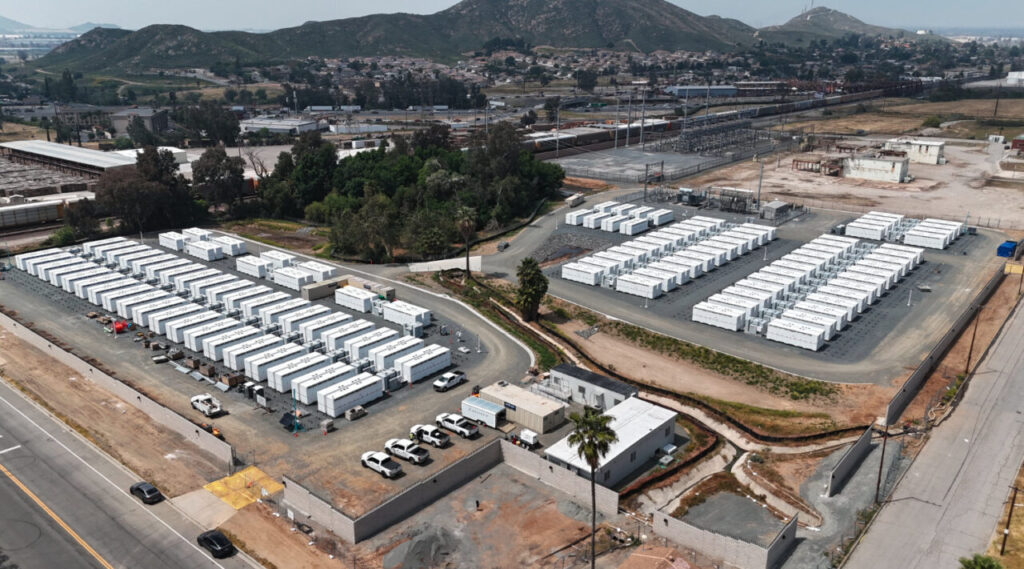
IPP Arevon Energy has started operations on its 200MW/800MWh Condor BESS project in San Bernadino County, California.
The company has commissioned and put into operation the 4-hour duration project in Grand Terrace, San Bernadino County. It utilises Tesla Megapacks and its energy has been secured by utility Southern California Edison (SCE) under a long-term Resource Adequacy agreement.
Arevon secured financing to complete the project earlier this year, with a US$350 million of preferred equity and debt financing with Blackstone Credit & Insurance, as reported by Energy-Storage.news.
California is the leading state in the US for BESS with around 9GW online by July 2024 according to transmission system operator (TSO) CAISO with high renewable penetration and ambitious decarbonisation targets.
Try Premium for just $1
- Full premium access for the first month at only $1
- Converts to an annual rate after 30 days unless cancelled
- Cancel anytime during the trial period
Premium Benefits
- Expert industry analysis and interviews
- Digital access to PV Tech Power journal
- Exclusive event discounts
Or get the full Premium subscription right away
Or continue reading this article for free
Arevon, a developer and independent power producer (IPP), is among the most active in the US solar and storage markets. Recently, it secured a deal for the offtake of its 1GWh Cormorant BESS in California with community choice aggregator (CCA) MCE shortly before securing financing for a solar-plus-storage project with a 600MWh BESS.
“The Condor Energy Storage Project signifies our ongoing commitment to energy storage technologies and to advancing clean, renewable energy across the nation,” said Kevin Smith, Arevon CEO.
“As California looks to achieve its sustainability goals and brings more renewable energy online, battery storage is an essential component to ensure grid reliability and facilitate further renewable energy adoption. Our projects here provide viable economic revenue, cleaner air for the community, and reliable energy access throughout the state.”
This article was amended after publication to correct the location of the project.