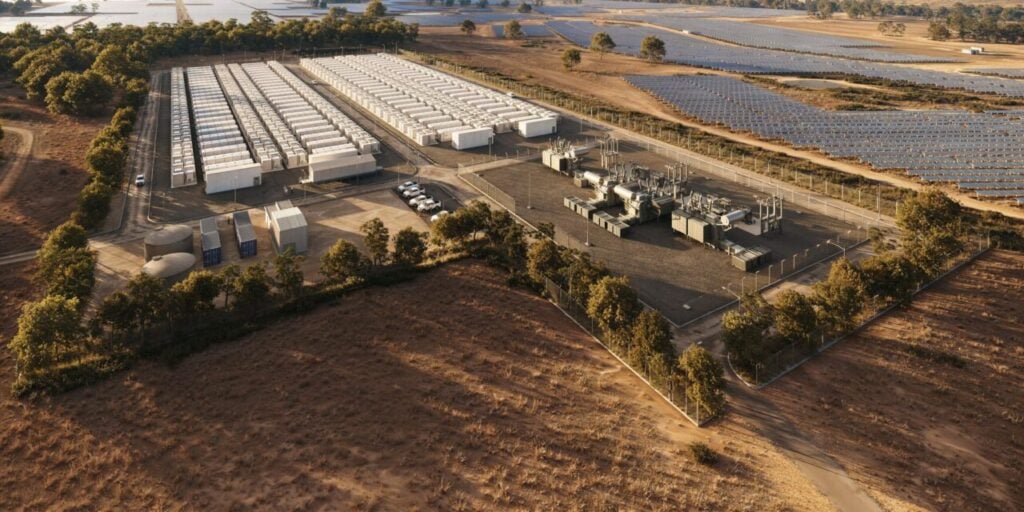
Developer Akaysha Energy has submitted a 1.6GWh battery energy storage system (BESS) project to Australia’s Environment Protection and Biodiversity Conservation (EPBC) Act.
The Glenrowan BESS project, located in Victoria, is a 400MW/1,600MWh facility designed to store energy for the National Electricity Market (NEM) while providing essential grid services to support network stability.
The submission coincides with the project’s inclusion in Victoria’s Development Facilitation Program (DFP), which aims to accelerate 700MW of battery storage development across the state.
The facility will be constructed on a 62.11-hectare site encompassing three freehold parcels near Winton, Victoria, with the battery infrastructure concentrated within an 8.17-hectare disturbance footprint.
Try Premium for just $1
- Full premium access for the first month at only $1
- Converts to an annual rate after 30 days unless cancelled
- Cancel anytime during the trial period
Premium Benefits
- Expert industry analysis and interviews
- Digital access to PV Tech Power journal
- Exclusive event discounts
Or get the full Premium subscription right away
Or continue reading this article for free
The project area includes agricultural land and parcels containing the existing Glenrowan Terminal Station, which will serve as the connection point for the BESS.
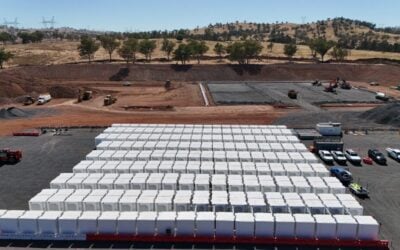
According to the EPBC Act application, Akaysha Energy has designed the project to minimise environmental impact through strategic siting decisions. The battery units, configured as shipping container-sized modules on engineered hardstand surfaces, will be positioned within existing cleared agricultural land.
Underground 220kV transmission cabling will connect the facility to the Glenrowan Terminal Station via horizontal directional drilling beneath Glenwest Lane to avoid vegetation clearance.
The environmental assessment identifies minimal ecological impact, with only five of 185 surveyed significant native trees requiring removal for construction. The project avoids areas of highest ecological value and is not expected to result in significant impacts on Matters of National Environmental Significance.
Construction is planned to commence late-2027 with this set to include the installation of battery units and inverters, underground transmission infrastructure, security fencing, electrical works, and supporting facilities, including operations buildings and fire-fighting systems.
The Glenrowan project includes comprehensive decommissioning provisions, with all infrastructure designed for removal after the anticipated 30-year operational lifespan.
The site would be restored for agricultural use or for alternative applications, as agreed with the landowners.
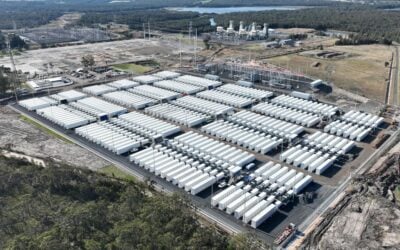
Akaysha Energy has established itself as a major player in Australia’s utility-scale battery storage sector, developing what it describes as the “world’s most powerful battery storage system,” the 850MW/1,680MWh Waratah Super Battery in New South Wales.
The battery storage system achieved its first full output to the NEM (NEM) in October last year. However, a catastrophic transformer failure raised concerns around the project before it entered a planned balance of plant shutdown from 20 November to 2 December.
Waratah Super Battery, which has been described as a ‘giant shock absorber for the grid,’ will deliver essential services under a System Integrity Protection Scheme (SIPS) contract and is now expected to be fully commissioned this year.
Beyond Australia, Akaysha has exposure in several international markets, including the US, Japan and Germany. In September 2025, the group secured an AU$300 million corporate debt facility to support its expansion into these markets.
More recently, the company switched on a 410MWh grid-forming BESS five months ahead of schedule and entered a 300MWh BESS into NEM trading in Queensland.
The BlackRock-backed developer has been weighing funding options to support its battery storage expansion across Australia.
Akaysha Energy’s operational portfolio now encompasses 1.4GWh across multiple Australian markets, with 4.5GWh under construction and an additional 30GWh in development globally.