Akaysha begins construction of 410MWh BESS in Queensland, Australia

August 8, 2024
LinkedIn
Twitter
Reddit
Facebook
Email

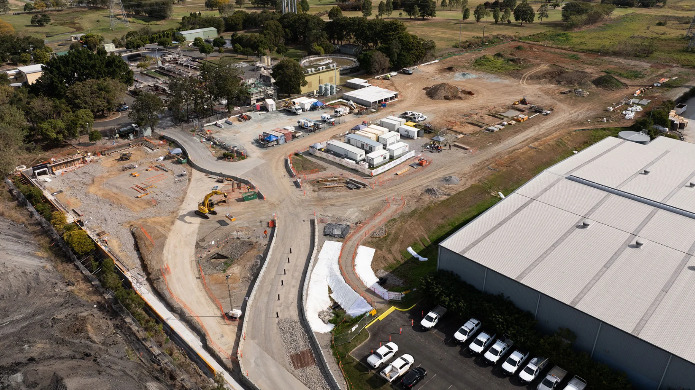
Energy storage developer Akaysha Energy confirmed it had started constructing its 205MW/410MWh battery energy storage system (BESS) in Queensland, Australia, yesterday (8 August).

The 2-hour duration project, which has seen AU$200 million (US$131 million) allocated towards its development, is set to commence commercial operations in 2026. It will be located on UnityWater’s 3.7-acre site next to the South Pine substation.

Akaysha has confirmed that the Brendale BESS will incorporate Tesla Megapack technology, with Consolidated Power Projects Australia Pty Ltd (CPP) set to deliver the Balance of Plant (BoP).

Tesla Megapack has been used across several Australian sites, including RWE’s 50MW/400MWh Limondale BESS in New South Wales.

This article requires Premium SubscriptionBasic (FREE) Subscription

Try Premium for just $1

  • Full premium access for the first month at only $1
  • Converts to an annual rate after 30 days unless cancelled
  • Cancel anytime during the trial period

Premium Benefits

  • Expert industry analysis and interviews
  • Digital access to PV Tech Power journal
  • Exclusive event discounts

Or get the full Premium subscription right away

Or continue reading this article for free

Akaysha is also using Megapacks at its 1,660MWh Orana BESS, located in the Central-West Orana Renewable Energy Zone (REZ), in New South Wales.

However, the developer has a multi-supplier approach and for its biggest project to date, the Waratah Super Battery project, also in New South Wales (slightly larger than Orana at 850MW/1,680MWh), system integrator and manufacturer Powin is providing the BESS solution.

Akaysha, backed by major global asset manager Blackrock, closed project financing for the Orana BESS in July. The AU$650 million three-year agreement will fund the construction of the BESS in the Central-West Orana REZ. It includes AU$75 million in support for project security obligations with a Letter of Credit.

The Brendale BESS project aims to provide energy arbitrage and Frequency Control Ancillary Services (FCAS) to support the national electricity market (NEM) and facilitate the integration of solar PV and wind projects by utilising the existing transmission infrastructure in the region.

Paul Curnow, managing director and chief commercial officer (CCO) at Akaysha Energy, said the Brendale BESS is a “crucial step” in the company’s mission to deploy large-scale BESS.

“The Brendale BESS is an important element of Akaysha Energy’s portfolio across not only Queensland but the NEM more broadly. It is a crucial step in our mission to rapidly deploy large-scale BESS, enhancing grid stability and energy security while driving the global shift to sustainable energy,” Curnow said.

“The Brendale BESS is one of four projects under development in the state and it’s clear that the Queensland energy sector is serious about the transition. Once operational, the Brendale BESS will significantly bolster the delivery of a stable supply of energy to the local community.”


17 March 2026
Sydney, Australia
As we move into 2026, Australia is seeing real movement in emerging as a global ‘green’ superpower, with energy storage at the heart of this. This Summit will explore in-depth the ‘exponential growth of a unique market’, providing a meeting place for investors and developers’ appetite to do business. The second edition will shine a greater spotlight on behind-the-meter developments, with the distribution network being responsible for a large capacity of total energy storage in Australia. Understanding connection issues, the urgency of transitioning to net zero, optimal financial structures, and the industry developments in 2026 and beyond.
9 June 2026
Stuttgart, Germany
Held alongside The Battery Show Europe, Energy Storage Summit provides a focused platform to understand the policies, revenue models and deployment conditions shaping Germany’s utility-scale storage boom. With contributions from TSOs, banks, developers and optimisers, the Summit explores regulation, merchant strategies, financing, grid tariffs and project delivery in a market forecast to integrate 24GW of storage by 2037.
15 September 2026
San Diego, USA
You can expect to meet and network with all the key industry players again in 2025 from major US asset owners, operators, RTOs and ISOs, optimizers, software and analytics providers, technical consultancies, O&M technology providers and more.
15 September 2026
Berlin, Germany
Launching September 2026 in Berlin, Energy Storage Summit Germany is a new standalone event dedicated to Germany’s energy storage market. Bringing together investors, developers, policymakers, TSOs, manufacturers and optimisation specialists, the Summit explores the regulatory shifts, revenue models, financing strategies and technology innovations shaping large-scale deployment. With Germany targeting 80% renewables by 2030, it offers a focused platform to connect with the decision-makers driving the Energiewende and the future of utility-scale storage.

Read Next

February 26, 2026
Energy storage developer and subsidiary of Canadian Solar, Recurrent Energy, has sold its 200MWh Fort Duncan battery energy storage system (BESS) project, located in Texas, US, to developer Hunt Energy Network.
February 26, 2026
The US Department of Energy (DOE) has closed a US$26.5 billion loan package to two wholly owned subsidiaries of utility Southern Company, in Georgia and Alabama, US.
February 26, 2026
MGA Thermal has secured AU$3.25 million in funding from ARENA to conduct up to five FEED studies for its thermal energy storage technology.
February 25, 2026
In this Energy-Storage.news roundup, FlexGen updates its EMS, LandGate launches a BESS site selection tool, ON.energy and Shoals target AI data centres, and Sunrun has a successful season of dispatching energy with PG&E.
Premium
February 25, 2026
In an interview with Energy-Storage.news Premium, Jay Jayasuriya, Principal at Sendero Consulting, argues that AI data centres are “convenient scapegoats” for grid failures