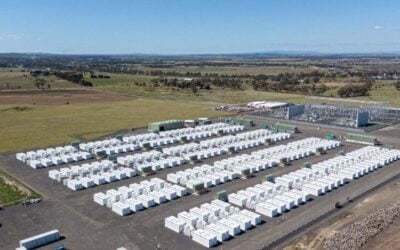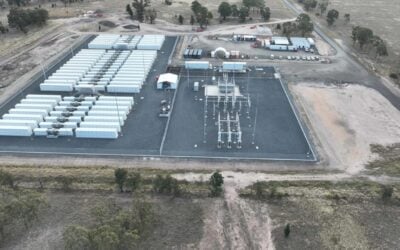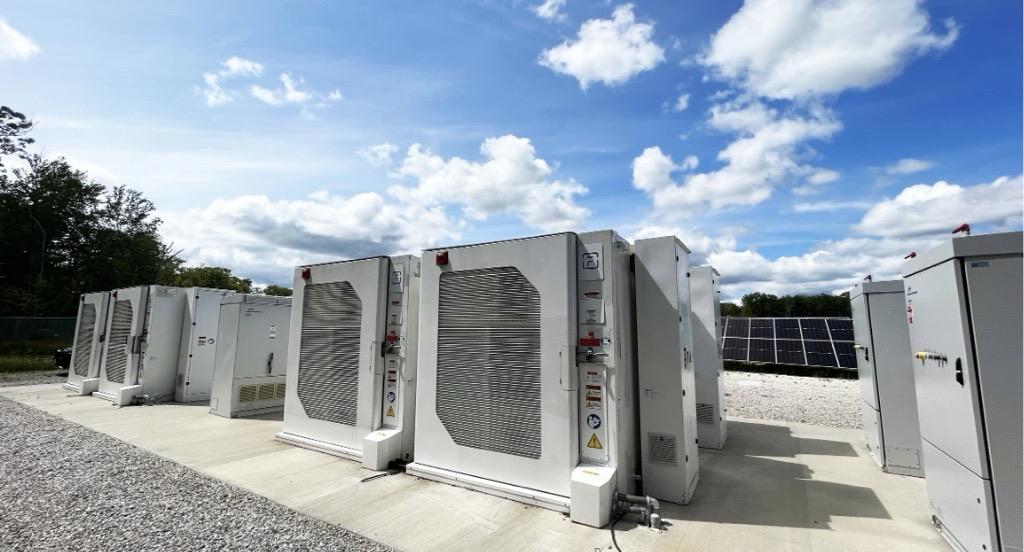
Subsidiary of the AES Corporation, AES Indiana, has announced the opening of the 200MW/800MWh Pike County Battery Energy Storage System (BESS) in Pike County, Indiana, US.
The Pike County BESS is set to be one of the largest BESS projects in the Midcontinent Independent System Operator (MISO) region.
Energy-Storage.news reported in January 2024 that the Indiana Utility Regulatory Commission (IURC) had approved the project.
The project is built on the site of AES Indiana’s former coal-fired plant, the Petersburg Generating Station.
Try Premium for just $1
- Full premium access for the first month at only $1
- Converts to an annual rate after 30 days unless cancelled
- Cancel anytime during the trial period
Premium Benefits
- Expert industry analysis and interviews
- Digital access to PV Tech Power journal
- Exclusive event discounts
Or get the full Premium subscription right away
Or continue reading this article for free
Building the BESS at this location allows AES to use the coal plant’s interconnection points. Additionally, the Pike County BESS was part of a larger approximately US$1.1 billion total investment in Pike County, Indiana.
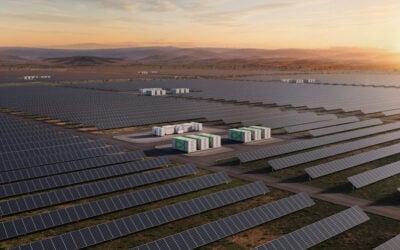
These investments included repowering the Petersburg Generating Station units 3 and 4 from coal to natural gas and adding two new solar and BESS projects.
AES says that the coal units will be converted to natural gas by the end of 2026 and anticipates being the first utility in the state to eliminate coal as a generating resource.
This is a notable move from AES since, as reported by the US Energy Information Administration (EIA), in 2023, the state was the second-largest consumer of coal in the US behind Texas. “Coal fuelled 45% of Indiana’s electricity net generation that year.”
Indiana created a voluntary clean energy portfolio standard in 2011, which set a goal of 10% clean energy by 2025. 30% of the goal can be met with “clean coal” technology.
In 2022, two gas peaker plants and a gas pipeline extension were approved by regulators in the state. Expert testimony from Citizens Action Coalition (CAC) was given against this decision but was refuted by utility representatives.
According to AES’s Integrated Resource Plan (IRP), the company plans for 46% of its generation portfolio to be from natural gas by 2026.
The company is also looking to have 6% of its portfolio consist of BESS and 3% of wind generation resources.