The Australian Energy Regulator (AER) has approved plans to convert Basslink, the sole interconnector connecting Tasmania to the National Electricity Market (NEM), to a regulated transmission service, a decision with implications for pumped hydro energy storage (PHES) developments on the island state.
In its final decision, the AER reversed its earlier draft determination, accepting APA Group’s application to convert the 500MW interconnector into a regulated Transmission Network Service Provider (TNSP). This change allows a portion of the transmission line’s costs to be recovered from customers through network charges.
The AER initially rejected the application in December 2024. However, upon receiving stakeholder submissions, “expert advice,” and information provided in response to compulsory information notices, the AER has now formally reversed its decision.
AER chair Clare Savage said the decision was informed by consultation, market modelling, and analysis of the likely impact of conversion on the energy market and consumers.
Try Premium for just $1
- Full premium access for the first month at only $1
- Converts to an annual rate after 30 days unless cancelled
- Cancel anytime during the trial period
Premium Benefits
- Expert industry analysis and interviews
- Digital access to PV Tech Power journal
- Exclusive event discounts
Or get the full Premium subscription right away
Or continue reading this article for free
“The final decision to accept the application comes after further consultation and receiving information and evidence that indicates conversion to a regulated service would be in the long-term interests of consumers,” Savage said.
“A converted Basslink will support benefits to consumers by ensuring the open flow of electricity across the Bass Strait.”
The AER, Australia’s national energy market regulator, will now consult on Basslink’s entitlement to earn revenue as a regulated transmission service.
Basslink: critical infrastructure for Tasmania’s PHES
The Basslink interconnector is a 500MW high-voltage direct current (HVDC), 370km interconnector stretching from the Loy Yang Power Station in Victoria, on the Australian mainland, to the George Town substation in northern Tasmania.
It is bidirectional, allowing energy to be transmitted both ways. Tasmania’s abundance of hydroelectricity plants and PHES facilities enables them to supply peak load capacity to the NEM.
The cable has faced significant challenges in the past, including a six-month outage in 2015-2016 and financial difficulties that led to the previous operator, Basslink Group, entering voluntary administration in 2021 owing AU$40 million (US$26 million) to the Tasmanian government and Hydro Tasmania for the outage.
APA Group acquired Basslink in February 2022 and applied for regulated status later that year.
Implications for pumped hydro and the ‘Battery of the Nation’
This regulatory approval represents a crucial development for Tasmania’s “Battery of the Nation” initiative, which aims to leverage the island state’s abundant renewable energy resources to support Australia’s energy transition through expanded PHES capacity.
Tasmania already boasts impressive credentials with over 2,600MW of hydroelectric capacity across 30 power stations and more than 50 major dams, creating an ideal foundation for development.
The state holds 27% of Australia’s total freshwater dam storage capacity and has achieved net zero emissions in six of the last seven years.
Hydro Tasmania plans to develop an additional 1,500MWh to 3,500MWh of PHES through 2040 to provide dispatchable capacity to the NEM. However, realising this PHES vision depends heavily on increased interconnection capacity between Tasmania and mainland Australia.
Expanding interconnection to support PHES growth
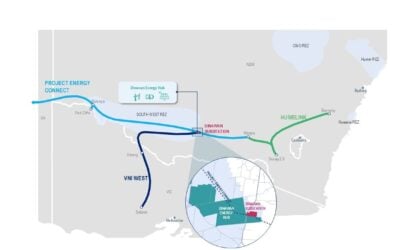
The proposed Marinus Link project would add 1,500MW of transmission capacity through a new undersea HVDC interconnector between Northwest Tasmania and Victoria’s Latrobe Valley, significantly enhancing Tasmania’s ability to export renewable energy from its current and planned PHES facilities.
Clean Energy Council CEO Kane Thornton exclusively told ESN Premium that Marinus Link is “critical” for strengthening Tasmania’s connection to the mainland, allowing more hydropower and PHES capacity to flow into Victoria during peak demand periods. He also noted that Marinus Link is critical for Tasmania to fulfil its “Battery of the Nation” ambitions.
This is a perspective that has been shared by Thomas Fitzsimons, a senior modeller at UK-based research group Cornwall Insight, who told Energy-Storage.news last year that the viability of PHES projects in Tasmania could “come into question” due to a lack of interconnectivity with mainland Australia.
Our publisher, Solar Media, will host the Battery Asset Management Summit Australia 2025 on 26-27 August in Sydney. You can get 20% off your ticket using the code ESN20 at checkout.