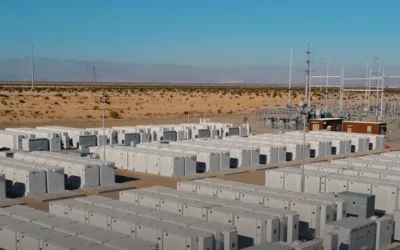
Renewable energy developer ACE Power has seen 5.6GWh of proposed battery energy storage system (BESS) projects in Queensland granted approval by the Australian government.
The federal government has granted permission for ACE Power to develop two utility-scale BESS projects in Queensland under the Environment Protection and Biodiversity Conservation (EPBC) Act. Both projects received a “Not a Controlled Action” determination.
ACE Power will pursue the development of the 900MW/3,600MWh Nebo BESS and the 500MW/2,000MWh Raglan BESS in the Isaac and Gladstone regions of Queensland, respectively.
The Nebo BESS is poised to become one of Australia’s largest BESS, providing essential firming capacity to support the increasing share of renewables in the electricity grid. Likewise, the Raglan BESS will enhance energy security in Central Queensland by improving reliability and decreasing reliance on fossil fuels.
Try Premium for just $1
- Full premium access for the first month at only $1
- Converts to an annual rate after 30 days unless cancelled
- Cancel anytime during the trial period
Premium Benefits
- Expert industry analysis and interviews
- Digital access to PV Tech Power journal
- Exclusive event discounts
Or get the full Premium subscription right away
Or continue reading this article for free
ACE Power is now progressing toward connection agreements with Powerlink, which are scheduled for negotiation later this year. Construction on both projects is poised to begin in 2026.
The Raglan BESS
The 4-hour Raglan BESS will connect to the National Electricity Market (NEM) via the Raglan substation, which is owned by the government-owned network operator Powerlink.
Documents submitted as part of the EPBC Act application confirmed that the BESS would import electricity from the grid, store it, and then export it for use during periods of peak demand.
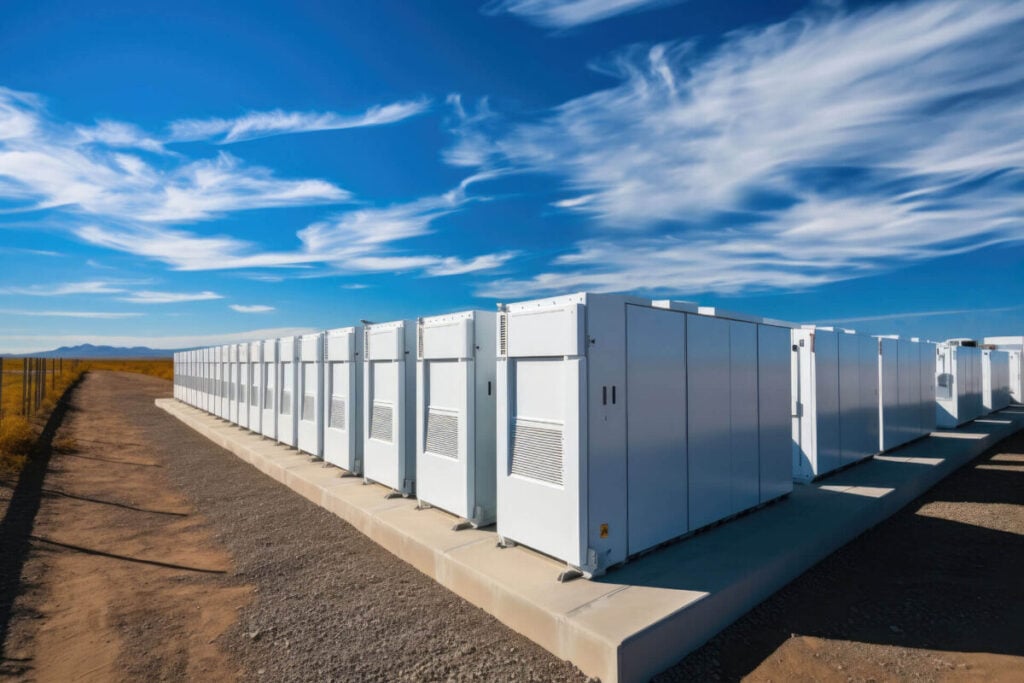
ACE Power said the BESS will use lithium-ion technology. The components will be fully encased within a storage container, with the final dimensions and number of containerised batteries dependent on the provider’s choice.
The construction phase of the project is expected to last around 18 months and employ 60 workers at its peak. Once completed, the BESS would operate for 45 years, with a repower option available after the first 20 years.
ACE Power’s 3.6GWh Nebo BESS
ACE Power’s 900MW Nebo BESS is set to be one of the largest battery projects in Australia. It will cover 97 hectares and will also include an extension to Powerlink’s Nebo substation. Two underground 275kV circuits will connect the project to this substation and the NEM.
The project will be located near the rural town of Nebo in the Isaac region, around 956km north of the state capital, Brisbane. It will import electricity from the grid, which will then be stored and exported during peak demand.
According to documents submitted to the EPBC Act, the project will have two 450MW stages that could be developed separately or concurrently. Although the specific details of the BESS technology were not disclosed, the company confirmed that it will utilise lithium-ion technology.
The project’s first stage will include developing 450MW of BESS, a switchyard, and transmission infrastructure alongside the access driveway to the project site. Stage two will add 450MW of BESS and a second switchyard.
ACE Power confirmed that the construction phase of the Nebo BESS will take 12 to 18 months and is likely to start in the first quarter of 2026, subject to timely planning approval.
Once operational, the project will operate for around 45 years, with a repowering scheduled after the first 20 years. ACE Power secured the rights to the land in the first quarter of 2023.