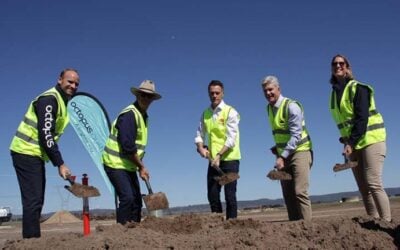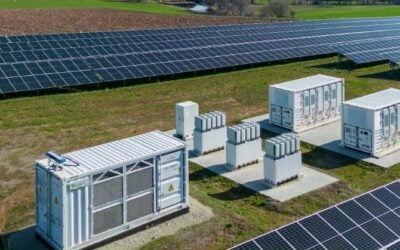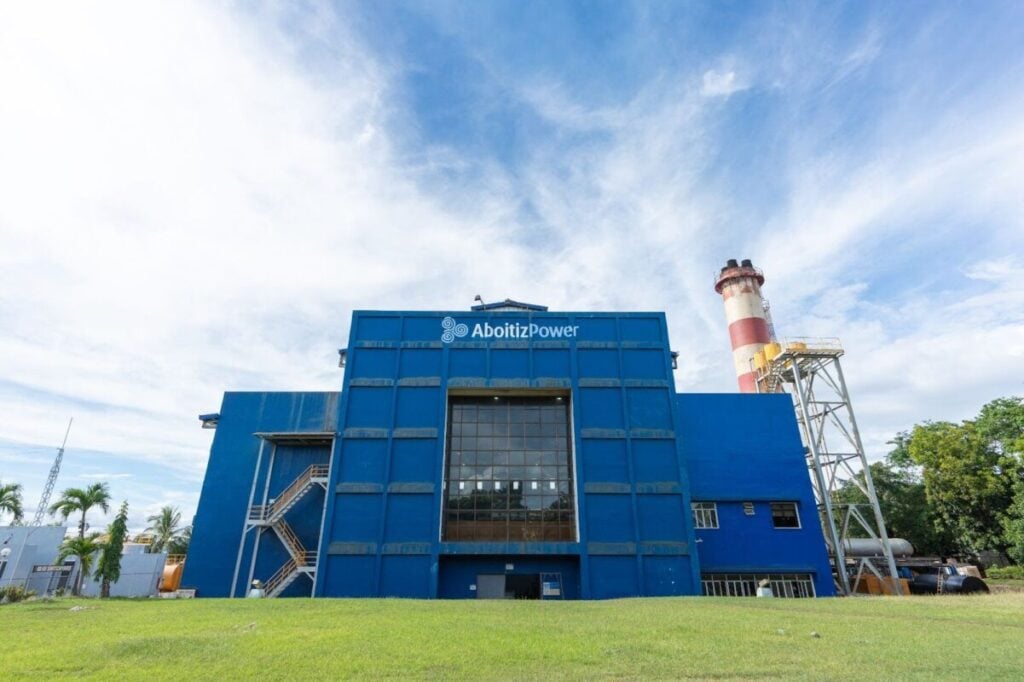
Integrated energy utility Aboitiz Power has kicked off a 30MW hybrid battery energy storage system (BESS) project in the Philippines.
The company said on Wednesday (16 July) that construction will begin imminently on the BESS asset. It will be integrated into an existing operational thermal power plant facility in Mactan Economic Zone in Lapu-Lapu City, Cebu, within the Visayas administrative region.
The system will be constructed by Aboitiz Power Corporation’s subsidiary, Therma Power Inc.’s East Asia Utilities Corporation (EAUC). EAUC operates a 50MW oil-fired power plant in Lapu-Lapu City and sells its power on the wholesale market with Cebu Private Power Corporation (CPPC).
As with other hybrid thermal generation-plus-storage projects built by Aboitiz Power and other Philippine power generation companies, the asset will enable increased efficiency in delivering ancillary services to the grid.
Try Premium for just $1
- Full premium access for the first month at only $1
- Converts to an annual rate after 30 days unless cancelled
- Cancel anytime during the trial period
Premium Benefits
- Expert industry analysis and interviews
- Digital access to PV Tech Power journal
- Exclusive event discounts
Or get the full Premium subscription right away
Or continue reading this article for free
It will also provide a backup power source for the economic zone’s grid, including during maintenance events for the attached thermal power plant.
Presently, power generators in the Philippines are responsible for providing ancillary services, including frequency regulation. Battery storage can respond much more quickly to grid signals for frequency-adjusting power than thermal power plants, reacting in milliseconds as opposed to the minutes it takes to ramp up fossil fuel generators.
Equally, as the Philippines moves to adopt greater shares of variable renewable energy (VRE) sources on its grid network, the demand for ancillary services is continuing to grow.
In other words, the hybrid BESS will allow for real-time response to imbalances, “helping the grid absorb fluctuations and minimise disruptions,” said Aldo Ramos, COO for Aboitiz Power’s transition business group.
“EAUC has consistently proven its ability to provide crucial ancillary reserves to the Luzon and Visayas grid when needed. The integration of BESS with our existing facility will materially enhance this capability, enabling faster and more efficient responses,” Ramos said.
The Philippine Economic Zone Authority (PEZA), which oversees developments including that at Mactan, approved the project at a board meeting in January, noting at the time that the BESS represented an investment of around PHP1.2 billion (US$21 billion).
“Investors heavily consider the reliability of power supply, and so we work to efficiently facilitate these innovative energy initiatives to support resident businesses and encourage more investments in the Mactan Economic Zone,” PEZA director general Tereso Panga said, adding that the hybrid BESS will aid stability of power supply, “and more so as the share of variable renewable energy increases in our power mix.”
Philippines government, power corporations working to integrate storage into energy mix
Aboitiz Power has already put two large-scale BESS assets into operation in the Southeast Asian country.
The first was the 49MW Maco Hybrid Battery Energy Storage System, installed at a 100MW floating barge diesel power plant on Mindanao Island operated by another Aboitiz subsidiary, Therma Marine Inc. Completed in 2022, it reduced the diesel plant’s ramping time from 15 minutes to three using BESS technology provided by Wärtsilä.
In early 2024, SN Aboitiz Power (SNAP), the company’s joint venture with Norwegian developer Scatec, inaugurated a 24MW asset paired with one of the company’s hydroelectric facilities, the 388MW Magat Hydroelectric Power Plant, in Luzon.
In April, Therma Marine Inc. began construction on another thermal-BESS hybrid, this time a 48MW system at a floating oil-fired barge in Nasipit Bay, Agusan del Norte.
The projects are part of 248MW initial development pipeline Aboitiz Power announced in 2022. Other major Philippine energy companies, including the power arm of San Miguel Corporation (SMC), have embarked on significant short-duration BESS deployments at thermal power plants, with SMC currently nearing the completion of a 1,000MW/1,000MWh pipeline of projects.
Meanwhile the national government has recognised the value of energy storage in stabilising the grid and enabling renewable energy adoption, with president Ferdinand Marcos Jr emphasising the point at the 2023 inauguration of an SMC BESS portfolio.
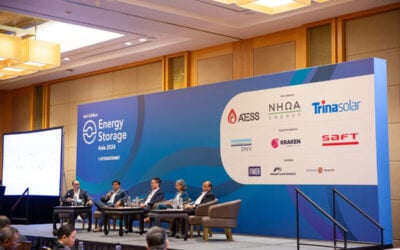
A panel at the 2024 Energy Storage Summit Asia, hosted by our publisher Solar Media that included representatives of the Philippines Department of Energy, SNAP and Aboitiz Power discussed the drivers and challenges for the market.
Since then the government has launched its first auction for renewables paired with energy storage as it targets a 35% share of electricity coming from renewables by 2030 and 50% by 2040.