The Board of Supervisors (BoS) for Arizona’s Pinal County has given the go-ahead to developer and IPP esVolta to construct 3.2GWh BESS within its unincorporated territory, and two utilities are in talks to procure some of its capacity.
In order to commence construction on the BESS, esVolta sought approval of a non-major comprehensive plan amendment, rezoning and planned area development overlay, which were all discussed and ultimately approved during the recent December 10 BoS meeting.
Approval of these items follows on from a recommendation from the county’s Planning and Zoning (P&Z) commission, who discussed and approved esVolta’s requests as part of an 8-1 vote during its November 20 meeting.
First time seeing standalone BESS
During the December 10 meeting, Court Rich, director of energy & utility infrastructure at Rose Law Group, presented details of the project to the BoS on behalf of esVolta.
Try Premium for just $1
- Full premium access for the first month at only $1
- Converts to an annual rate after 30 days unless cancelled
- Cancel anytime during the trial period
Premium Benefits
- Expert industry analysis and interviews
- Digital access to PV Tech Power journal
- Exclusive event discounts
Or get the full Premium subscription right away
Or continue reading this article for free
“I think this might be the first time this board has seen a battery energy storage project by itself,” said Rich as part of his opening introduction.
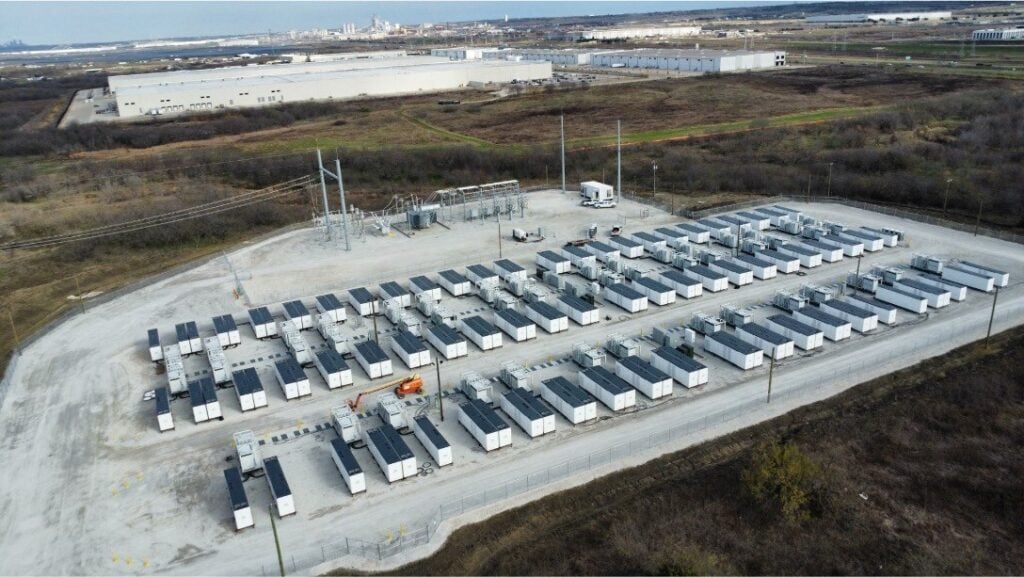
The project in question, known as Cactus Wren BESS, will have up to 800MW/3,200MWh of capacity on approximately 40 acres of land located around 7.6 miles south of the City of Maricopa in Pinal County, Arizona.
Interconnection to the electricity grid will be achieved via Salt River Project’s (SRP’s) Duke 500kV substation that’s located to the north of the project amongst three other substations.
Shortlisted for procurement
Also present at the recent meeting was SRP’s director for local relations, Buchanan Davis, who revealed that the project has been shortlisted for procurement by the utility.
“We are in active discussions with the developer as we explore a potential energy storage agreement,” said Davis.
The success of the project was described by Davis as being important for both SRP and Pinal County, especially with the utility predicting a 12% growth in annual energy usage across the county during the next decade.
SRP attributes this increasing demand to population growth and hotter summers, but also points to further industrial developments in the area – particularly where data centers are concerned.
Just last month, Pinal County’s BoS approved a data center development from Copia Power that will feature a BESS, known as the Energy Generation and Technology Campus, that will be located adjacent to esVolta’s recent BESS proposal.
As well as SRP, the project is also being considered for procurement by public utility Electric District No. 3 (ED3), which described the project as being located in an “ideal location.” According to a letter of support for the project, ED3 has requested pricing for a portion of Cactus Wren BESS which will be evaluated as part of the utility’s power procurement process.
After little discussion amongst the BoS, esVolta’s three requests were approved unanimously.
Construction is expected to take around 12 months to complete, with esVolta aiming to break ground sometime next year.
Florence BESS approval
Elsewhere in Pinal County, esVolta is developing a 400MW BESS known as the Lighthorse Energy Storage project, which received unanimous approval from the Town of Florence during August 2025.
Having initially been focused on the Texas and California markets, esVolta has a handful of operational projects located in both of these regions. This includes a trio of Texas BESS projects connecting with a cumulative capacity of 490MW/980MWh that were brought online this past summer.
Also under development in Texas by esVolta in ERCOT is a 150MW/300MWh standalone project known as Bufflehead BESS. As reported by Energy-Storage.news, the project was acquired by esVolta from developer Black Mountain Energy Storage as part of a three-project portfolio.