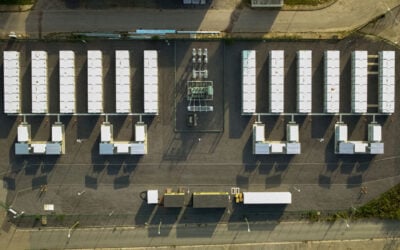
Results of an auction to procure large-scale energy storage to support the electric grid in South Korea will be announced in February.
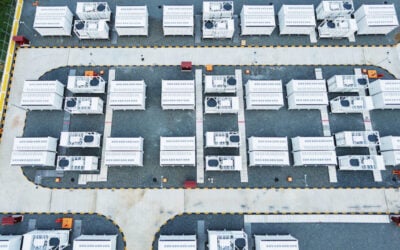
Announced by the country’s Ministry of Trade, Industry and Energy (MOTIE) in May, the 2025 2nd ESS Central Contract Market Competitive Bidding solicitation, administered by market operator Korea Power Exchange (KPX), seeks 500MW/3,000MWh (6-hour duration) of energy storage on the Korean mainland and 40MW/240MWh on Jeju Island.
KPX issued tender notices on 27 November 2025 and held a briefing session on Friday (12 December). The deadline for businesses to register has already closed, and bidders now have until 12 January to submit proposals and business plans and until the following day to submit supporting documents.
Evaluation of bid documents will take place until mid-February, when KPX intends to confirm and announce successful bidders. Contracts will be signed after bidders obtain power generation business permits for their projects.
Try Premium for just $1
- Full premium access for the first month at only $1
- Converts to an annual rate after 30 days unless cancelled
- Cancel anytime during the trial period
Premium Benefits
- Expert industry analysis and interviews
- Digital access to PV Tech Power journal
- Exclusive event discounts
Or get the full Premium subscription right away
Or continue reading this article for free
On the mainland, the auction seeks facilities of between 10MW and 100MW output, on Jeju Island, projects of between 10MW and 40MW.
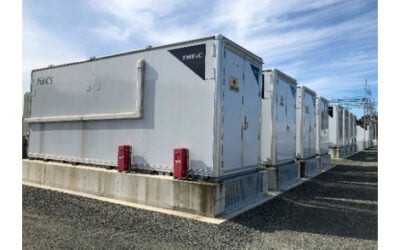
All facilities must be new, standalone energy storage system (ESS) technology, in a single operation, i.e., not paired with another facility. KPX also stipulated that combinations of battery types, including nickel manganese cobalt (NMC) and lithium iron phosphate (LFP) or NMC and flow battery, are ineligible.
The power system operator will give equal weighting to price and non-price evaluation factors. Non-price factors with the highest weighting are fire and facility safety (including emergency response planning), the contribution to grid stabilisation the project will make at its point of connection and a project’s “ESS industry ecosystem contribution”.
The 1st Central Contract Market auction took place in 2023, where a 15-year contract was awarded for 60MW/260MWh of battery energy storage system (BESS) capacity on Jeju Island.
The auction, aimed at helping the popular tourist destination island’s grid handle peaks in demand and integrate more renewable energy, marked the first time the Korean government has offered a central market contract to low-carbon power sources.
South Korea is committed to quadrupling its installed renewable energy capacity from 30GW in 2023 to 121.9GW by 2038 and the government has forecast that around 23GW of short-duration and long-duration energy storage (LDES) will be needed to maintain grid stability by that time.
Chang Jae Won, vice chairman of the Korea Smart Grid Association (KSGA), speaking at The Battery Show Indonesia in September, said that the 540MW auction will essentially reimburse developers for their projects’ capex over a 15-year term.
Won said that under current power market design, private companies find it difficult to recover their investments in DC energy storage in South Korea.
While the country is home to some of the world’s largest ESS suppliers, including LG Energy Solution (LG ES) and Samsung SDI, domestic uptake stalled after a government-subsidised boom in commercial and industrial (C&I) storage ended in 2018, following a number of fires.
While the fires were reportedly found to have been caused by alleged mismanagement of equipment rather than defects in batteries themselves, and one analyst praised authorities for their swift action, the 23 fires reported during 2018 are likely to have damaged confidence in the industry.
“Since 2018, frequent energy storage system fire instances and the suspension of government support policies have significantly slowed the growth of the domestic storage market,” KSGA vice chair Chang Jae Won said at the September event.
“In contrast, the global energy storage industry has continued to grow strongly, and in Korea as well, the expansion of renewable energy has highlighted the need for more storage.”