Renewable energy infrastructure developer BE Power Group’s 9.6GWh Big-G pumped hydro energy storage (PHES) project in Queensland, Australia, has been submitted to the Federal government for approval under the Environment Protection and Biodiversity Conservation (EPBC) Act.
The Big-G PHES project, an 800MW system which could provide 12 hours of storage duration, was first announced in April 2024 and is being proposed for the Gladstone region of Queensland, which is approximately 529km north along the coast from the state capital, Brisbane.
BE Power confirmed that the PHES would feature a closed-loop system, meaning it would connect to two reservoirs without flowing water features via a tunnel. Turbines or pumps, alongside a generator or motor, would move water and create electricity.
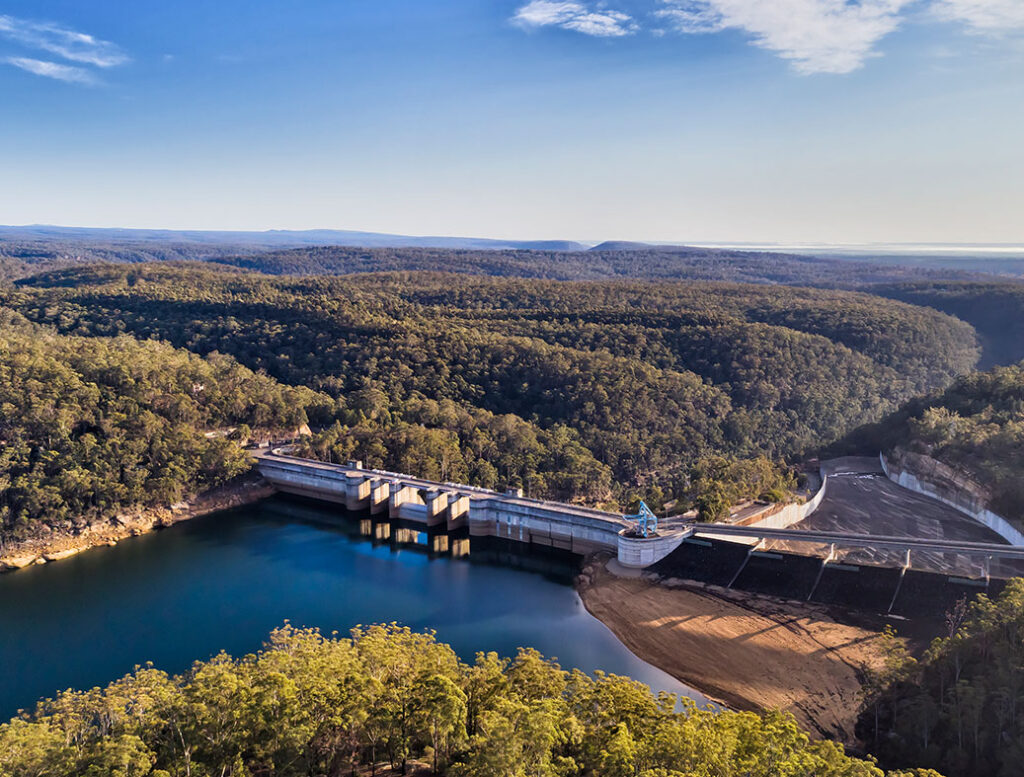
For the Big-G project, the developer confirmed that it would feature two valley dams and several saddle dams to form an upper reservoir alongside a turkey-nest type dam for the lower reservoir. An underground power station complex would house four 200MW fixed-speed reversible Francis pump-turbine units.
Try Premium for just $1
- Full premium access for the first month at only $1
- Converts to an annual rate after 30 days unless cancelled
- Cancel anytime during the trial period
Premium Benefits
- Expert industry analysis and interviews
- Digital access to PV Tech Power journal
- Exclusive event discounts
Or get the full Premium subscription right away
Or continue reading this article for free
The project’s electricity would be supplied to the National Electricity Market (NEM) via a new privately owned transmission line. Planning documents submitted to the government disclosed that ongoing discussions with Powerlink, a government-owned network operator selected to deliver Queensland’s Renewable Energy Zones (REZ) in September last year, were taking place with two possible options identified.
BE Power said this connection has two options: an overhead power line or underground lines. A decision on this will be made as the project grid connection design advances and community feedback is received.
The EPBC application noted that the power station could operate as a single large PHES with a capacity of 800MW or be spread across two 400MW PHES projects. Should the latter be pursued, the site would be modified to include separate upper reservoirs and a single shared lower reservoir.
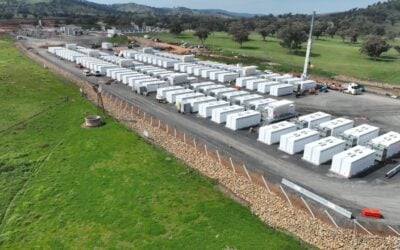
BE Power is also exploring the possibility of including a battery energy storage system (BESS) on-site, likely a 400MW/1,600MWh 4-hour duration system. This would be located near the switchyard, a substation without transformers used mainly for connections and interconnections.
The project area will cover 859 hectares and encompass five properties: Voewood, Beel Creek, Rockfield, Wyalla, and Bocoolima. The BESS will likely occupy around five hectares of the total project area.
Big-G’s construction phase, including rehabilitation work, is estimated to take up to six years. At the peak stage, 1,000 workers are expected to be required. It is scheduled to begin in late 2027.
BE Power Group’s Australian PHES portfolio
BE Power is also developing the Big-T and Big-S PHES projects alongside the Big-G project. Big-T, the oldest of BE Power’s PHES portfolio, is a 400MW/4GWh 10-hour duration power station beside Lake Cressbrook, near Toowoomba in southern Queensland.
Similarly to Big-T, Big-S, which was revealed in June 2024, is a 400MW/4GWh 10-hour duration PHES project located in Molesworth, Victoria. It is expected to commence construction in late 2028, with this set to last four years.
It is also worth noting that BE Power is behind a 12.5MW solar PV power plant and a 15MW gas-fuelled co-generation plant near Darwin in the Northern Territory. Both are in operation and were supported through a partnership with investment company Merricks Capital.
Queensland’s PHES sector takes multiple hits following election
Queensland’s PHES sector had a turbulent end to 2024 following the state election in October, which saw the right-wing Liberal National Party (LNP) of Queensland, led by Premier David Crisafulli, take office. Since being elected, the government has taken a hard stance on pumped hydro. Queensland’s new treasurer and energy minister, David Janetzki, stated that the government was committed to delivering “an energy policy guided by engineering and economics, not ideology.”
The first casualty of this new stance was the 5GW/120GWh Pioneer-Burdekin Pumped Hydro Project. Once touted as the world’s largest PHES project, the government quickly pulled the plug on the development in early November, citing that it was “not financially viable, not environmentally appropriate, and the community was never consulted.”
Indeed, a report commissioned by the government outlined that the AU$36 billion (US$22.43 billion) project would have led to unnecessary additional costs for Queensland residents, with each household spending AU$15,653.
Following this, Premier Crisafulli said the government had a “laser-like focus” on finding affordable ways to continue developing the 2GW/48GWh Borumba PHES project. Indeed, Energy-Storage.news reported in December that the project’s cost had increased to AU$18 billion and had been delayed by three years, prompting talks between the government and Queensland Hydro to save the development.
According to Premier Crisafulli, the previous Labor government overestimated the cost of the Borumba project by AU$4 billion. There was less than a 1% chance that the project would be completed in time for its planned first power date of 2030. Instead, it is believed the project will be completed in July 2035.
Energy storage in the EPBC Act
BE Power Group’s 9.6GWh Big-G PHES development becomes the latest large-scale energy storage project to be submitted for EPBC approval.
The EPBC queue, administered by the Federal government, aims to protect nationally threatened species and ecological communities. The approval must be received before a project can be developed.
One of these large-scale projects submitted to the EPBC Act includes Quinbrook Infrastructure Partners’ plans for a 750MW BESS co-located with a proposed polysilicon plant in Townsville, Queensland.
Squadron Energy, a renewable energy developer owned by one of Australia’s wealthiest citizens, Andrew Forrest, entered the EPBC Act to secure consent for an 8-hour duration 1,200MWh BESS in New South Wales, to be co-located with a 300MW wind project.
Similarly, the Australian entity of global renewable energy investor Cubico Sustainable Investments (Cubico) recently submitted two wind-plus-storage projects, both of which include a 200MW BESS, for approval under the EPBC Act.
In September 2024, Pacific Green Technologies submitted its 1GW/2.5GWh Portland BESS in Victoria to the EPBC Act. The project will feature multiple 250MW ‘battery parks’ alongside other necessary infrastructure.