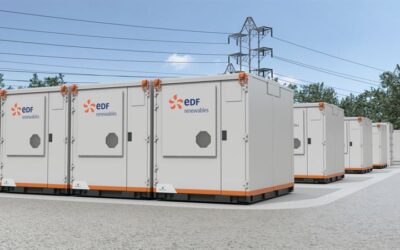
Three large-scale battery storage projects and one virtual power plant were the winners of a recent competitive tender held on behalf of the government of New South Wales (NSW), Australia.
Hosted by AEMO Services, the services arm of the Australian Energy Market Operator (AEMO), the tender was the second in a series of four through which NSW is seeking firming capacity, under the state’s Electricity Infrastructure Roadmap.
Winners receive a Long-Term Energy Service Agreement (LTESA) through AEMO Services, a financial support contract for which competitive bids were placed. The LTESA contracts have been designed in such a way that the state pays a revenue top-up to replace projects’ ‘missing money’, in the form of annuity payments.
Their design means that New South Wales electricity consumers pay far lower levels of subsidy than under other more commonly used financial support structures, AEMO Services said.
Try Premium for just $1
- Full premium access for the first month at only $1
- Converts to an annual rate after 30 days unless cancelled
- Cancel anytime during the trial period
Premium Benefits
- Expert industry analysis and interviews
- Digital access to PV Tech Power journal
- Exclusive event discounts
Or get the full Premium subscription right away
Or continue reading this article for free
Eligible resources in the most recent round included battery energy storage system (BESS) technology, demand response, gas generators and pumped hydro energy storage (PHES). It followed a first round in which three generation projects and one BESS project were selected.
That BESS project was an 8-hour duration lithium-ion (Li-ion) project submitted by RWE, with 50MW output to 400MWh capacity, as reported by Energy-Storage.news in May.
980MW/2790MWh of BESS, 95MW of VPP win contracts
This time out, there were no long-duration energy storage (LDES) winners. Instead, two of the three selected BESS projects were 2-hour, and the third a 4-hour duration resource. Total output of winning BESS projects was 980MW and capacity 2,790MWh. The winners can be seen in the table below
| Project name | Proponent | Technology | Output (MW) | Capacity (MWh) | Duration (hours) |
| Liddell BESS | AGL | Lithium-ion | 500 | 1000 | 2 |
| Orana BESS | Akaysha Energy | Lithium-ion | 415 | 1660 | 4 |
| Smithfield BESS | Iberdrola | Lithium-ion | 65 | 130 | 2 |
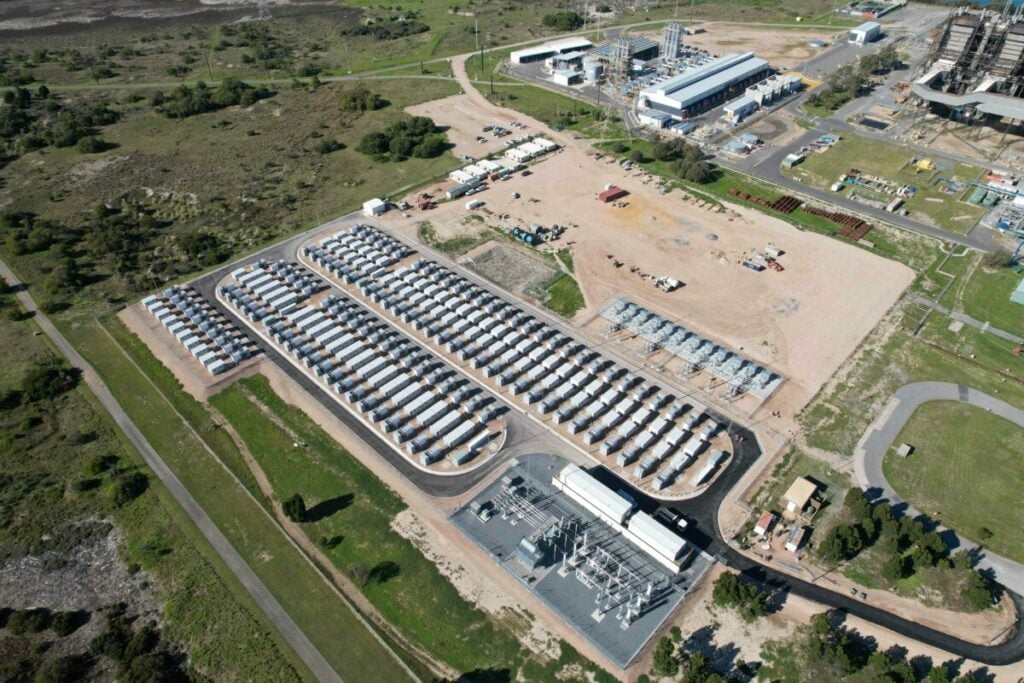
AGL is one of Australia’s biggest generator-retailer (‘gentailer’) entities. Its winning Liddell project is thought to represent some or all of the planned BESS for which the company got approval at the site of its Liddell coal power plant, which was retired this year.
Akaysha Energy meanwhile is the developer backed by investment firm Blackrock currently delivering the 850MW/1,650MWh Waratah Super Battery project, also in New South Wales, as well as a 150MW/300MWh project in the state of Queensland. According to the company, its winning Orana project will support the integration of capacity at the Central-West Orana Renewable Energy Zone (REZ), one of several multi-gigawatt REZ developments the government of NSW is looking to get built.
Rounding out the three is major Spanish power company Iberdrola. Its winning Smithfield BESS project will be co-located with one of the company’s existing open cycle gas turbine (OCGT) peaker plants of the same name.
In addition, a demand response virtual power plant (VPP) project by the digital energy services arm of Enel Group, Enel X, was also successful. Enel X Australia’s project comprises three individual VPPs, one of 50MW, another of 25MW and of 20MW, for a total of 95MW. The VPP will have a minimum 2-hour dispatch duration.
All New South Wales tenders oversubscribed so far
The forecast LTESA cost of the winning bids, on capacity weighted average basis, was AU$32,000 (US$20,900) present value (PV)/MW/year, while the annuity payment cap was AU$40,000PV/MW/year.
All projects must be operational by December 2025, and as with the previous tender round, project bids were judged on a number of non-financial criteria, such as commitments to hiring local workforce or contributing to community schemes, deliverability and organizational capability, as well as financial criteria.
“Firming capacity is a key aspect of the energy transition as the state’s coal generation exited the industry,” AEMO Services chair Paul Moy said.
“This tender is a first step in meeting this challenge at a reasonable cost to consumers. Combined, the projects in this tender will have the equivalent capacity to supply of 8% of the total 2023 NSW summer peak demand.”
AEMO Services said the contract design, which Moy referred to as “innovative,” mean
Each of the tenders held so far has been oversubscribed. In Round 2, the NSW government had been seeking around 930MW of resources to firm up growing renewable energy capacity.
This was an expansion from an initial 380MW indicative tender size, and it was boosted due to financial support from Australia’s Commonwealth government under its Capacity Investment Scheme (CIS) – the new national tender scheme for dispatchable clean energy which many have said will encourage big levels of investment in energy storage.
“AEMO Services has conducted three tenders over 12 months, two for generation and long duration storage infrastructure and one for firming infrastructure, each of these tenders has been oversubscribed,” AEMO Services executive general manager Paul Verschuer said.
Results from a third round, seeking generation and long-duration storage resources, are due before the end of 2023, while a fourth round for generation infrastructure opened in October.