A 1.5GW offshore wind power plant in South Korea will be paired with energy storage provided by so-called ‘next generation’ lithium-ion batteries.
Singapore-Norwegian company G8 Subsea, a specialist in subsea engineering and floating and offshore renewable energy projects, has signed an agreement to develop the project with South Korean industrial business group Holim Tech.
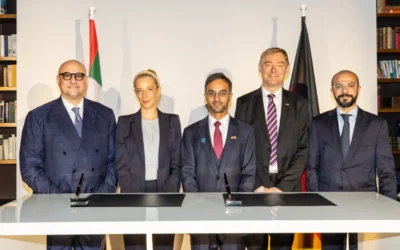
An official signing ceremony between the two parties took place on 24 December after an inspection of construction site and coastal facilities the previous month. Local authority planning permission to proceed has also been granted, G8’s chief operating officer in Korea, Pascal Cheon, said this week.
For G8, this will be its second wind power project in Korea, following a 60MW project completed in 2017. It officially opened a Korean office in December 2021, and said at the time it planned to develop 2GW of offshore renewable energy projects with Korean partners.
Try Premium for just $1
- Full premium access for the first month at only $1
- Converts to an annual rate after 30 days unless cancelled
- Cancel anytime during the trial period
Premium Benefits
- Expert industry analysis and interviews
- Digital access to PV Tech Power journal
- Exclusive event discounts
Or get the full Premium subscription right away
Or continue reading this article for free
Holim Tech has coastal storage and quayside construction facilities which can support wind turbine engineering and manufacturing activities as well as what has been described as “strong government links” at municipal and local authority level which can help it and its partners to get and secure offshore renewable energy projects.
The signing of the agreement initiates “the commercial execution of this significant project,” Cheon said.
The plant will include an advanced energy storage system (ESS), to ensure the optimal stabilisation of energy output and manage energy going to the grid. It will also include high voltage subsea power cables installed using G8’s cable laying and protection technologies, which the company claimed will ensure long-term stability of its connection to the grid.
The batteries used will come from 3DOM, a Japan-headquartered company which has developed technologies including a lithium manganese iron phosphate (LMFP) battery which has high energy density cathodes offering thermal stability and long life, high temperature resistant lithium-ion batteries and proprietary separators.
In early December, Energy-Storage.news reported that G8 had signed a transaction agreement with 3DOM’s Singapore-based subsidiary 3DOM Singapore (3DOM SG), to use the latter’s battery technology in its renewable energy projects in Asia.
The agreement included a share swap and an acquisition of a 5% stake in G8 by 3DOM for up to US$10 million — giving the subsea and offshore specialist a US$200 million valuation.
3DOM SG is meanwhile targeting a business combination with Reenova, an investment company in Singapore which would give it a US$1 billion valuation.