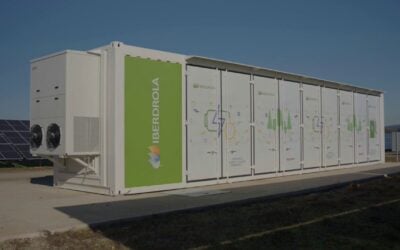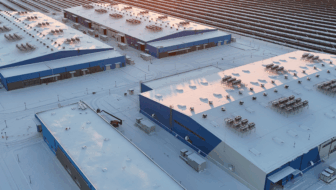
Technology provider Dalian Rongke Power (Rongke Power) and infrastructure developer China Three Gorges Corporation (CTG) have brought online the world’s first gigawatt-hour-scale flow battery energy storage project.
The start of operation of Jimusaer Vanadium Flow Battery Energy Storage Project, a 5-hour duration, 200MW (1,000MWh) vanadium redox flow battery (VRFB) project in China’s Xinjiang autonomous territory, was announced on 31 December by manufacturer Rongke Power.
Rongke Power stated that the facility will enable surplus renewable energy generation to be stored during periods of high output and then dispatched during peak demand periods.
Separately, global vanadium trade association Vanitec reported on the same day that developer CTG confirmed to a VRFB channel on Chinese networking app WeChat that the project in Xinjiang has been fully commissioned and is running at full output.
Try Premium for just $1
- Full premium access for the first month at only $1
- Converts to an annual rate after 30 days unless cancelled
- Cancel anytime during the trial period
Premium Benefits
- Expert industry analysis and interviews
- Digital access to PV Tech Power journal
- Exclusive event discounts
Or get the full Premium subscription right away
Or continue reading this article for free
Dr Yu Li, a technical officer at Vanitec, noted in a blog entry that the total investment cost of the project was reported to be RMB3.8 billion and that it is paired with a 1GW solar PV plant nearby.
The 1GW/1GWh facility will be part of an integrated demonstration of solar-plus-storage technology, Dr Li wrote, quoting China Three Gorges New Energy Jimsar Power Generation Co project manager Wang Lei, who said the project turned “a barren stretch of land to a ‘super power bank’ in less than three years.”
“This is not only a victory of speed, but also a reflection of confidence in our technology,” Lei said.
The system is expected to enable the grid integration of around 220 million kWh of additional renewable electricity annually. According to CTG estimates, it will directly replace the burning of approximately 519,000 tonnes of coal and reduce associated CO2 emissions by around 1.424 million tonnes per year.
The co-ordinated dispatch of solar using the batteries’ five hours of continuous discharge will raise PV utilisation by around 9%, while the project also features intelligent thermal management, a digital twin operations and maintenance (O&M) platform. The VRFB installation itself features electrolyte that can operate at a wide temperature range and high-reliability materials sealing the battery stacks, Vanitec’s Dr Wei Li wrote.
Unprecedented scale
CTG is one of the world’s biggest energy companies, founded in 1993 to work on the Three Gorges dam project, which created significant hydroelectric power generation capacity on the three gorges of the Yangtze River.
Its hydroelectric facilities in the upper section of the iconic river represent the world’s largest clean energy corridor, CTG claims, with 71.695GW of installed hydroelectric capacity. The company also develops or owns renewable energy projects in both China and overseas.
Rongke Power claimed the Jimusaer project demonstrates that VRFB technology, an alternative or complement to lithium-ion (Li-ion) battery energy storage system (BESS) technologies, can achieve reliability on a previously unprecedented scale.
What is a little unclear is that it appears the start of commercial operation of the Jimsaer project was previously also reported in May last year. According to a Vanitec update from around that time, the system actually comprises two VRFB sub-systems, one of 150MW/750MWh and another of 50MW/250MWh, both connecting to the same 220kV substation.
Presumably, this earlier update referred to a commissioning milestone; however, Energy-Storage.news has contacted Rongke Power and hopes to receive clarification on this point and answers to a few other questions.
What is clear, though, is that Rongke Power has now delivered at least three of the world’s biggest vanadium flow battery projects to date, all within China, as reported by Energy-Storage.news.
The company said it has now connected more than 3.5GWh of flow battery projects and these include a 100MW/400MWh project in Rongke Power’s home province of Dalian, brought online in 2022, and Xinhua Power Generation Wushi, a 175MW/700MWh project in Wushi Province, which went into operation in late 2024.
These far exceed the scale of any VRFB project outside of China: the largest project in operation in the US so far is a 2MW/8MWh system in California supplied by Japan’s Sumitomo Electric and the biggest announced or in-operation systems in countries like Canada, the UK and Australia are around 20MWh capacity.
While this means China—which has the biggest involvement in the vanadium materials supply chain of any country as it does with lithium—has the world’s biggest projects by far, one interesting point about scale was made in a December 2024 interview by the president of Anglo-American flow battery company Invinity Energy Systems with ESN Premium.
‘Modular factory-built products vs highly bespoke projects’
Invinity’s Matt Harper previously worked at a Chinese VRFB company. He said that Chinese manufacturers, for the most part, do not provide modular, productised solutions that can be rolled out of factory production lines.
Instead, China’s flow battery megaprojects tend to be “all built onsite, highly bespoke, constructed in-situ projects,” Harper said.
“They look like a small chemical plant with huge tanks and pumps and pipes all over the place, which is a great way to build those plants if you can have a hundred or 200 or so workers walking around putting that thing together over the course of about a year.”
Harper said this made it unlikely Chinese manufacturers could flood the markets overseas with cheaper products as it had done with Li-ion and solar PV technologies previously. Where China does retain a massive advantage is in vanadium materials production and electrolyte processing capabilities, which Invinity is itself seeking to leverage through a recently formed partnership with Chinese materials and manufacturing specialist UENT.
That said, while most VRFB installations built or planned outside China remain firmly in the range of dozens of megawatt-hours, one developer has recently announced a plan to develop a 1.6GWh project in Switzerland. The developer, FlexBase Group, got construction approval for its project at Laufenberg Technology Centre in May last year.