Two investor-owned utilities (IOUs) are seeking regulatory approval to acquire an under-development solar and storage project located in Waushara County, Wisconsin.
A joint application outlining the terms of the deal was submitted by Wisconsin Electric Power Company (WEPCo) and Madison Gas and Electric Company (MGE) with the Public Service Commission of Wisconsin (PSCW) on October 23 2025.
Dawn Break Solar
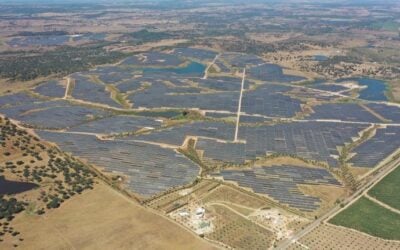
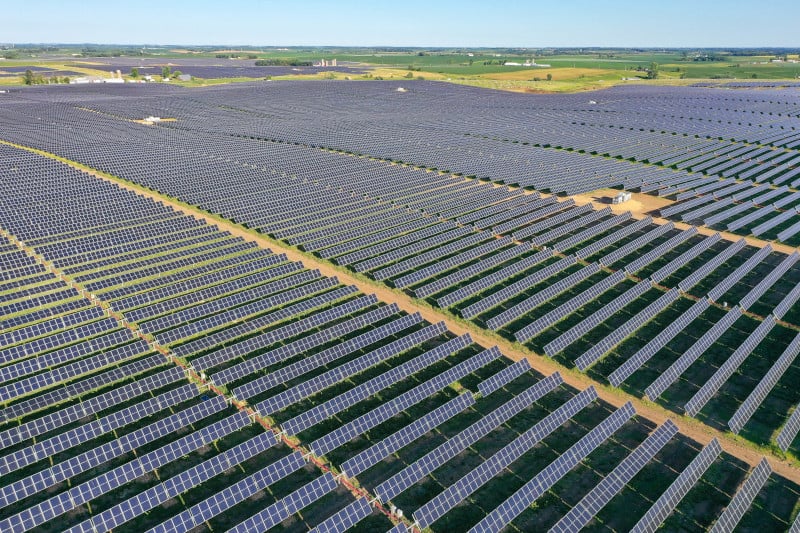
As outlined within the recent PSCW filings, the two utilities are hoping to acquire the Dawn Break Solar facility, which will pair a 180MW solar farm with a 180MW/720MWh BESS located across 2,250 acres of land in northeastern Waushara County.
The two utilities are proposing to acquire the project from Illinois-based developer Ranger Power through an Asset Purchase Agreement (APA).
Try Premium for just $1
- Full premium access for the first month at only $1
- Converts to an annual rate after 30 days unless cancelled
- Cancel anytime during the trial period
Premium Benefits
- Expert industry analysis and interviews
- Digital access to PV Tech Power journal
- Exclusive event discounts
Or get the full Premium subscription right away
Or continue reading this article for free
WEPCo and MGE are also currently negotiating the terms of an engineering, procurement and construction (EPC) agreement with DESRI, which has been enlisted to complete construction of the project.
The two developers have a history of working together, with Ranger Power claiming to have moved over 1.85GW-worth of renewable capacity into construction and operation in partnership with DESRI.
Ranger Power doesn’t currently have permission to commence construction of the project. However, it is in the process of obtaining a Certificate of Public Convenience and Necessity (CPCN) after it filed an engineering plan with the PSCW on October 15 2025.
The developer expects to follow-up this engineering plan with a CPCN application during the first quarter of next year.
If the acquisition deal is approved, this certificate, along with interconnection rights and any other permits, would be transferred to the utilities.
According to this application, the project will form part of the Midcontinent Independent System Operator (MISO), connecting via the ATC-owned Sand Lake 138kV substation.
Ranger Power plans to utilise MISO’s surplus interconnection process for the BESS, which it plans to split into separate 100MW and 80MW submissions.
US$775 million deal value
Under the terms of the acquisition deal, WEPCo is proposing to acquire 90% of the project (162MW of BESS and solar capacity) and perform operations and maintenance (O&M) services for the project’s lifetime.
MGE will acquire a much smaller 10% share of the project, representing only 18MW of both solar and BESS capacity.
The two utilities expect the acquisition to cost approximately US$775 million, with capital cost of the BESS making up around US$335.6 million of this total, representing a value of around $1,975/kW.
Pricing details of the potential “turnkey” EPC contract with DESRI wasn’t disclosed, except that the cost could increase due to “conditions that cannot be known until construction starts.”
In order to meet their December 2029 commercial operations target, the utilities hope to receive PSCW approval of the acquisition and execute the EPC agreement with DESRI by December 2026.
Based on this construction timeline, the two utilities said that they hoped to “take advantage” of federal tax credits currently available under the Inflation Reduction Act (IRA).
Acquisition over PPAs
As reported by Energy-Storage.news last October, the two utilities, alongside Wisconsin Public Service Corporation (WPSC), adopted the same acquisition and EPC strategy to take ownership of a portfolio of renewable energy projects under development by Invenergy.
Similarly to the case of the Invenergy portfolio, the utilities said that they opted to acquire the project over entering into a power purchase agreement (PPA) in order to give them more control of the future of the site.
By owning the project, the utilities have the option to repower the project by utilising existing infrastructure, or even continue to operate the project after it has been fully depreciated.
The utilities said this strategy would also avoid any additional financing costs to their customers from adding “debt-like PPAs” to their balance sheets.
In December 2024, the US Department of Energy’s (DOE) Loan Programs Office (LPO) announced a conditional commitment for a loan of up to US$2.5 billion to WEPCO, though the Trump administration’s efforts to scale down the LPO’s activities mean the outcome of this is not yet clear.