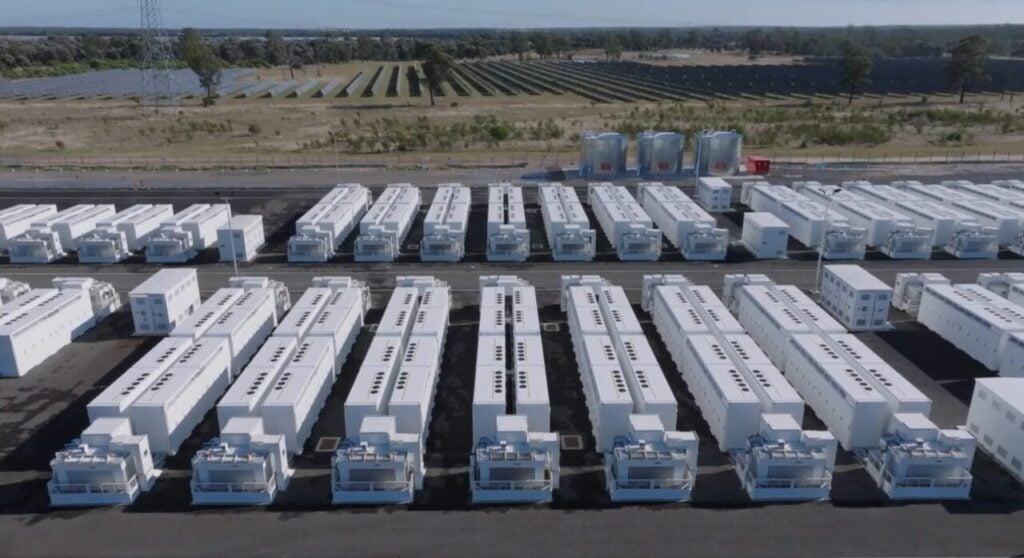
Western Australia has launched the fourth round of its Clean Energy Innovation Grants programme with AU$9 million (US$6 million) in funding, prioritising long-duration energy storage (LDES) systems capable of delivering power for 10 hours or more by 2030.
The announcement, made yesterday (6 January), marks a policy shift toward extended-duration storage technologies as the state advances its renewable energy transition.
The Clean Energy Innovation Grants Round 4 represents the latest iteration of Western Australia’s Clean Energy Future Fund initiative, which has allocated over AU$30 million to clean energy projects since its establishment.
The inclusion of long-duration energy storage as a ministerial priority reflects a growing recognition of the technology’s role in enhancing grid stability and facilitating the integration of renewable energy.
Try Premium for just $1
- Full premium access for the first month at only $1
- Converts to an annual rate after 30 days unless cancelled
- Cancel anytime during the trial period
Premium Benefits
- Expert industry analysis and interviews
- Digital access to PV Tech Power journal
- Exclusive event discounts
Or get the full Premium subscription right away
Or continue reading this article for free
Western Australia’s minister for energy and decarbonisation, Reece Whitby, identified nine specific priorities for the funding round, with long-duration energy storage positioned alongside initiatives supporting Aboriginal and Torres Strait Islander participation, green exports and heavy industry decarbonisation.
The LDES criterion specifically targets systems capable of sustained power delivery beyond the typical 2-4-hour duration of conventional lithium-ion battery installations.
Western Australia has emerged as a focal point for extended-duration storage development, particularly through vanadium flow battery storage technology.
The state government previously announced plans in December for a 500MWh vanadium flow battery project in Kalgoorlie, leveraging local vanadium resources to support grid-scale energy storage.
In an interview with ESN Premium, a spokesperson for Perth-headquartered vanadium flow battery company AVESS Energy described Western Australia’s vanadium flow battery initiative as a “pivotal moment” for the technology’s commercial deployment.
The latest iteration of the Clean Energy Innovation Grants programme targets projects that address specific grid challenges across Western Australia’s diverse electricity networks.
Priority areas include locations at the fringe of or disconnected from the South West Interconnected System (SWIS) and North West Interconnected System (NWIS), where long-duration storage could provide essential grid services and renewable energy firming capabilities.
Decarbonisation of heavy industry represents another key focus area, with funding available for projects supporting electrification and the development of low-emission industries.
The ministerial priorities specifically mention using clean energy to add value to Western Australian minerals and support green exports, aligning with the state’s objectives for transforming its resource sector.
The programme emphasises local manufacturing and content maximisation in project delivery, potentially benefiting Western Australian companies developing energy storage components and systems. This requirement complements the state’s broader industrial strategy of leveraging mineral resources for downstream manufacturing opportunities.
Diesel replacement initiatives also feature prominently in the funding priorities, reflecting Western Australia’s extensive use of diesel generation in remote and off-grid applications.
Long-duration storage systems could play a crucial role in enabling renewable energy to replace diesel generators in mining operations, remote communities, and industrial facilities.
The grants programme operates under the broader Clean Energy Future Fund framework. Previous funding rounds have supported diverse technologies including solar, wind, hydrogen and energy storage projects across the state.
The Energy Storage Summit Australia 2026 will be returning to Sydney on 18-19 March 2026. To secure your tickets and learn more about the event, please visit the official website.