Developer Akaysha Energy has confirmed that the replacement transformer for Australia’s 850MW Waratah Super Battery will be delivered in the third quarter of 2026.
This comes as the BlackRock-backed developer aims to address the aftermath of a catastrophic transformer failure that occurred in October.
According to the developer, it has instructed its contractor, Consolidated Power Projects Australia, to proceed with replacing the failed HVT3 transformer, with the manufacturer, Wilson Transformer Company, already commencing production after securing the necessary long-lead items for the build.
The decision follows a design review process completed by Consolidated Power Projects and Wilson Transformer Company, which included input from independent transformer consultants engaged on behalf of the contractor and other stakeholders.
Try Premium for just $1
- Full premium access for the first month at only $1
- Converts to an annual rate after 30 days unless cancelled
- Cancel anytime during the trial period
Premium Benefits
- Expert industry analysis and interviews
- Digital access to PV Tech Power journal
- Exclusive event discounts
Or get the full Premium subscription right away
Or continue reading this article for free
The original HVT3 transformer experienced a significant internal fault, resulting in extensive winding damage and triggering an overpressure event. This overpressure caused the rupture of the tank wall near the base, leading the transformer to self-drain into the surrounding bunded area. Investigations into the root cause of this fault remain ongoing.
The transformer failure has had substantial financial implications for the project. Dr Tom Harries, partner at NARDAC, a specialist energy and infrastructure broker providing battery energy storage insurance, estimates that the total losses could range between AU$50-80 million (US$32-51 million).
“If the project can replace the transformers in six months, possibly under a delay in start-up cover depending on whether the project has fully gone live or is still in testing, then the loss could be as low as AU$50 million,” Harries explained.
“However, this is contingent on securing transformers fairly quickly; otherwise, a much larger claim is likely.”
Despite transformer issues, the Waratah Super Battery continues to operate at 350MW, maintaining its critical System Integrity Protection Scheme (SIPS) obligations.
The facility serves as Australia’s “giant shock absorber for the power grid,” monitoring 36 transmission lines in real time and responding within seconds to grid disturbances. As a precautionary measure, the second transformer (HVT2) remains offline, with its remediation incorporated into a defined programme of work to ensure all three transformers are operational by the end of 2026.
The facility recently underwent a planned balance of plant shutdown from 20 November to 2 December 2025 as part of ongoing maintenance activities coordinated with AEMO and Transgrid. The timing coincided with increasing summer demand patterns and ongoing challenges in managing renewable energy intermittency across the National Electricity Market (NEM).
Main power transformer replacement typically requires extended lead times, with specialised equipment often taking 12-18 months to manufacture and deliver. However, the local manufacturing capability allows for faster turnaround times and close oversight of the repair process, with all diagnostics, rectification, and re-commissioning activities undertaken domestically.
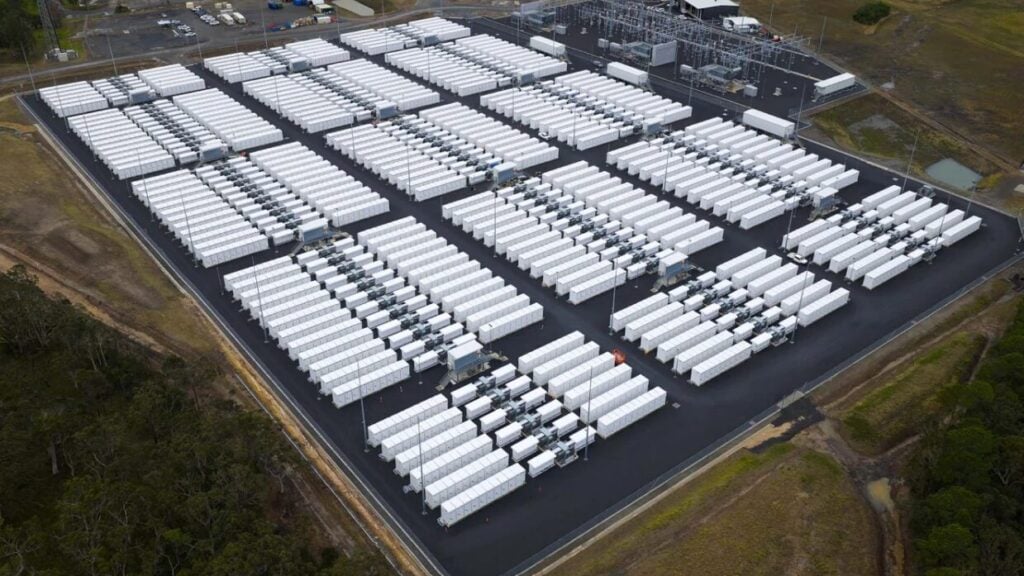
Located at the former Munmorah coal-fired power station site near Budgewoi, the 850MW/1,680MWh battery energy storage system was designed to provide critical grid services to Australia’s NEM.
The SIPS agreement with transmission operator Transgrid represents a core component of the Waratah Super Battery’s functionality, enabling Transgrid to send signals to the battery to inject energy into the grid while simultaneously instructing paired generators to adjust their output.
The facility’s continued operation at reduced capacity demonstrates the resilience built into large-scale battery storage systems.
The remaining capacity of the battery is scheduled to return online by the end of 2026, restoring the facility to its full 850MW operational capability.
The Energy Storage Summit Australia 2026 will be returning to Sydney on 18-19 March. It features keynote speeches and panel discussions on topics such as the Capacity Investment Scheme, long-duration energy storage, and BESS revenue streams. ESN Premium subscribers receive an exclusive discount on ticket prices.
To secure your tickets and learn more about the event, please visit the official website.