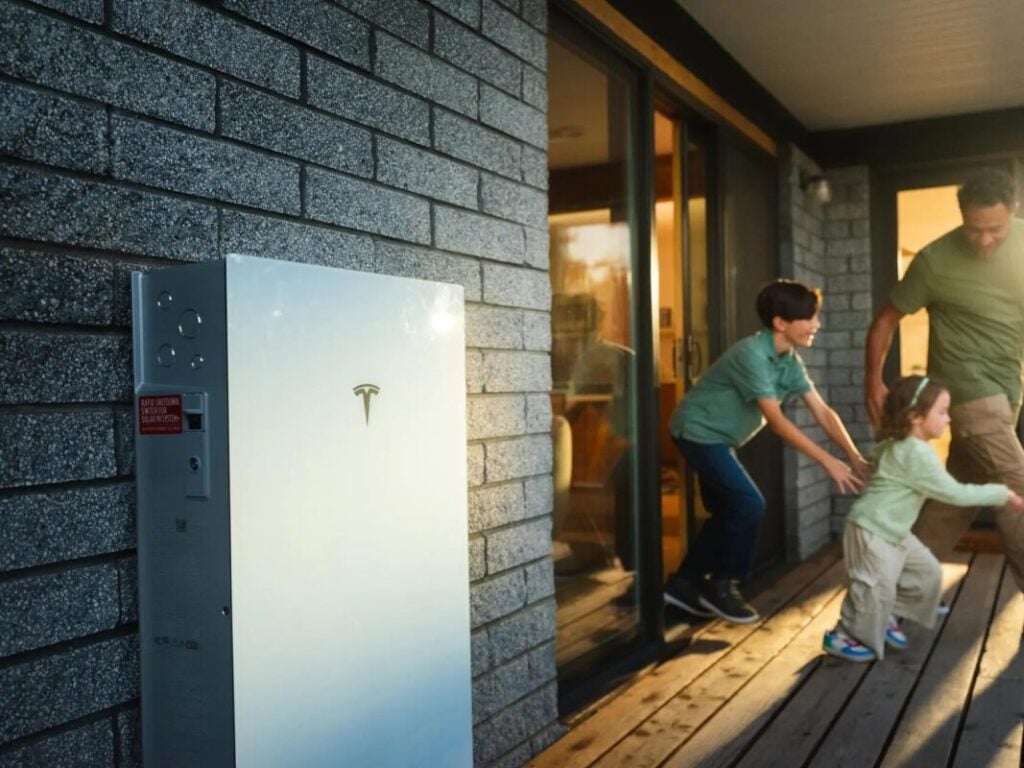
Distributed energy resources (DERs) are emerging as potential solutions for consumers seeking independence and relief from rising energy costs.
DERs, including residential energy storage systems, rooftop solar panels, microgrids, and small wind turbines, produce, store, or regulate electricity locally to assist the main grid or function independently, offering enhanced reliability and efficiency while potentially reducing monthly bills.
The growing adoption of DERs is demonstrating real financial benefits for consumers, with companies like Palmetto reporting that Californians collectively saved US$27.8 million in 2025 through their clean energy solutions.
Virtual power plants (VPPs) are collections of small-scale DERs that work together as a single power plant to stabilise the electric grid.
Try Premium for just $1
- Full premium access for the first month at only $1
- Converts to an annual rate after 30 days unless cancelled
- Cancel anytime during the trial period
Premium Benefits
- Expert industry analysis and interviews
- Digital access to PV Tech Power journal
- Exclusive event discounts
Or get the full Premium subscription right away
Or continue reading this article for free
VPPs have the potential to challenge the traditional centralised electricity networks that rely on large power plants. Consequently, numerous companies have developed VPP programmes, which frequently offer solar or battery systems at no cost or a reduced price in exchange for leveraging these systems to help maintain grid frequency and reliability.
Energy-Storage.news looks at recent news from Sunrun and NRG Energy, Haven Energy, and Leap and Enel North America as the companies advance VPP programmes across the US.
Sunrun and NRG partner to provide residential storage in Texas
US residential solar and energy storage installer Sunrun and energy supplier NRG Energy have announced a multi-year partnership aimed at accelerating residential energy storage in Texas.
Texas residents will have access to a home energy solution that combines Sunrun’s solar-plus-storage systems with “optimised rate plans and smart battery programming,” provided by NRG Energy’s retail electricity provider, Reliant.
As new and existing Sunrun customers sign up with Reliant, the total capacity will be leveraged to address the rising demand in the Electric Reliability Council of Texas (ERCOT) market.
The companies will collaborate to develop offers that aggregate and dispatch distributed power assets, supplying electricity to Texas’s grid during peak demand times. Sunrun will receive payment for aggregating capacity, while Reliant customers who participate will be compensated by Sunrun for sharing their stored solar energy.
In November, Sunrun reported a revenue of US$724.6 million for the third quarter of this year, as the company pursued its “storage-first strategy”.
Sunrun has achieved its third consecutive quarter of revenue growth. The company’s revenue rose from US$569 million in the previous quarter, and the Q3 figure reflects a 35% year-over-year increase compared to US$537.2 million in Q3 2024.
The company also took part in California’s Demand Side Grid Support (DSGS) distributed storage programme. During a test on 29 July, DSGS helped lower the net load on the state’s grid. However, shortly afterwards, California Governor Gavin Newsom’s office reduced the programme’s funding.
In May, VPP provider Sonnen collaborated with Abundance Energy and Energywell Technology Licensing to create a battery-enabled VPP in Texas. This VPP enables Abundance Energy customers to utilise sonnenConnect residential battery systems to enhance grid stability and reduce electricity expenses.
Haven Energy secures US$40 million to expand VPP networks
Haven Energy, a home battery systems company, has raised US$40 million to boost its partnerships with utility companies and community choice aggregators (CCAs). The funds will allow expansion of its leasing model, enhance its Channel Partner Programme for local installers, and support the ongoing development of “one of the nation’s largest VPP networks.”
The US$40 million comprises an equity round led by Giant Ventures and a debt facility from Turtle Hill, with further equity investments from California Infrastructure Bank, Carnrite Ventures, Chaac Ventures, Comcast Ventures, and Lerer Hippeau.
Haven states that US energy demand is expected to increase by 15% by 2030, growing faster than new generation and transmission infrastructure can be developed. This will lead to higher costs, increased outages, and greater pressure on the grid.
The company states it is tackling this challenge by working with utilities to install home solar and battery systems for its customers. These DERs provide utilities with flexible, local capacity that enhances the grid’s stability and contributes to lowering energy costs.
Haven also claims it has installed over 10MW of distributed capacity with more than 50MW in development for 2026, with over US$75 million worth of projects in its pipeline.
This capacity underpins both Haven’s expanding VPP and the utility-run programs that Haven develops for its utility partners. Current partners include Electric Power Research Institute (EPRI), Clean Power Alliance (CPA), San Jose Clean Energy (SJCE), Clean Energy Alliance (CEA), and Peninsula Clean Energy (PCE).
The funding will also facilitate the growth of Haven’s leasing model and Channel Partner Programme. This programme allows trusted local installers to provide Haven’s solar and battery solutions directly to homeowners and incorporate these installations into the company’s VPP. Haven handles financing, operations, and performance, allowing installers to focus on installation.
In June, Haven and CEA collaborated to offer California homeowners BESS without any purchase or installation expenses. The Battery Bonus Connect programme will serve around 300 homeowners and is financed through California’s US$280 million Self-Generation Incentive Program Residential Solar & Storage Equity (SGIP RSSE) initiative.
Leap and Enel partner on nationwide VPP growth
Leap, a software provider for aggregating DERs, and independent power producer (IPP) Enel North America have announced a partnership to expand the connection of commercial and industrial (C&I) DERs to utility demand response programmes across the country.
Together, Enel and Leap will utilise existing C&I capacity on the grid to manage energy demand in real time across Enel’s utility network, while generating additional revenue for Leap’s C&I partners.
The collaboration will start with three utility programmes managed by Enel in Washington, Arizona, and the Tennessee Valley, and will gradually expand to other markets nationwide.
Enel states that collaborating with Leap enables the company to rapidly increase capacity enrollment in its demand response programmes, while offering C&I customers new opportunities to generate revenue by aiding grid stability.
Leap, meanwhile, sees a wider expansion into vertically integrated utility markets, offering its technology partners additional revenue opportunities for the C&I resources the company sells and manages.
In February, Leap announced its expansion into the PJM Interconnection wholesale market. PJM, a regional transmission organisation (RTO), manages the flow of electricity across parts of Delaware, Illinois, Indiana, Kentucky, Maryland, Michigan, New Jersey, North Carolina, Ohio, Pennsylvania, Tennessee, Virginia, West Virginia, and the District of Columbia.
Leap’s software enables customer devices within the PJM region to automatically modify energy consumption to help stabilise the grid during emergencies. The company also mentions that Leap Connect, its customer registration tool, simplifies the registration and data authorisation processes.
The Energy Storage Summit USA will be held from 24-25 March 2026, in Dallas, TX. It features keynote speeches and panel discussions on topics like FEOC challenges, power demand forecasting, and managing the BESS supply chain. For complete information, visit the Energy Storage Summit USA website.