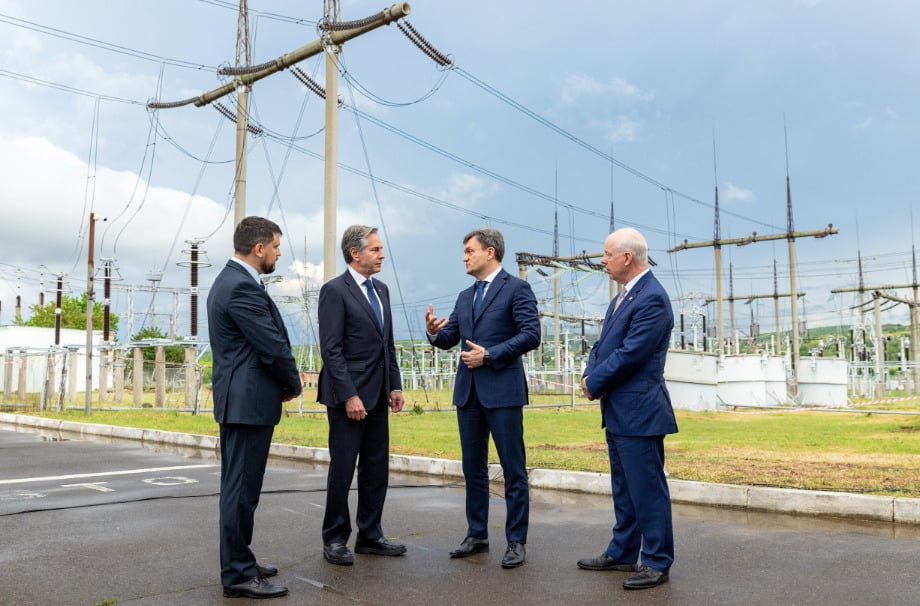
The US will provide US$85 million in foreign aid to the Republic of Moldova for battery energy storage system (BESS) projects, as well as high voltage transmission line upgrades, secretary of state Anthony Blinken said last week (29 May).
The result of the projects would be a strengthening of the country’s energy resilience and a stronger grid, Blinken said in a press event from the capital Chisinau.
The announcement press conference did not reveal the size of the BESS project, but Blinken’s statement indicated the BESS should be a substantial, if not majority portion of the funding. Blinken said the funding would “enhance things like battery storage, as well as the high voltage transmission lines that we’ve already dedicated some funds to.”
The US$85 million is part of a larger US$300 million package from the US to Moldova, which borders Ukraine. Russia’s invasion of Ukraine in February 2022 sparked a gas market crisis, which was particularly pronounced in Europe, leading to the continent to up its renewable energy deployment goals.
Try Premium for just $1
- Full premium access for the first month at only $1
- Converts to an annual rate after 30 days unless cancelled
- Cancel anytime during the trial period
Premium Benefits
- Expert industry analysis and interviews
- Digital access to PV Tech Power journal
- Exclusive event discounts
Or get the full Premium subscription right away
Or continue reading this article for free
“We’re partnering closely to support economic and energy security. The Russian attacks on the Ukrainian energy grid have exacerbated Moldova’s own energy challenges – raising electricity prices, hurting business and harming consumers,” Blinken said.
“The partnership that we have to reduce Moldova’s dependence on Russian energy, to enhance connectivity with Europe, to increase the use of renewables – all of that, is moving forward. And we’ve seen you [Moldova] take remarkable steps in a short period of time to move away from this dependence.”
Moldova and Ukraine synchronised with the Continental Europe Synchronous Area (CESA), allowing it greater energy independence from Russia, in 2022.
Energy-Storage.news’ publisher Solar Media will host the 2nd Energy Storage Summit Central Eastern Europe on 24-25 September this year in Warsaw, Poland. This event will bring together the region’s leading investors, policymakers, developers, utilities, energy buyers and service providers all in one place, as the region readies itself for storage to take off. Visit the official site for more info.