US Democrats’ televised debate: solar, storage and cost of the climate crisis

September 6, 2019
LinkedIn
Twitter
Reddit
Facebook
Email
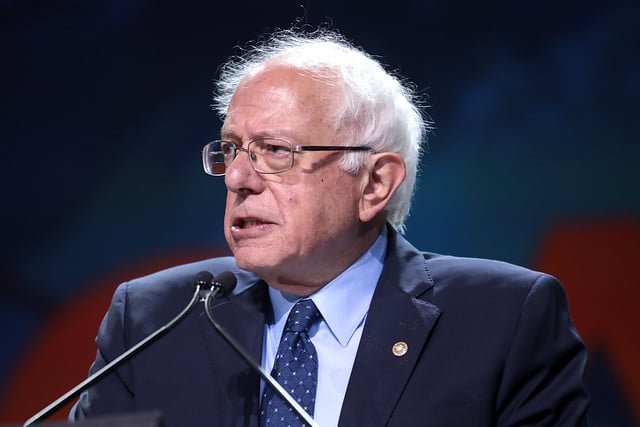
Vermont Senator Bernie Sanders proposed ‘StorageShot’, based on the Obama administration’s SunShot R&D initiative to bring down the cost of solar. Image: Flickr user Gage Skidmore.

On Wednesday, the ten Democratic presidential hopefuls discussed their environment and energy priorities during a televised town hall meeting in New York City.

Some candidates, like Cory Booker, specifically unveiled their climate change agendas ahead of the marathon seven-hour event.

But how do solar, energy storage, electricity and renewable promises compare across the top-polling candidates? Our sister site PV Tech has analysed their platforms to find out.

Joe Biden

This article requires Premium SubscriptionBasic (FREE) Subscription

Try Premium for just $1

  • Full premium access for the first month at only $1
  • Converts to an annual rate after 30 days unless cancelled
  • Cancel anytime during the trial period

Premium Benefits

  • Expert industry analysis and interviews
  • Digital access to PV Tech Power journal
  • Exclusive event discounts

Or get the full Premium subscription right away

Or continue reading this article for free

Poll frontrunner Joe Biden backs net-zero emissions by 2050, bolstered by US$1.7 trillion of federal funding over 10 years. In addition, his government intends to secure additional private sector, state and local investments to bring the total up to more than US$5 trillion.

The former vice-president wants to invest US$400 billion – or “twice the investment of the Apollo program which put a man on the moon, in today’s dollars” – in clean energy and climate research, and establish “targeted programs” that would develop renewables on federal lands and waters. Biden has a goal of doubling offshore wind by 2030.

In addition, a Biden presidency would establish a new government-wide clean energy export and climate investment initiative. The scheme would promote American clean energy exports and investments around the world and offer incentives for US firms that supply low-carbon solutions to the international market.

To read how all the candidates fared at the post-Jay Inslee-drops-out watershed event hosted by CNN, visit PV Tech for the full version of this story.
24 March 2026
Dallas, Texas
The Energy Storage Summit USA is the only place where you are guaranteed to meet all the most important investors, developers, IPPs, RTOs and ISOs, policymakers, utilities, energy buyers, service providers, consultancies and technology providers in one room, to ensure that your deals get done as efficiently as possible. Book your ticket today to join us in 2026!

Read Next

December 16, 2025
In this edition of the Energy-Storage.news US news roundup, EticaAG partners with Shell on battery immersion tech, Pacific Northwest National Laboratory begins utility-scale battery testing, and ON.Energy announces a transformer supply agreement.
December 16, 2025
 Utility Georgia Power has reached an agreement with the Public Interest Advocacy (PIA) staff of the Georgia Public Service Commission (PSC), that, if approved, will help lower energy costs and meet electricity demand in the state.
Premium
December 16, 2025
Calibrant’s BESS for a new data centre in Oregon, US, was hailed as the first of its kind, but what are the details beyond the headline? We caught up with Calibrant’s CCO to discuss the practical, commercial and technical specifics of the project.
December 16, 2025
Waratah Super Battery developer Akaysha Energy has put the first phase of its Ulinda Park BESS project into operation in Queensland, Australia.
December 15, 2025
A new battery energy storage system (BESS) cybersecurity whitepaper from consultancy firm The Brattle Group and cybersecurity solutions provider Dragos claims that a single 100MW/400MWh BESS outage could result in US$1.2 million in monthly losses.