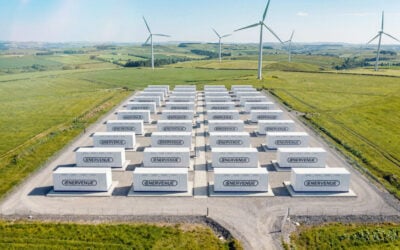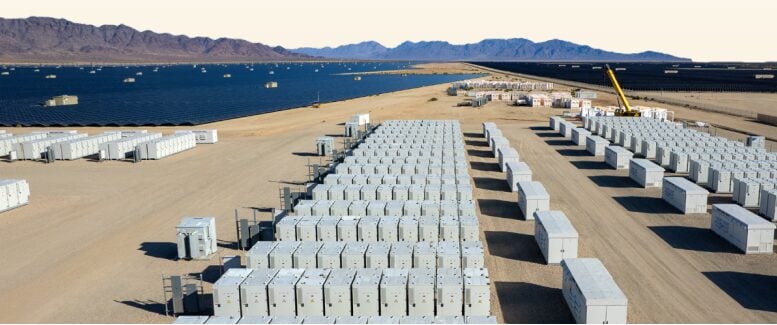
According to the US trade association group, the Solar Energy Industries Association (SEIA), US battery energy storage system (BESS) deployments are set to increase to 70GWh in 2026.
SEIA’s recent Energy Storage Market Outlook (ESMO), created in collaboration with Benchmark Mineral Intelligence, utilises Benchmark’s grid and behind-the-meter data on US energy storage deployment, combined with SEIA’s industry expertise, to offer a detailed analysis of the US energy storage market’s current state.
Throughout 2025, the US BESS policy landscape experienced significant changes, most notably with the passage of the One Big Beautiful Bill Act (OBBBA).
Still, the year saw BESS installations surpass 28GW/57GWh, which SEIA notes as a year-over-year increase of 29%.
Try Premium for just $1
- Full premium access for the first month at only $1
- Converts to an annual rate after 30 days unless cancelled
- Cancel anytime during the trial period
Premium Benefits
- Expert industry analysis and interviews
- Digital access to PV Tech Power journal
- Exclusive event discounts
Or get the full Premium subscription right away
Or continue reading this article for free
The utility-scale market supported growth with nearly 50GWh/16GW installed, with California, Texas, and Arizona making up 74% of the total capacity.
California led with 59,815MWh of cumulative storage capacity additions, followed by Texas with 26,271MWh, and Arizona with an impressive 19,334MWh. Fourth was Nevada, with 6,331MWh, underscoring just how far the top three states are leading the industry by.
Meanwhile, the behind-the-meter (BTM) market maintained its demand share at 13% of the total market in 2024, amounting to 12GW/8GWh. The BTM sector experienced notable growth in the residential segment following the expiration of the 25D tax credit.
Also notable from the report, SEIA says that 48% of storage capacity is paired with solar generation, 51% is standalone BESS, and the remaining 1% is paired with wind generation.
Looking ahead, US BESS deployments are projected to reach 35GW/70GWh in 2026, with the utility-scale segment comprising 20.2GW/62.4GWh and the BTM markets making up 14.8GW/7.3GWh. This growth is estimated to involve US$25.2 billion in capital investment.
SEIA states that by 2030, the market will surpass 47GW/110GWh of annual installations. By that year, the total installed utility-scale BESS is expected to reach just under 500GWh.
As recently covered by Energy-Storage.news Premium, Rho Motion’s monthly global grid-scale BESS deployment figures for 2026 showed a year-on-year fall and China continuing to account for the majority of activity.
Benchmark Mineral Intelligence found that approximately 3.5GW/10.5GWh of grid-scale BESS began commercial operation worldwide in January. This represents about a 25% decrease compared to January 2025, when 5.2GW/13.8GWh came online. In North America, 169MW/523MWh came online in the first month of this year, the research firm said.
The Energy Storage Summit USA will be held from 24-25 March 2026, in Dallas, TX. It features keynote speeches and panel discussions on topics like FEOC challenges, power demand forecasting, and managing the BESS supply chain. ESN Premium subscribers can get an exclusive discount on ticket prices. For complete information, visit the Energy Storage Summit USA website.