Energy storage firms have responded to the outcome of the UK general election with calls for stability, long term vision and an end to the “regulatory hurdles” that have limited the industry’s growth thus far in the UK.
In a surprise result, the Conservative Party has been forced to seek support from Northern Ireland’s Democratic Unionist Party (DUP) in order to maintain a majority in Parliament after losing 13 MPs, with the opposition Labour party gaining 32 seats.
Prior to the election the Tories had placed energy storage at the heart of its developing industrial strategy, announcing millions of pounds in funding to be spent on battery technologies. Meanwhile, Labour had also pledged to support new green technologies and increased renewable energy penetration, a view generally reflected across all parties.
Despite the shock outcome, firms are now seeking a stable policy environment in which solar, wind and other clean energy sources can continue to grow in a way that further increases the need for increased energy storage capability.
Try Premium for just $1
- Full premium access for the first month at only $1
- Converts to an annual rate after 30 days unless cancelled
- Cancel anytime during the trial period
Premium Benefits
- Expert industry analysis and interviews
- Digital access to PV Tech Power journal
- Exclusive event discounts
Or get the full Premium subscription right away
Or continue reading this article for free
Quentin Scott of Low Carbon, which won two lucrative contracts under last year’s Enhanced Frequency Response (EFR) tender run by National Grid, said: “This election result is a surprise. But the shock should not distract from the certainties in our energy system: we are on an unrelenting march to subsidy-free, renewable power.
“This will be underpinned by new forms of flexibility such as battery storage. The new government will recognise these realities and should ensure that Britain takes advantage of the economic opportunities presented by decarbonisation”.
Speaking to SPP prior to the election Duncan Bott, managing director of Belectric which also won in the EFR tender, said a top priority for the next government should be to “get on with it”, adding that there was a need for a “real commitment” to renewables as this would drive the need for storage.
“Things like increasing corporate tax on rooftop PV are just ridiculous. It’s that sort of interference that isn’t helpful,” he said.
The need for the Conservative/DUP alliance to commit to clean energy policy was also raised by Joe McDonald, business development manager at aggregator Limejump. Despite the government’s consistent cuts to support for renewables since 2015, and the absence of climate change policy from the DUP’s political approach, McDonald claimed action must still be taken to reach National Grid’s Gone Green scenario, expected to become ‘2 Degrees’ when the next Future Energy Scenarios update is launched next month.
“Does this mean the future of renewables is uncertain? If we are not going to have a system that is built around that Gone Green scenario, the impact on storage is that it is required a lot less. If we don’t go ahead and meet our 2030 targets obviously the frequency market [isn’t] required to grow at the rate the National Grid have set which means you’re going to have more storage competing for less volume.
“There are elements around that long target setting which differ between parties and it’s something we would want to understand as soon as possible.”
The industry is continuing to wait for a number of long term policy proposals which have been delayed by the snap election. In December the Department of Business, Energy and Industrial Strategy (BEIS) launched a smart power call for evidence alongside the regulator Ofgem, which sought to address a number of issues affecting greater take-up of storage.
A response had been expected to be published in May but was delayed while campaigning was carried out. It is expected to outline how to overcome a number of challenges, such as the fact that storage is yet to be correctly defined as an asset class and the issue of double charging as energy is drawn down and again when discharged.
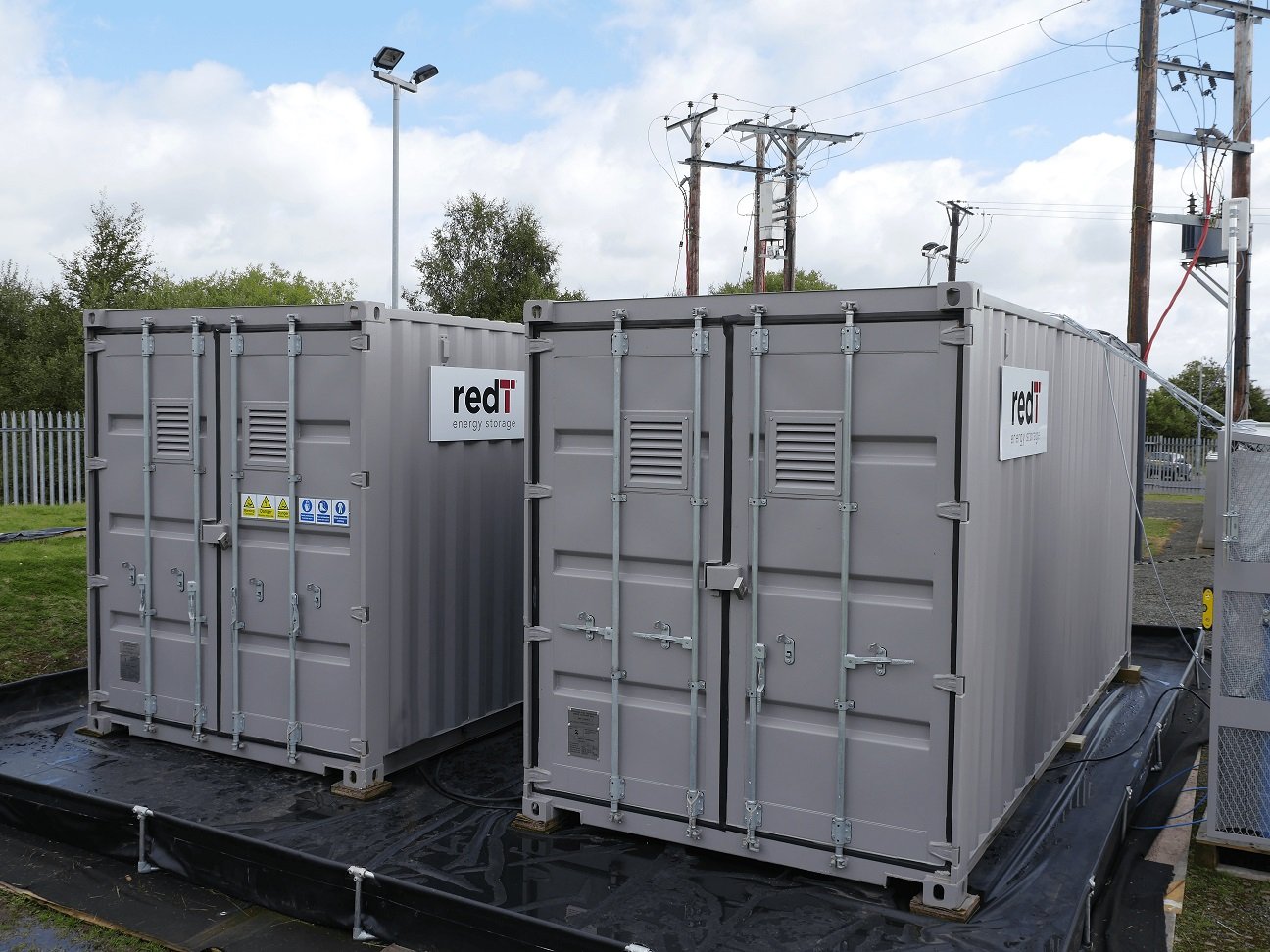
According to Scott McGregor, chief executive of redT energy, tackling these concerns would “create a storage market not with subsidies but with a free market”.
McDonald agreed, adding: “What is clear in the energy storage market is that investment is still at quite an early stage. The sensitivities around regulatory hurdles really can make or break the industry at this time.
“I think it’s undoubtable that storage will come in to full force within the next four years. We’re quite close to hitting that peak now but things like uncertainty on the classification of batteries is clear and has a huge difference because it impacts running costs, which can make up 8% of the costs against the full stack of revenues. That classification is really quite interesting and everyone wants that to be secure.”
Despite this delay, McGregor was quick to point out that the policy itself is positive and that consistent changes in energy ministers in recent years has led to uncertainty across the sector.
“Our personal view is that the staff within BEIS are first class quite frankly and I think their policy work is fantastic. What we want from a government is to let that policy come through parliament. There has been consistent change of energy ministers for the last ten years. It’s got to stop,” he said.
“Westminster is damaging the energy infrastructure of this country and making it more expensive through constant change, bringing in ineffective policy which has unintended consequences.”
However, while the wider energy sector faces this disruption McGregor added that the inevitable rise of storage will take place regardless as the global decarbonisation agenda continues.
“From a storage side, in the end it’s irrelevant. Renewables are growing and they’re coming online whether government likes it or not. Solar is the cheapest form of stable, daily generation, wind is even cheaper.
“This is happening no matter what the regulators like or not and because renewables have hit that barrier where the grid is struggling with it, storage is essential so it will happen in this country irrespective of policy,” he concluded.