Energy storage has reached a point of commercial viability in the UK according to the chief executive of redT energy, who said the company had now reached “the right price” for an economic proposition.
Speaking to sister title Clean Energy News, Scott McGregor said the company’s price modelling had improved in recent months to a point where he is able to overcome previous cynicism towards the UK market.
“I’ve been very vocal up until now about how [general] energy storage doesn’t make economic sense in the UK. However we’ve spent the last four to five months tentatively modelling how to get the revenues laid up for storage, grid services and solar and some arbitrage and we’re getting an 8-10 year payback now in the UK, which is pretty good for an infrastructure project.
“We believe now it is now commercial in the UK, we’ve got the right price for the system so it’s economic,” he said.
Try Premium for just $1
- Full premium access for the first month at only $1
- Converts to an annual rate after 30 days unless cancelled
- Cancel anytime during the trial period
Premium Benefits
- Expert industry analysis and interviews
- Digital access to PV Tech Power journal
- Exclusive event discounts
Or get the full Premium subscription right away
Or continue reading this article for free
Utility-scale energy storage is ramping up activity across the UK thanks largely to competitive tenders for specific grid services required by the transmission system operator, National Grid.
While these have been led by front of the meter applications centered around various forms of frequency response, behind the meter revenues have proven to be a growing area of focus, particularly in the commercial and industrial sectors.
McGregor added that other revenue streams, particularly arbitrage, are set to become more prominent as the value of this income becomes more attractive.
“What we are seeing which is quite exciting is if you put arbitrage into the equation you can reduce payback significantly. The smarter finance groups can get a baseline return of eight years payback, based on reasonable assumptions of grid services and demand use etc, but then put on to manage the asset and can get payback much quicker,” he explained.
“So the arbitrage play is where I think storage will play out in the UK and other grid markets. The ones that take the risk will be able to pay back on its own, in certain markets I see one or two years payback on systems through pure arbitrage, but it’s a riskier financial investment.”
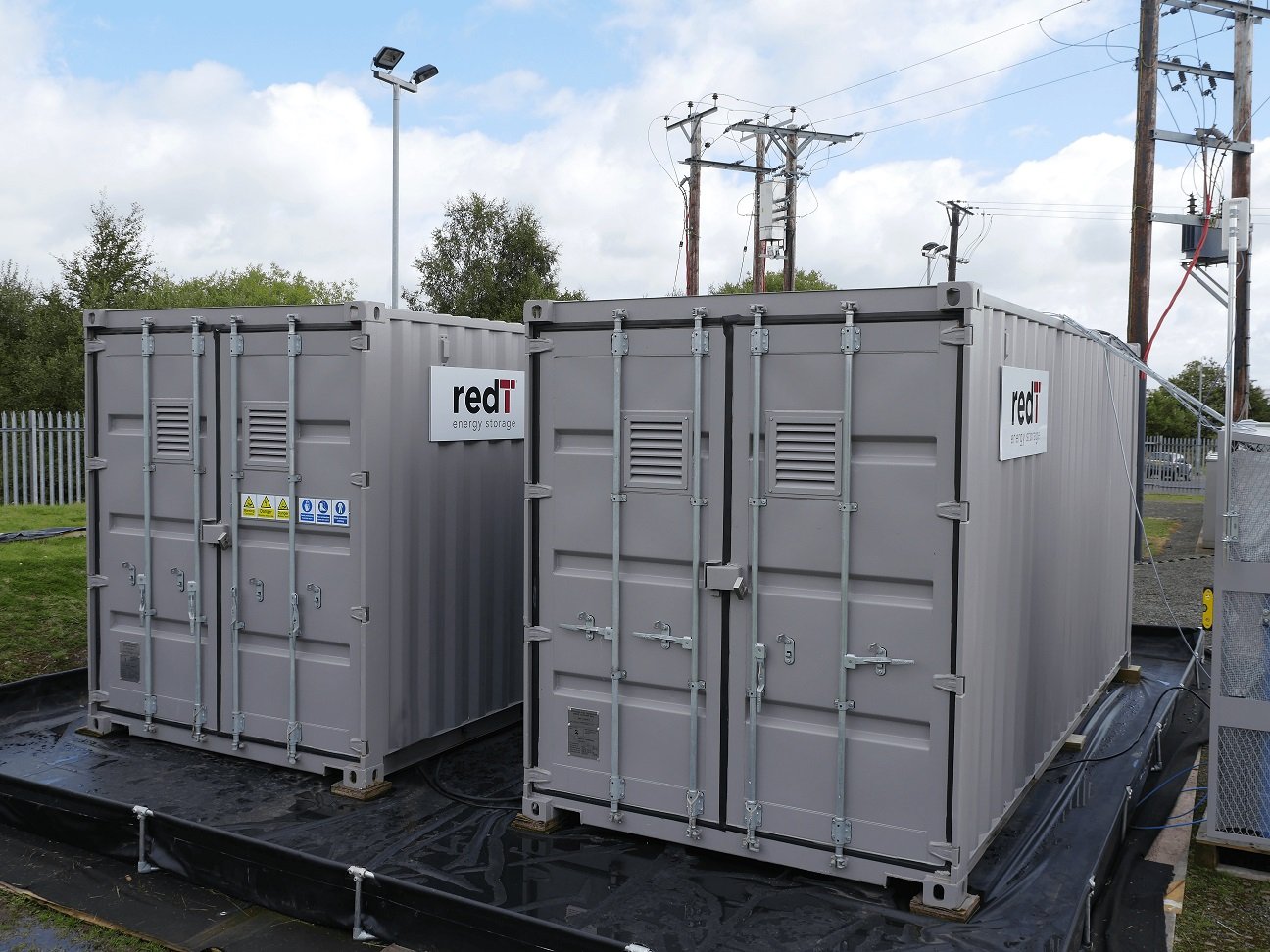
McGregor was speaking as part of a newly agreed trial project with the Royal National Lifeboat Institution (RNLI), which will use an 180kWh redT energy storage machine to time shift output from a 100kWp solar array. It will also use the flow battery technology as a backup generator allowing critical operations to continue in the event of a mains power outage.
He explained that the machine could be called upon to provide 12 hours of emergency discharge in the event of a power outage.
As part of a wider portfolio of flow battery units, the machine was originally intended for a wind project on the Scottish Isle of Gigha. However, after infrastructure was improved to the remote isle the systems were no longer necessary, allowing redT to use them elsewhere.
Other units will deliver 1.08MWh of energy storage to the distributed energy system in Cornwall, England for the utility Centrica, and will potentially take part in its developing ‘virtual energy marketplace’.