UK needs 80GW of solar and up to 30GW of energy storage to meet net zero targets

September 14, 2020
LinkedIn
Twitter
Reddit
Facebook
Email
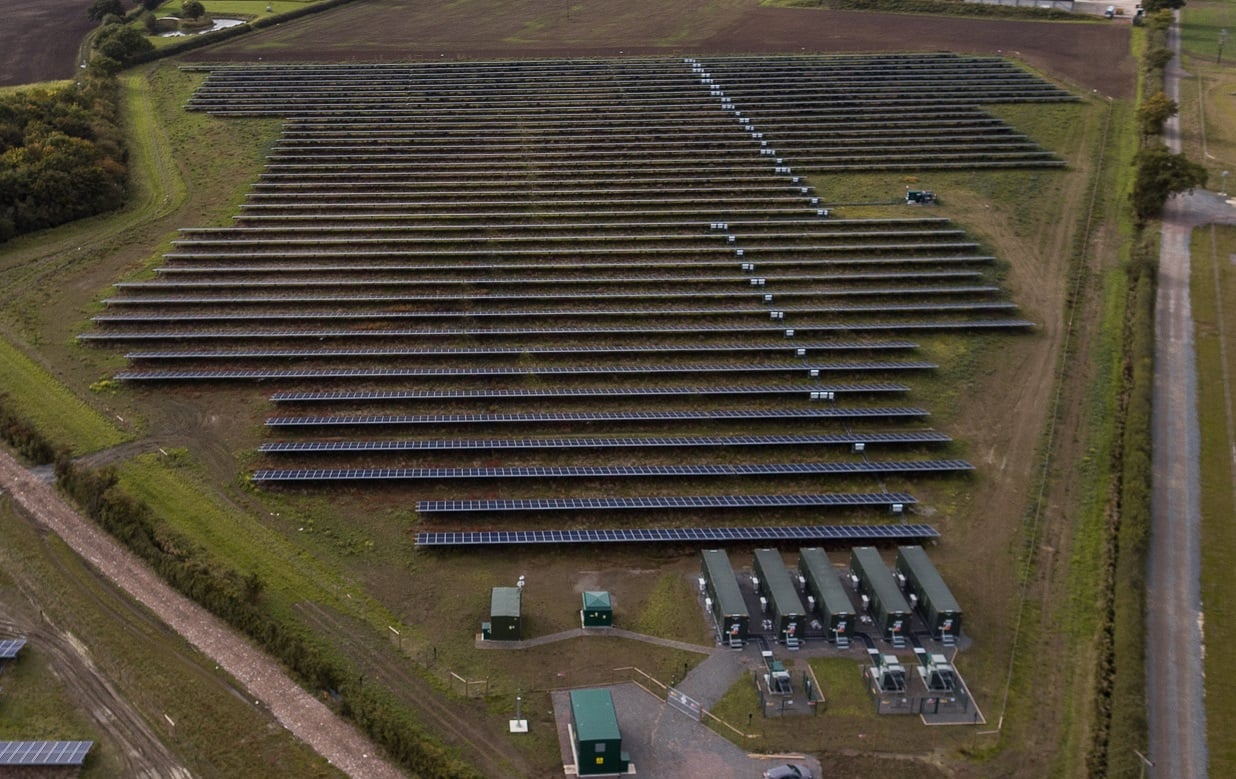
Clayhill, a solar farm with colocated battery storage, developed and built without subsidies in the UK. Image: Anesco.

The UK will need to deploy 80GW of solar to meet net zero according to a new whitepaper from consultancy Atkins.

The white paper looked into the capacity of each generation type needed to meet net zero, as well as the rate of deployment.

It found that 80GW of solar would be needed at a run rate of 2.67GW/yr, however the run rate in 2019 came in at just 0.26GW/yr for solar PV, only 10% of the target outlined by Atkins.

The whitepaper pointed to the 257MW of total new solar capacity in 2019, of which 81.9MW was in large installations. It went on to praise the technology for being simple in engineering terms, having low development costs and responding quickly to changes in the subsidy regime, stating it is possible to accelerate deployment.

This article requires Premium SubscriptionBasic (FREE) Subscription

Try Premium for just $1

  • Full premium access for the first month at only $1
  • Converts to an annual rate after 30 days unless cancelled
  • Cancel anytime during the trial period

Premium Benefits

  • Expert industry analysis and interviews
  • Digital access to PV Tech Power journal
  • Exclusive event discounts

Or get the full Premium subscription right away

Or continue reading this article for free

It also outlined how 15-30GW of battery storage would also be required for net zero, helping to mitigate the intermittency of solar PV as well as wind. According to the whitepaper, more solar is required than wind, with Atkins stating that 75GW of offshore wind at 2.5GW/yr is needed and 20GW onshore wind at 0.67GW/yr.

To read the full version of this story, visit Solar Power Portal.
Read Next

February 12, 2026
A 582MWh battery storage project and a gigawatt-hour-scale thermal energy storage system are the latest big developments in the emerging Baltic region, north-eastern Europe.
February 11, 2026
Netherlands-based iron-air long-duration energy storage (LDES) startup Ore Energy has completed a grid-connected pilot of its 100-hour iron-air LDES system at EDF Lab les Renardières in France.
Premium
February 11, 2026
Owner-operator Fidra Energy came out of virtually nowhere to be building one of Europe’s largest BESS in the UK, the 1.4GW/3.1GWh Thorpe Marsh project. We catch up with CEO Chris Elder, about its strategy and projects but also broader BESS and clean energy financing trends.
February 10, 2026
Energy infrastructure platform Revera Energy has completed an expanded US$150 million credit facility to accelerate development and construction of its battery storage, solar, and green hydrogen project pipeline across Australia and the UK.
February 9, 2026
Europe’s energy storage market has hit a turning point. What was once a scattered, early-phase market featuring pilot projects and daring developers has swiftly evolved into a dynamic, capital-intensive infrastructure sector, writes Wood Mackenzie research associate Cecilie Kristiansen.