
The energy storage market in Australia continues to gain traction, with several notable trends emerging in recent months. Ahead of the Energy Storage Summit Australia 2026, which will take place 18-19 March in Sydney, we take a look at some of the key debates set to take centre stage at the event.
In some of our ESN Premium articles, we’ve gained insights into the Australian energy storage markets from companies such as Wärtsilä, Akaysha Energy, Fluence, and more. Some of these insights will be expanded on in the upcoming event.
Australia’s battery storage fleet ‘facing challenges in extreme heatwave conditions’
At the start of 2026, Australia’s most severe heatwave in six years tested the resilience of the National Electricity Market (NEM) and its growing grid-scale battery energy storage fleet, according to Javier Savolainen, market development manager at Wärtsilä Energy.
Temperatures soared above 40°C across large areas of New South Wales, Victoria and South Australia, with some inland regions experiencing consecutive days above 46°C.
Try Premium for just $1
- Full premium access for the first month at only $1
- Converts to an annual rate after 30 days unless cancelled
- Cancel anytime during the trial period
Premium Benefits
- Expert industry analysis and interviews
- Digital access to PV Tech Power journal
- Exclusive event discounts
Or get the full Premium subscription right away
Or continue reading this article for free
The extreme weather event began intensifying on 7 January, with many regions recording their hottest temperatures in six or seven years, a period when bushfires ravaged much of Australia in what has since been remembered as ‘Black Summer’.
The heatwave highlighted the operational constraints facing Australia’s battery energy storage systems (BESS) during prolonged periods of peak demand.
Many grid-scale BESS installations across the East Coast provide between 2- 3 hours of storage duration, a discharge capacity that Savolainen warns falls short during multi-day extreme weather events when air conditioning demand remains elevated for extended periods.
Savolainen said: “Batteries and pumped hydro are critical parts of the solution, but have limits during extreme heat events. Most battery systems currently provide only up to two to three hours of support, which falls short during prolonged peak demand or renewable energy droughts.”
Western Australia’s 500MWh vanadium flow battery initiative is a ‘pivotal moment’
A Western Australian government initiative to deploy the largest vanadium redox flow battery (VRFB) project outside China is a “pivotal moment,” one technology provider said.
In late November, the state government launched the first stage of an expression of interest (EOI) for a 50MW/500MWh (10-hour duration) VRFB energy storage project, to be built in Kalgoorlie, around 600km northeast of the Western Australia (WA) capital, Perth.
The project, backed by AU$150 million (US$97 million) of government funding and administered by the Department of Energy and Economic Diversification (DEED), requires the use of flow battery technology manufactured within WA, using locally sourced and processed vanadium.
Western Australia Premier Roger Cook of the Labor Party had made the delivery of the project in the mining town of Kalgoorlie one of his campaign pledges on the trail for reelection at the beginning of this year. The project is designed in part to replace the role of the 57MW West Kalgoorlie Power Station gas power plant, due for decommissioning next year.
“This is a pivotal moment for Australia’s vanadium industry, battery manufacturing industry, and diverse energy consumers,” a spokesperson for Perth-headquartered vanadium flow battery company AVESS Energy told ESN Premium.
The “breakthrough” project will be the largest VRFB to date outside of China, as well as the first large-scale VRFB project in Australia to connect to either of the country’s biggest electricity markets.
‘You need to be co-located with battery storage’: Wärtsilä sees DC-coupling as essential for Australia’s solar future
Australia’s solar curtailment crisis and frequent negative pricing events are fundamentally changing how developers approach renewable energy projects, with co-located battery storage shifting from an optional add-on to essential infrastructure.
“As we see more and more solar PV plants be deployed, as we see curtailment issues, as we see decommissioning of coal plants in favour of these systems, it’s becoming clear that you need to be co-located with battery storage to maximise the potential of your system and to support the market demands,” said Neha Sinha, product manager for energy storage systems at Wärtsilä Energy Storage.
This perspective reflects the company’s experience scaling from pilot-scale DC-coupled projects to delivering Australia’s largest DC-coupled hybrid system, driven by the technology’s efficiency advantages and the growing need to address solar curtailment and negative pricing in the Australian market.
Sinha explains that the primary benefit of DC-coupled BESS lies in their round-trip efficiency advantage. “The efficiency losses that come with converting from the solar field through an inverter to the batteries back through an inverter are reduced if you can directly couple the solar to the battery storage,” she said in an interview with ESN Premium.
OptiGrid: Lately, BESS in Australia’s NEM ‘rarely go fully contracted’
Sahand Karimi, CEO of Australian AI-driven energy management company OptiGrid, tells ESN Premium that the majority of recent battery storage projects in the NEM “rarely go fully contracted”.
“We are seeing more merchant exposure of the battery because the owners and operators can see more opportunities for the merchant. Lately, we now rarely see a battery go fully contracted because the owners want some exposure to those upsides with merchant exposure,” Karimi said..
“That’s why virtual tolling agreements have become very common these days: they want to contract some part and keep the other part as a merchant.”
A fully merchant BESS operates without guaranteed revenue contracts, participating directly in wholesale electricity markets and ancillary service markets. These systems are fully exposed to market price volatility, capturing both upside potential during high-price events and downside risks during unfavourable market conditions.
This approach features a high-risk profile with no protection against losses if market conditions deteriorate or if the asset’s performance is affected by unfavourable pricing spreads. The high-risk profile is reflected in proportionally higher revenue share for the operator/owner.
Battery trading complexity demands sophisticated software solutions as the Australian market matures
Australian battery energy storage operators using basic trading algorithms are missing millions in revenue opportunities as the NEM evolves into a sophisticated trading arena that demands enterprise-grade software solutions.
These are the thoughts of Matt Grover, director of sales engineering and energy markets at Fluence, who believes that successful BESS operations require far more than basic price forecasting and optimisation algorithms.
As the NEM experiences unprecedented growth in battery deployments, the complexity of trading strategies has evolved to demand comprehensive software platforms and deep operational expertise.
“To be good at battery optimisation and bidding, you need to be good at much more than just price forecasting and optimisation,” Grover explained during an exclusive interview with ESN Premium.
“It’s relatively easy to hire a modern data science graduate and put them in the room. They’ll figure out how to develop a good optimisation model that works well in a kind of simulation environment. But being good at operating in Australia’s NEM requires a lot more than just that.”
Akaysha Energy: Developing the ‘world’s most powerful battery storage system’
As reported by Energy-Storage.news last year, the Waratah Super Battery started partial operations with the first 350MW/700MWh coming online.
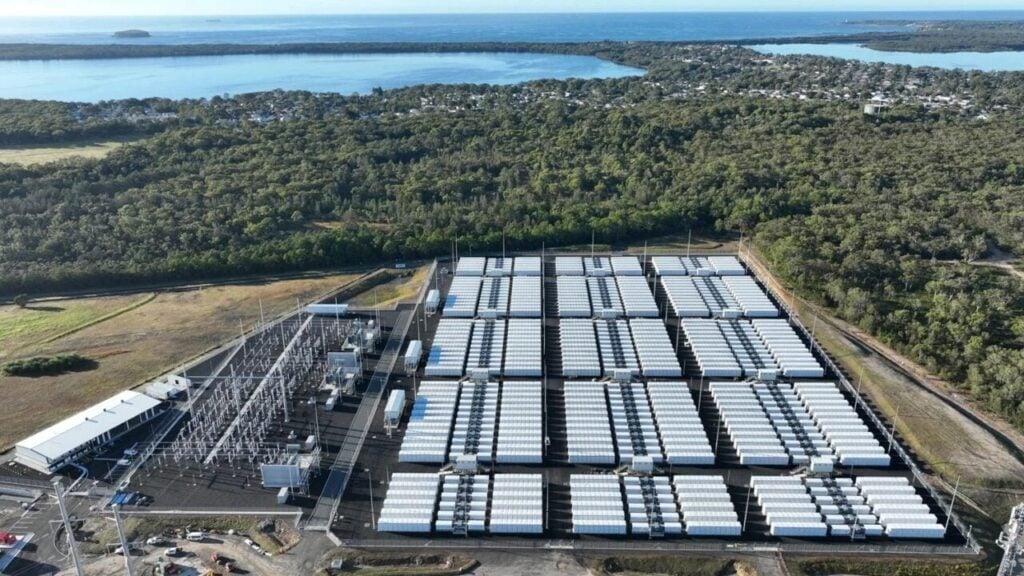
“It’s the most powerful BESS in the world,” Nick Carter, CEO of Akaysha Energy, told ESN Premium following the switching on of the 850MW/1,680MWh Waratah Super Battery in New South Wales, Australia.
The claim made by Akaysha Energy, which had been acquired by global investment powerhouse BlackRock in 2022, refers to the power output of the battery storage system.
Carter explained that this represents the largest connection point across Australia’s NEM which spans its eastern and southern states. However, several challenges have been encountered in building a BESS of this size, including the operationality of the System Integrity Protection Scheme (SIPS) with transmission operator Transgrid.
“Enabling that first half of the SIPS has been a massive amount of work. On the face of it, the SIPS seems very simple in terms of what it’s doing, where we get a signal from Transgrid to ramp up generation,” Carter said.
“That all sounds straightforward, but the actual implementation of it, and doing it at the speed at which we need to do it, in conjunction with the grid connection, in conjunction with the control system, across 288 inverters at a massive site, is really, really hard for a single connection point. That’s been massively challenging, so getting it to this point has been a huge win for us.”
Another key discussion point with Carter centered around grid-forming inverters and how Australia could potentially be a leader in the use of this technology, owing to the amount of renewables already connected to its grids. This will also be covered at the Energy Storage Summit Australia 2026.
Indeed, Tesla’s head of business development and sales, Megapack APAC, Shane Bannister, said last month at the Clean Energy Council’s Australian Clean Energy Summit 2025 in Sydney that “Idon’t think we’re [Tesla] going to sell another battery in Australia that’s not grid-forming.”
Readers of Energy-Storage.news can get a 20% discount on tickets with the code ESN20 from the Energy Storage Summit Australia event website.