TotalEnergies seeks greenlight for 320MW solar-plus-storage site in Australia

January 28, 2025
LinkedIn
Twitter
Reddit
Facebook
Email

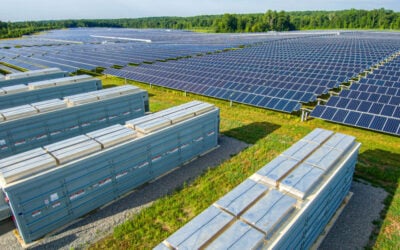
TotalEnergies, a French energy major, is seeking approval from the federal government’s Environment Protection and Biodiversity Conservation (EPBC) Act for a 320MW solar-plus-storage site in New South Wales, Australia.

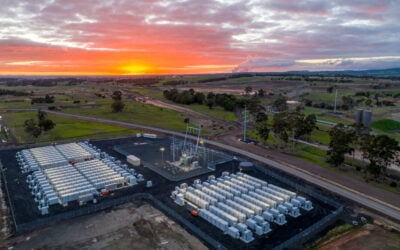
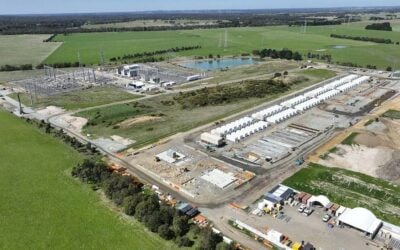
If approved, the state-significant development, located 22km south of Tamworth, will feature a 320MW/780MWh battery energy storage system (BESS) co-located on the project’s site.

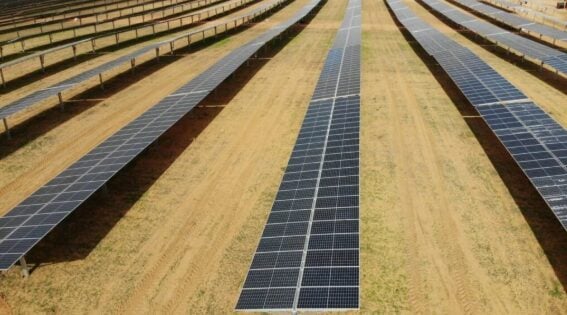
The Middlebrook project’s solar PV element will include 750,000 solar PV modules. These will generate green electricity that will be connected to the National Electricity Market (NEM) via an on-site substation and an existing 330kV transmission line owned by Transgrid.

Planning documents for the project indicate that the project represents an investment of around AU$856 million (US$562 million) and will generate up to 400 construction jobs and 15 operational jobs.

This article requires Premium SubscriptionBasic (FREE) Subscription

Try Premium for just $1

  • Full premium access for the first month at only $1
  • Converts to an annual rate after 30 days unless cancelled
  • Cancel anytime during the trial period

Premium Benefits

  • Expert industry analysis and interviews
  • Digital access to PV Tech Power journal
  • Exclusive event discounts

Or get the full Premium subscription right away

Or continue reading this article for free

The pre-construction phase of the project is anticipated to last around six months, with construction to start shortly after, which will take approximately 18-24 months. The operational lifespan of the site will be 30 years.

The project received approval from the New South Wales Independent Planning Commission (IPC) on 11 November 2024.

More than 50 public objections were received for TotalEnergies’ project, and to satisfy some of these, the IPC has implemented conditions to which the owner will have to adhere.

Most of these conditions are visual cues, such as ensuring vegetation screening of the BESS and substation and that landowners can request vegetation screening on properties within 3km of the project.

To read the full article, please visit PV Tech.
17 March 2026
Sydney, Australia
As we move into 2026, Australia is seeing real movement in emerging as a global ‘green’ superpower, with energy storage at the heart of this. This Summit will explore in-depth the ‘exponential growth of a unique market’, providing a meeting place for investors and developers’ appetite to do business. The second edition will shine a greater spotlight on behind-the-meter developments, with the distribution network being responsible for a large capacity of total energy storage in Australia. Understanding connection issues, the urgency of transitioning to net zero, optimal financial structures, and the industry developments in 2026 and beyond.
15 September 2026
San Diego, USA
You can expect to meet and network with all the key industry players again in 2025 from major US asset owners, operators, RTOs and ISOs, optimizers, software and analytics providers, technical consultancies, O&M technology providers and more.

Read Next

January 28, 2026
Ahead of the Energy Storage Summit Australia 2026 in March, we take a look at some of the key debates set to take centre stage at the event.  
January 28, 2026
South Australia’s battery storage fleet entered a 4-hour AU$1,000/MWh (US$700/MWh) price event at around 90% state of charge during the Australia Day heatwave.
January 27, 2026
More BESS news from across Europe, with ContourGlobal and Alpiq striking sizeable deals in Greece and France, Iberdrola putting projects into operation in Spain, and other project news in Germany, Poland, Denmark and Southeast Europe.
January 23, 2026
Palmer Renewable Energy has submitted a referral under the EPBC Act for a 200MW solar-plus-storage project near Collie, Western Australia.
January 23, 2026
Australian mining giant Fortescue has claimed to have secured large-scale battery storage at pricing levels not previously seen in Australia, according to CEO Dino Otranto.