German commercial and industrial (C&I) energy storage system firm Tesvolt is investing €60 million (US$64 million) in a new manufacturing hub at its headquarters in Saxony-Anhalt.
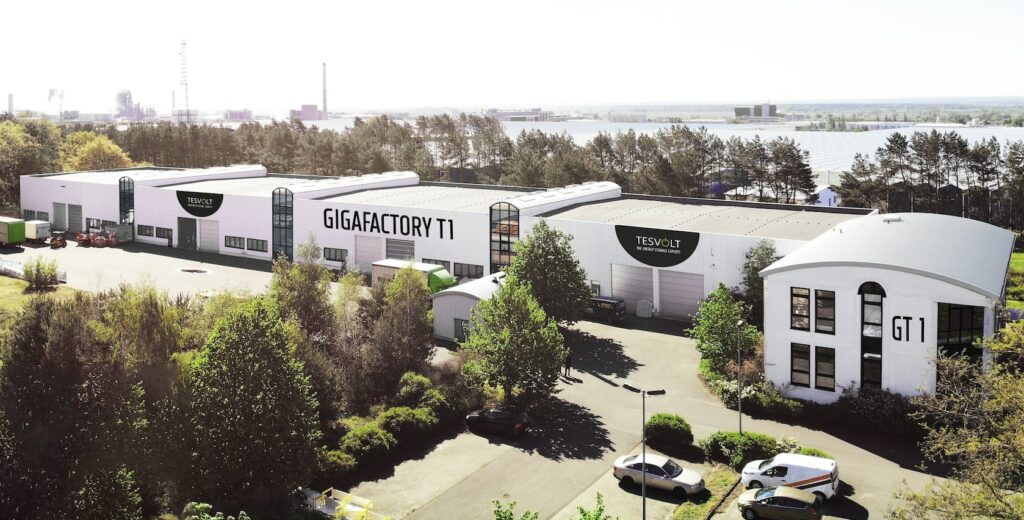
The money will go towards constructing two new buildings and renovating its existing production site at its headquarters in the town of Lutherstadt Wittenberg, pictured above, which has an annual production capacity of a few hundred MWh.
Construction on the new plant will start in spring this year and be completed in 2024, with an eventual annual production capacity of 4GWh.
It will assemble the company’s energy storage system (ESS) enclosures, which it sells to a variety of C&I markets in Europe.
Try Premium for just $1
- Full premium access for the first month at only $1
- Converts to an annual rate after 30 days unless cancelled
- Cancel anytime during the trial period
Premium Benefits
- Expert industry analysis and interviews
- Digital access to PV Tech Power journal
- Exclusive event discounts
Or get the full Premium subscription right away
Or continue reading this article for free
Daniel Hannemann, Tesvolt CEO said: “In the future, our new Gigafactory is set to produce up to 80,000 storage systems per year – that equates to a tenfold increase on today’s production capacity. With this milestone we are contributing to an increase in international independence for the European energy transition.”
The project is eligible to receive up to €12 million in subsidies through the Investitionsbank Sachsen-Anhalt, the development bank of the state of Saxony-Anhalt.
The new plant will cover two floors totalling 6,000m2 and will feature a high-bay racking system that will quadruple the storage capacity.
Tesvolt is aiming to make the plant carbon-neutral. Its electricity will be provided by rooftop wind and solar, with any excess stored in its own ESS units, and its heat supply provided through air source heat pumps and heat recovery.
The company last year reported that orders for its products had increased 195% in light of the energy crisis which engulfed Europe after Russia’s invasion of Ukraine. Hanneman said at the time that companies were increasingly seeking to reduce their dependency on fossil fuels.
The German ESS market has been dominated by the C&I and residential sectors in recent years as homeowners have looked to become increasingly energy self-sufficient well before the post-Covid and post-Ukraine war energy crisis.
Tesvolt has previously said it expects sales of over €100 million in 2023.
Energy-Storage.news’ publisher Solar Media will host the eighth annual Energy Storage Summit EU in London, 22-23 February 2023. This year it is moving to a larger venue, bringing together Europe’s leading investors, policymakers, developers, utilities, energy buyers and service providers all in one place. Visit the official site for more info.