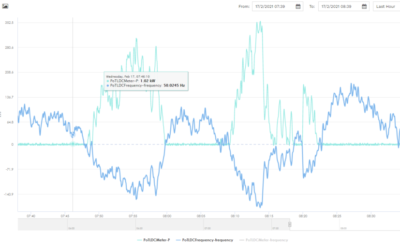
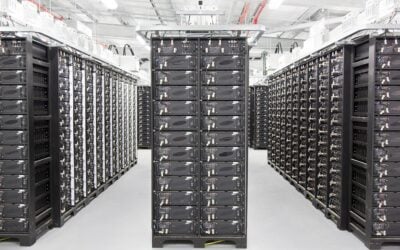
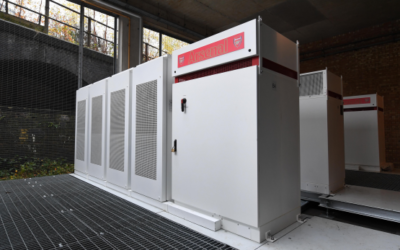
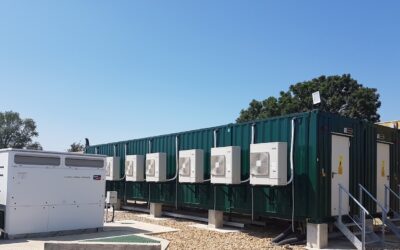
Participation in the UK’s recently-launched Dynamic Containment (DC) frequency response service has exceeded 400MW of assets with the enrolment of investment fund Gore Street Capital’s 9MW Port of Tilbury battery storage project by optimiser Origami Energy.
The UK’s move to net zero emissions will require a reinforced distribution network and a varied mix of energy storage technologies to make the most of low-cost renewables generation, a panel has suggested.
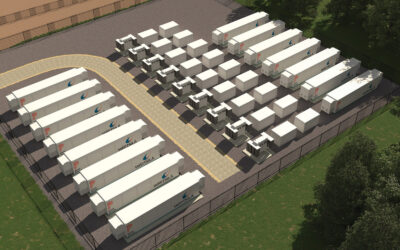
UK investment management group Downing LLP has announced its first utility-scale battery storage site in the country, a 50MW/53MWh project in Nursling, Southampton on England’s southern coast.
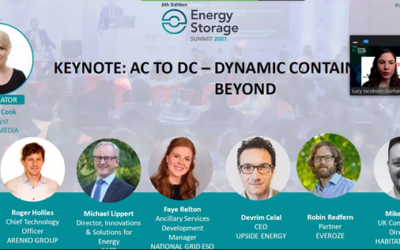
The benefits – and remaining challenges – of the UK’s new frequency response service Dynamic Containment (DC) were discussed at today’s Energy Storage Summit by a panel of experts and industry stakeholders.
A look at this morning’s Energy Storage Summit 2021 keynote discussion, ‘What is the key for really making money from batteries?’ and the panel’s thoughts on the increasingly complex range of revenue pathways.
Bigger projects, increased synergy with renewable energy generation, better evolved business models and a forward-thinking market design have contributed to the success of battery storage in the UK, with neighbouring Ireland also showing strong signs of rapid growth.
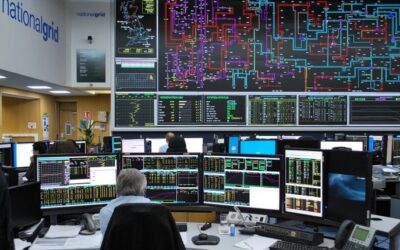
Following a dramatic start to the year, Energy-Storage.news takes a look at what is driving price volatility in Britain and what battery energy storage could do about it.
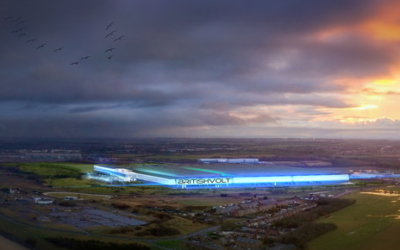
Siemens has partnered with the company behind what is to be the UK’s first lithium-ion battery gigafactory, providing it with its Digital Enterprise Technology, which can simulate gigaplant production processes and flows ahead of construction.
An increase of 20GWh of battery storage could reduce the amount of wasted wind power in Great Britain by 50%, according to new analysis from consultancy LCP.