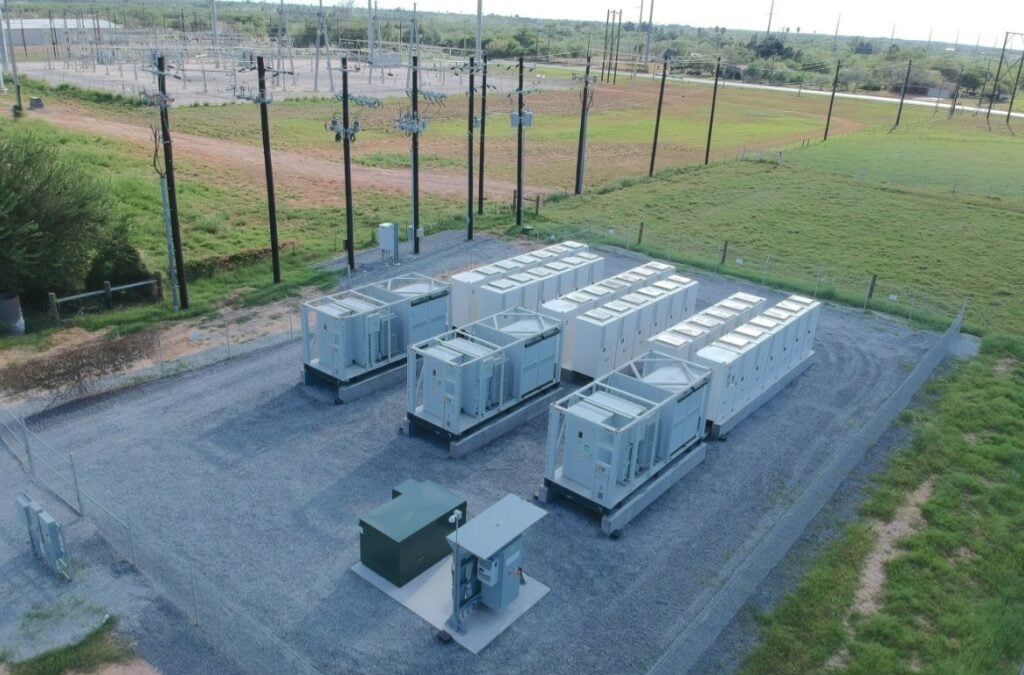
Investors SUSI Partners and SMT Energy have added 10 BESS projects in the ERCOT, Texas market totalling 100MW, building on an already-operational 100MW portfolio the pair has in the state.
The acquired battery energy storage system (BESS) projects are around the cities of Dallas and Houston which SMT said complemented its operational portfolio which is primarily in Southern Texas.
Construction on the new projects will start in early 2024 for a commercial operation date (COD) in late 2024 and the first half of 2025.
The projects are being developed, built and operated through a joint venture (JV) partnership between the two, which delivered the 100MW of assets brought online to-date. Tax equity financing for that 100MW was secured in August, from tax equity specialist investor Greencoat Capital.
Try Premium for just $1
- Full premium access for the first month at only $1
- Converts to an annual rate after 30 days unless cancelled
- Cancel anytime during the trial period
Premium Benefits
- Expert industry analysis and interviews
- Digital access to PV Tech Power journal
- Exclusive event discounts
Or get the full Premium subscription right away
Or continue reading this article for free
System integrator FlexGen deployed the JV’s projects that are already online and its CCO Yann Brandt tweeted on the news of the new 100MW acquisition, congratulating the pair on their continued collaboration.
Texas is one of the busiest markets in the US for energy storage, with some 750MW coming online in the third quarter of 2023 and 9.5GW set to be online by the end of 2024 according to grid operator ERCOT. Most systems coming online and being built are two-hour duration in order to capitalise on more energy-intensive revenue streams as well as to manage new state-of-charge (SOC) requirements.
The new projects SUSI and SMT are working on are likely to actually be 9.9MW-rated or lower. Projects that size or less benefit from much faster interconnection process from grid operator ERCOT, coming online as much as two years’ quicker than larger-scale projects.
Within the ERCOT context, projects of that size are often termed ‘distributed-scale’ to differentiate from much larger projects, though in other US markets like the Northeast a 10MW project would very much be called ‘grid-scale’.
SUSI, which is headquartered in Switzerland, has also recently expanded into the grid-scale energy storage markets in Italy and Chile.
Energy-Storage.news’ publisher Solar Media will host the 5th Energy Storage Summit USA, 19-20 March 2024 in Austin, Texas. Featuring a packed programme of panels, presentations and fireside chats from industry leaders focusing on accelerating the market for energy storage across the country. For more information, go to the website.