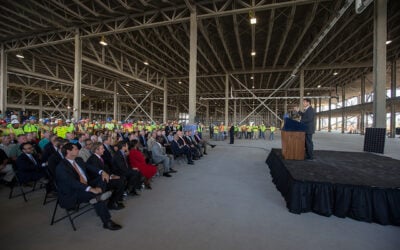
The development of systems capable of storing over six hours of energy economically is being supported in New York with an Innovation Challenge launched by the New York Power Authority (NYPA) and Urban Future Lab, a cleantech innovation centre.
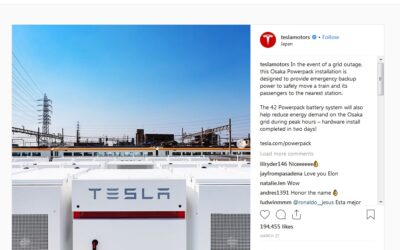
A Tesla Powerpack energy storage system with 7MWh capacity has been deployed for a train company in Japan, adding backup power capabilities to trains and adding the system to an ongoing virtual power plant project.
Andy Colthorpe caught up with Moixa CTO Chris Wright to hear about how a tie-in with trading company ITOCHU and the Ministry of Economy, Trade and Industry (METI) is creating smarter energy networks in Japan using solar, batteries, electric cars – and Moixa’s GridShare software platform.
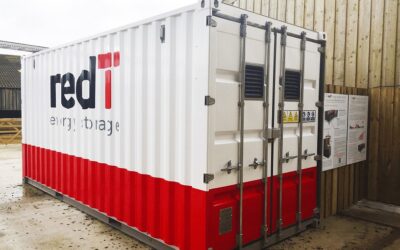
Pivot Power will collaborate with manufacturer and system integrator redT on what is claimed to be the world’s first grid-scale hybrid battery energy storage project to use a combination of lithium-ion and vanadium technologies.
Following February’s excellent Energy Storage Summit at London’s Victoria Park Plaza hotel and hosted by our publisher Solar Media, here’s a short series of videos posing some of the big questions around energy storage, renewables, climate change, business and the industry, and more.
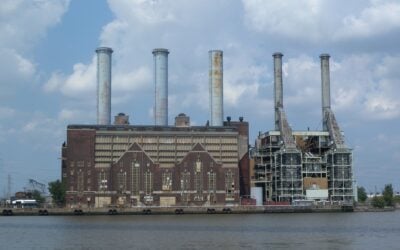
Many of the most polluting thermal power plants on the US grid today are also the most lucrative to run, but the service they provide could already be done twice as cheaply using solar and storage, developer 8minutenergy has claimed.
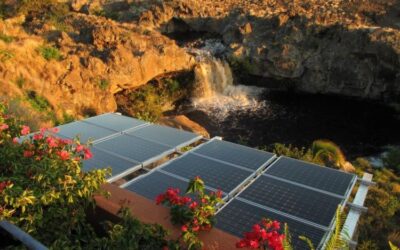
A large tranche of utility-scale solar – and storage – projects in Hawaii has been approved by the state’s Public Utilities Commission (PUC), each quoting a cost per kilowatt hour of US$0.10 or under.
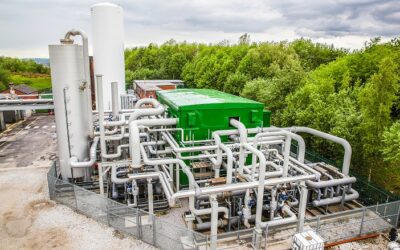
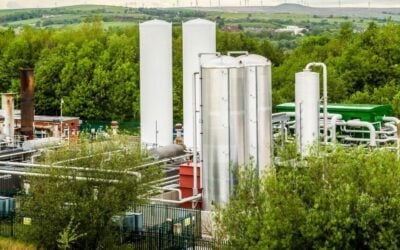
Liquid air energy storage (LAES), so far only deployed at scale at two sites in England, will be available in a number of new territories after manufacturer Highview Power signed a deal claimed to be worth €1 billion (US$1.12 billion).
A key missing piece in the clean energy puzzle is the question of how to provide baseload power in an electricity system dominated by intermittent renewables. Javier Cavada of Highview Power examines cryogenic long-duration storage as a possible solution.
UK company Solarcentury has commissioned two solar-storage-diesel mini-grids in rural communities in Eritrea that are far away from the grid and have relied purely on diesel power until now.