Nine companies conducting research and development projects in energy storage have partnered with, and are set to receive financial support from, the New York State Energy Research and Development Authority (NYSERDA).
Singapore is set to create a US$25 million fund for energy storage, as part of a raft of strategic measures aimed at meeting “significant shifts” in the energy sector, which will also include investment in research for integration of solar and cutting times for grid connection.
India’s growing energy storage industry shares the enthusiasm of its solar counterpart in welcoming the Modi government’s aims and ambitions, according to one industry veteran.
German mechanical engineering company Manz has supplied a lithium-ion battery production line to a research centre for the commercial production of the batteries, initially for the e-mobility sector, at the Center for Solar Energy and Hydrogen Research Baden-Wuerttemberg (ZSW) in Ulm.
An “enormous” request for proposal (RFPs) put out by the Hawaii Electric Company (HECO) for up to 200MW of energy storage was responded to by more than 60 would-be developers.
One of the U.S.‘s largest investor-owned energy utilities, Consolidated Edison (Con Edison), is planning to spend US$200 million on demand reduction technologies. Con Edison has filed a proposal with the New York Public Utilities Commission for a Brooklyn/Queens Demand Management Program (BQDM) that it hopes can defer the US$1 billion cost of building a new substation and expanding two existing ones.
Energy storage might not be cost effective in Germany as a method of helping the transition to a higher grid penetration of renewable energy, until that penetration level reaches as high as 90%, according to a leading think tank.
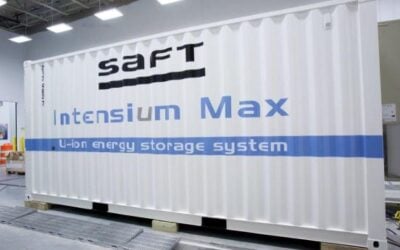
French battery manufacturer and designer Saft has been contracted to supply a 1MW/3MWh lithium-ion storage system at an educational facility in California, aimed at mitigating the impact of variable solar generation.
The developing economies of the world are largely located in geographical regions that have abundant renewable energy resources, be they solar, wind, hydro or in some cases geothermal, yet paradoxically at the individual and rural community level, access to energy is often a very real issue. Establishing a continuous chain of temperature controlled cold environments from the point of harvest to the marketplace and on into the home, a ‘cold chain’, is what is required in order to avoid produce spoilage and to connect farmers with higher value market options in distant urban centres or overseas.
The Australian Energy Storage Council, a new industry representative body has been launched for energy storage in Australia, backed and co-founded by the Australian Solar Council.