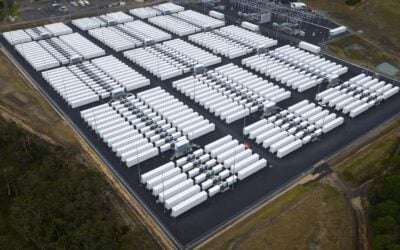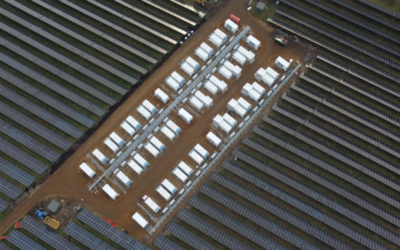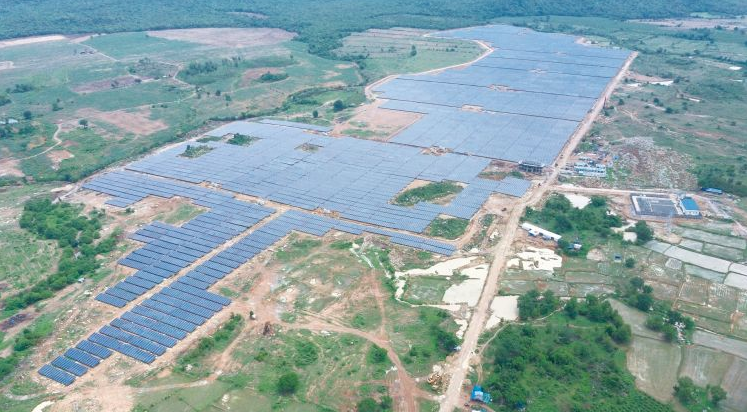
Vietnam’s latest attempt to draft new solar feed-in tariff (FiT) rates has come under fire for the absence of energy storage in its remit.
the plans involve reducing FiTs for ground-mount and floating PV after solar capacity deployment exceeded expectations under the original subsidy by a factor of five.
During the first FiT programme, which ran for two years up to 30 June 2019, all three PV segments – floating, ground mount, rooftop – had a generous FiT rate of US$9.35 cents/kWh lasting for 20 years.
But under the third set of draft plans proposed by the Ministry of Industry and Trade (MOIT) this week, the subsidy for ground-mounted projects will be reduced to US$7.09 cents and for floating solar to US$7.69 cents. Rooftop solar, however, looks set to get a pass by maintaining its US$9.35 cents rate. If this third draft is approved by the Prime Minister, the new FiT programme will run until 31 December 2021.
Try Premium for just $1
- Full premium access for the first month at only $1
- Converts to an annual rate after 30 days unless cancelled
- Cancel anytime during the trial period
Premium Benefits
- Expert industry analysis and interviews
- Digital access to PV Tech Power journal
- Exclusive event discounts
Or get the full Premium subscription right away
Or continue reading this article for free
There are three issues with the new draft, Gavin Smith, vice chairman of Eurocham’s Green Growth Committee, told Energy-Storage.news. Firstly, the absence of a provision to incentivise solar-plus-storage is a “serious mistake”. Energy storage, which helps integrate PV to the grid, had been incentivised in the first draft, but the technology has been omitted once again in the third draft.
Secondly, Smith said the new rate for floating PV is “insufficient to incentivise investors to go to floating solar first”. This would be a missed opportunity given the inherent benefits of FPV on land use and grid integration – most reservoirs in Vietnam have hydro plants with excess transmission capacity already built-in.
Thirdly, despite the first draft incentivising solar to be located in regions with lower irradiance and where there is less grid congestion already, the new draft resorts back to a single national FiT. Smith said this would concentrate solar even more in the overloaded south of Vietnam, with no benefit to the national transmission system.
“Binh Thuan and Ninh Thuan Provinces are already overloaded,” Smith added. “It’s fully documented and not going away anytime soon. A single national price is going to exacerbate that.”
Again industry members see the addition of energy storage as a key factor in solving the grid constraint issues.
MOIT had expected around 850MW of installations by the end of the first FiT period up to June this year, but the high rate on offer led to a rush to enter the Vietnamese PV market, including many international companies, resulting in 4.5GW of deployment across 90 projects. This led to the now well-known grid congestions issues.
Industry members had warned as early as last year that large-scale projects were likely to cause grid congestion, particularly in the provinces of Ninh Tuan and Binh Tuan, where developers had been attracted by the highest irradiation levels in the country.
The deployment rush caused “overloading on the national grid at certain distribution lines and at certain period of day time”, said a MOIT release.
In the same release, Nguyễn Đức Cường, director of the National Load Dispatch Centre (EVN NLDC), said that while PV plants are being added to the national grid, congestion means that, against expectations, many plants are having to reduce capacity.
Investors have been notified of the overloading, but there are fears that should the overloading not be alleviated by necessary power transmission projects immediately, then both investors and the utility EVN will be negatively impacted. Site clearance for transmission projects was identified as one problem area, which could be resolved by greater collaboration between MoIT, local governments, investors and EVN.
On the plus side, Smith noted that MOIT had done well in its third draft of FiT changes to resist the temptation to reduce the FiT for rooftop projects, which are thriving across all segments.
The new FiT rates are expected to be approved imminently, said MOIT, but Smith said there is no guarantee that approval will come.