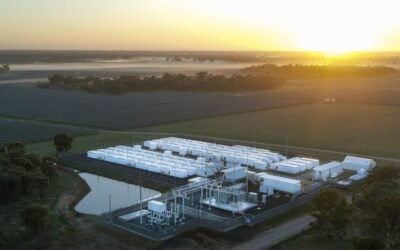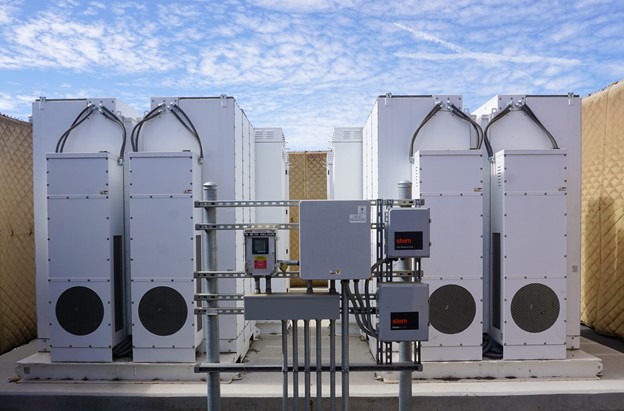
Stem Inc has signed a deal for over 110MWh of front-of-meter battery storage systems, as well as related services and software which will enable them to participate in New York’s Value of Distributed Energy Resources (VDER) programme.
The ‘smart energy storage’ company has been contracted by developer NineDot, a specialist in community-scale clean energy projects, to procure energy storage hardware as well as leverage Stem Inc’s own artificial intelligence-driven software platform Athena, for six standalone battery energy storage system (BESS) sites.
Located on New York’s Staten Island, the portfolio is scheduled to be up and running by May 2023.
The VDER programme, also referred to as the Value Stack, compensates energy generated by distributed energy resources (DER) based on how valuable that energy is to the network. In other words, when and where the energy is generated and fed into the grid.
Try Premium for just $1
- Full premium access for the first month at only $1
- Converts to an annual rate after 30 days unless cancelled
- Cancel anytime during the trial period
Premium Benefits
- Expert industry analysis and interviews
- Digital access to PV Tech Power journal
- Exclusive event discounts
Or get the full Premium subscription right away
Or continue reading this article for free
Kilowatt-hours of electricity from solar, storage and other DER assets are rewarded at an hourly, aggregate rate, through their ability to reduce demand, provide capacity, their environmental benefits and for relieving congestion on the grid.
In practise, this makes the project economics of energy storage in New York very location-specific, and the programme favours front-of-meter projects that deliver energy to the grid when it is most needed, rather than behind-the-meter systems which meet onsite loads.
Designed as a successor to net metering programmes, VDER has been established by the regulatory New York Public Service Commission (PSC).
NineDot will develop the six sites, own the assets and monetise the VDER programme credits. Stem Inc meanwhile will use its Athena software platform to optimise VDER participation as well as other applicable incentive programmes.
This will enable other project revenue streams to be accessed while also making sure the systems meet their VDER compliance obligations and warranty conditions. Athena integration will also allow NineDot to monitor the entire portfolio as one, Stem Inc claimed.
New York is targeting 100% clean energy by 2040 and recently doubled its 3GW by 2030 energy storage procurement target to 6GW, the biggest policy goal of its type in the US.
Earlier this month, NineDot received a strategic investment thought to be worth in excess of US$100 million from investment group Carlyle. The New York-headquartered developer said the funds would enable it to move forward on 400MW of clean energy projects it wants to develop, build, own and begin operating by 2026.
In addition to Staten Island, NineDot’s battery storage pipeline in Downstate New York includes projects in Queens, the Bronx and on Long Island. The company’s HQ is based at the Urban Future Lab, a clean energy and technology innovation hub hosted by the New York University’s Tandon School of Engineering.
NineDot has said it sees great potential for battery storage to store offshore wind as well as hydroelectric power from Upstate New York and solar PV to serve the state, especially in reducing the use of fossil fuel peaker plants.
A study by Strategen Consulting published early last year highlighted the favourable economic as well as environmental benefits of replacing New York’s entire 6GW fleet of thermal peaker plants with a combination of rooftop solar, offshore wind, energy efficiency and energy storage.